
White Label Perfume Manufacturer in UAE: Ready Fragrances Under Your Brand
What Is White Label Perfume?
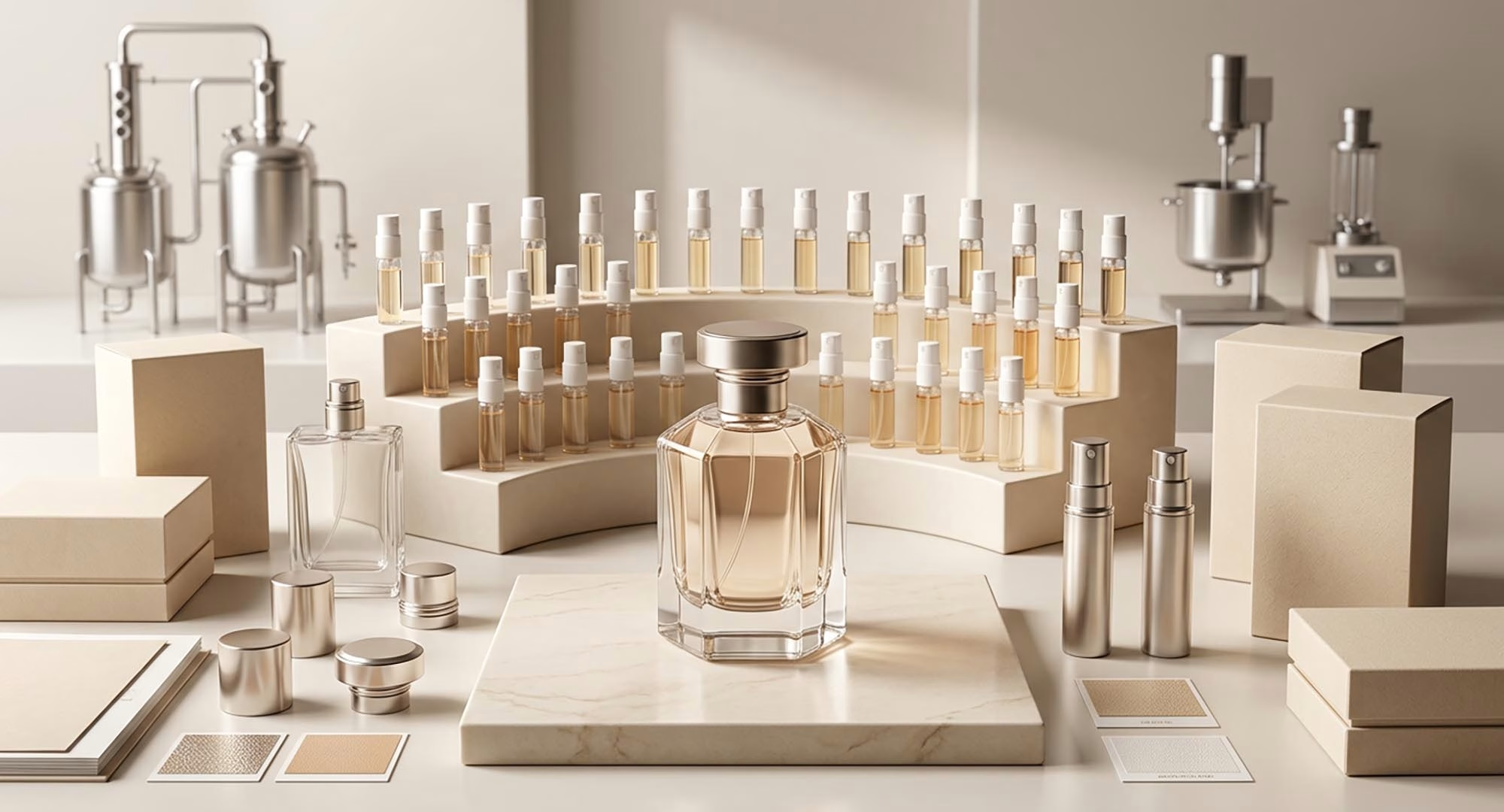
An existing fragrance, sold under your name.
The factory has already developed the scent. It sits in a library, it has been tested, and it is ready to fill. You select it, choose your bottle and box, and it goes to market as your product.
Nothing about the juice is built for you. That is the entire point, and it is why white label is the fastest and cheapest way to put a perfume brand on a shelf.
It is also why the route gets dismissed too quickly by people who think it is somehow lesser. A great deal of perfume sold in this region is white label. Customers do not know and do not ask.
What they notice is whether the scent is good and whether the packaging looks like it belongs at the price.
Who Should Use a White Label Perfume Manufacturer?
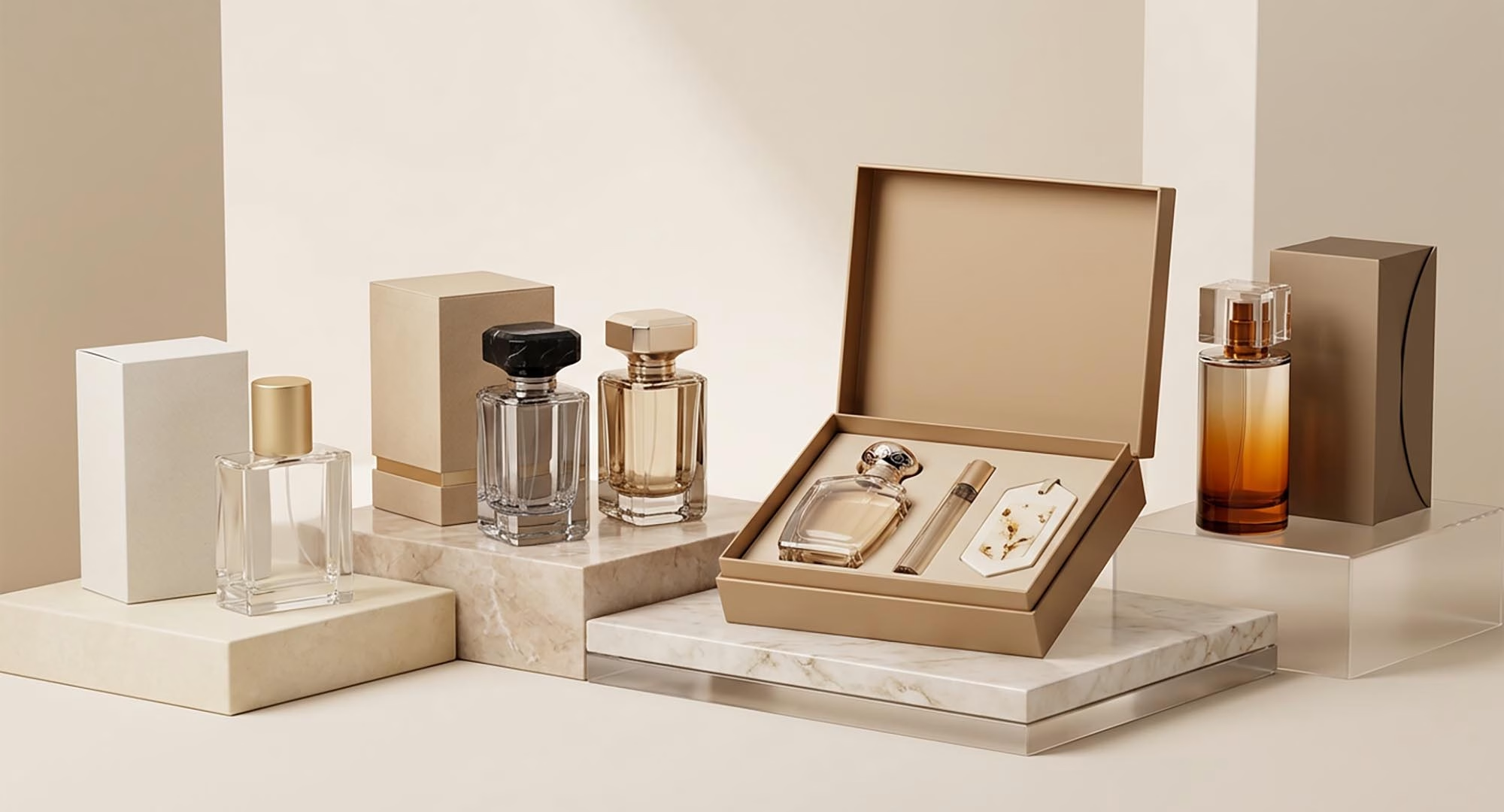
Four kinds of buyer, and they are not all beginners.
- First-time brand owners. Testing whether the concept sells before committing to development costs.
- Retailers adding an own-label line. A shop that already has footfall and wants margin, not a formulation project.
- Gifting and corporate buyers. A branded product for an event or a campaign, needed by a fixed date.
- Established brands filling a gap. A seasonal or entry-price line beside an existing custom range.
The thread connecting them is time. Every one of these buyers has a deadline that development cannot comfortably fit inside.
If your launch date is fixed and close, a white label perfume manufacturer is usually the only realistic answer.
How the Scent Library Works
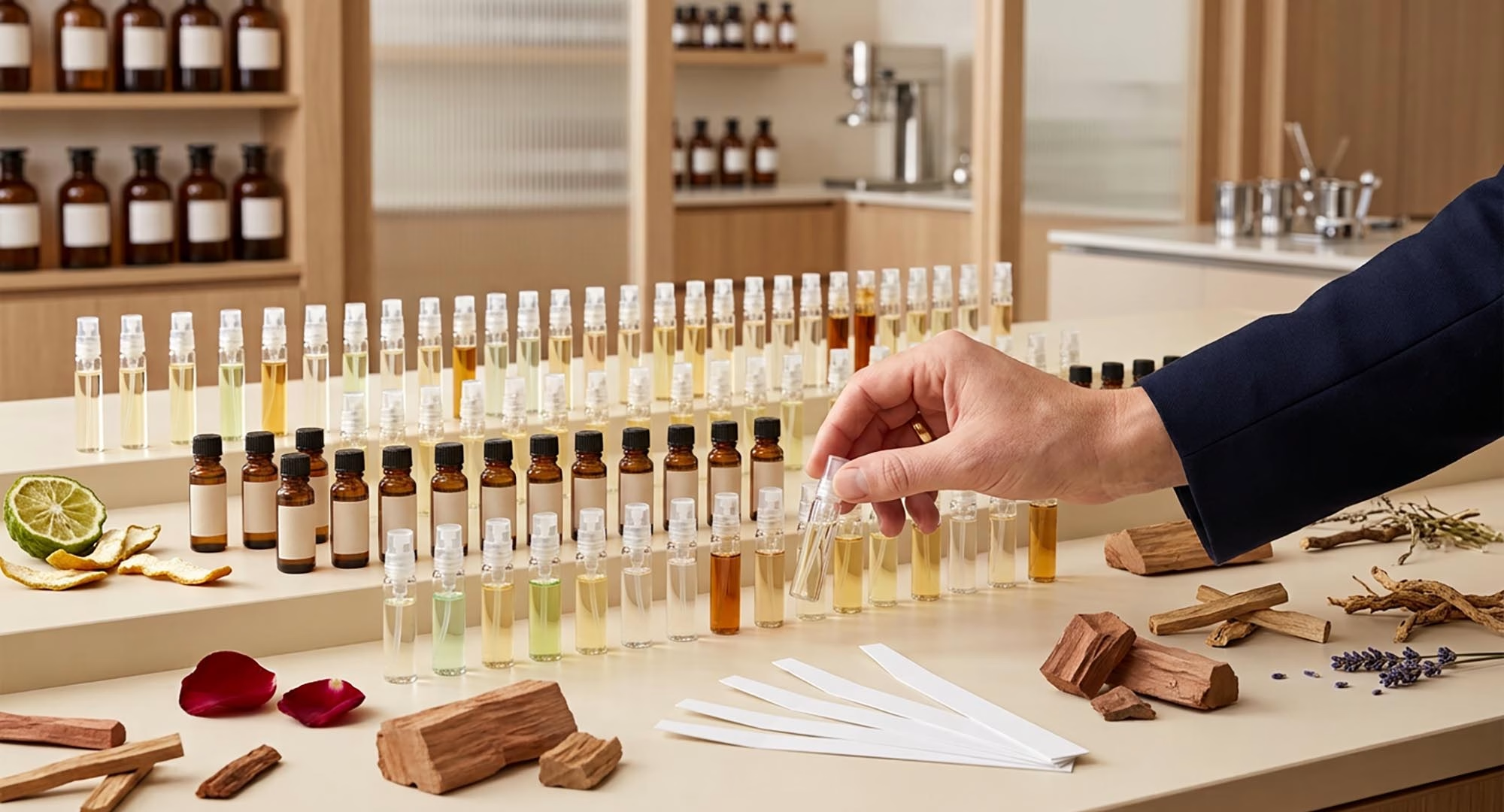
Better than the phrase suggests. A library is not a bin of leftovers.
Choosing From the Range
You smell options against your brief. Fresh, oriental, floral, woody, designer-inspired, masstige. The factory narrows the range once it knows your customer and your price point.
This takes an afternoon rather than a month. That compression is the main thing you are buying.
Bring a reference. Not to copy, but to communicate. Saying what you like is far more useful than describing what you want in adjectives, because two people rarely mean the same thing by fresh or by warm.
Smell the shortlist on skin as well as on paper. A blotter tells you the opening. Skin tells you what the customer actually lives with for the rest of the day.
What Not Exclusive Actually Means
It means the factory may sell the same composition to another buyer. Possibly in your market.
How much this matters depends entirely on your category. In a crowded value segment, plenty of products share a scent profile and compete on brand and price. In a premium niche line, it would be a problem.
Ask whether any form of regional or category exclusivity is available, because some factories will reserve a scent within a market even when it is not a bespoke formulation.
What Can You Change, and What Is Fixed?
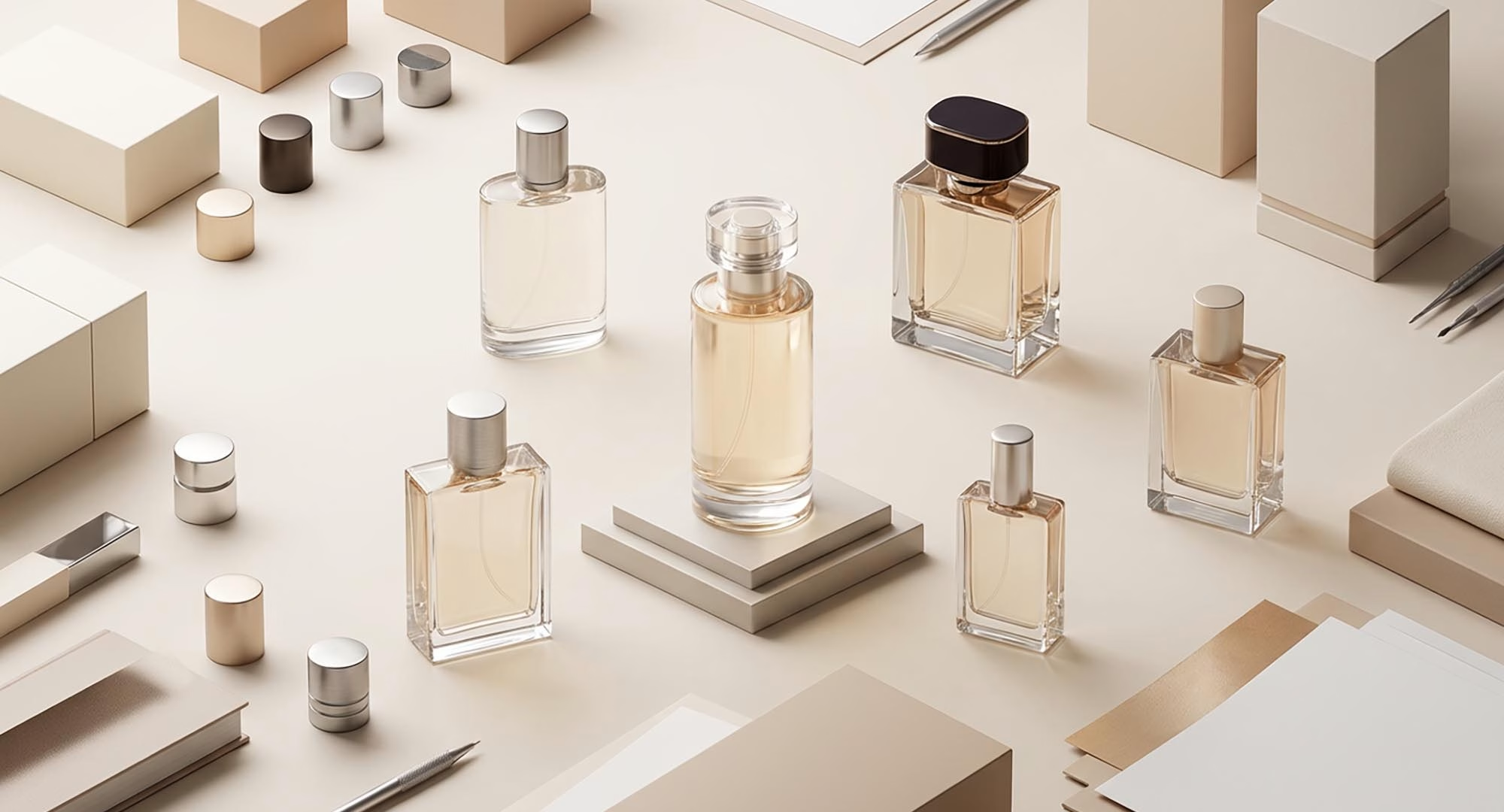
More is adjustable than most buyers assume.
- The fragrance composition itself.
- The concentration, which changes strength, longevity and cost.
- Yours entirely. Bottle, cap, sprayer, label, box and every decoration on them.
- Yours entirely. Volume, whether that is a 30ml purse size or a 100ml flagship.
That last point carries more weight than people expect. Two brands can use the same scent and produce products that feel nothing alike, because the packaging does most of the communicating.
Concentration is the quiet lever. The same composition at a higher concentration reads richer and lasts longer, and it moves your cost and your shelf price together.
How Fast Is White Label, Really?
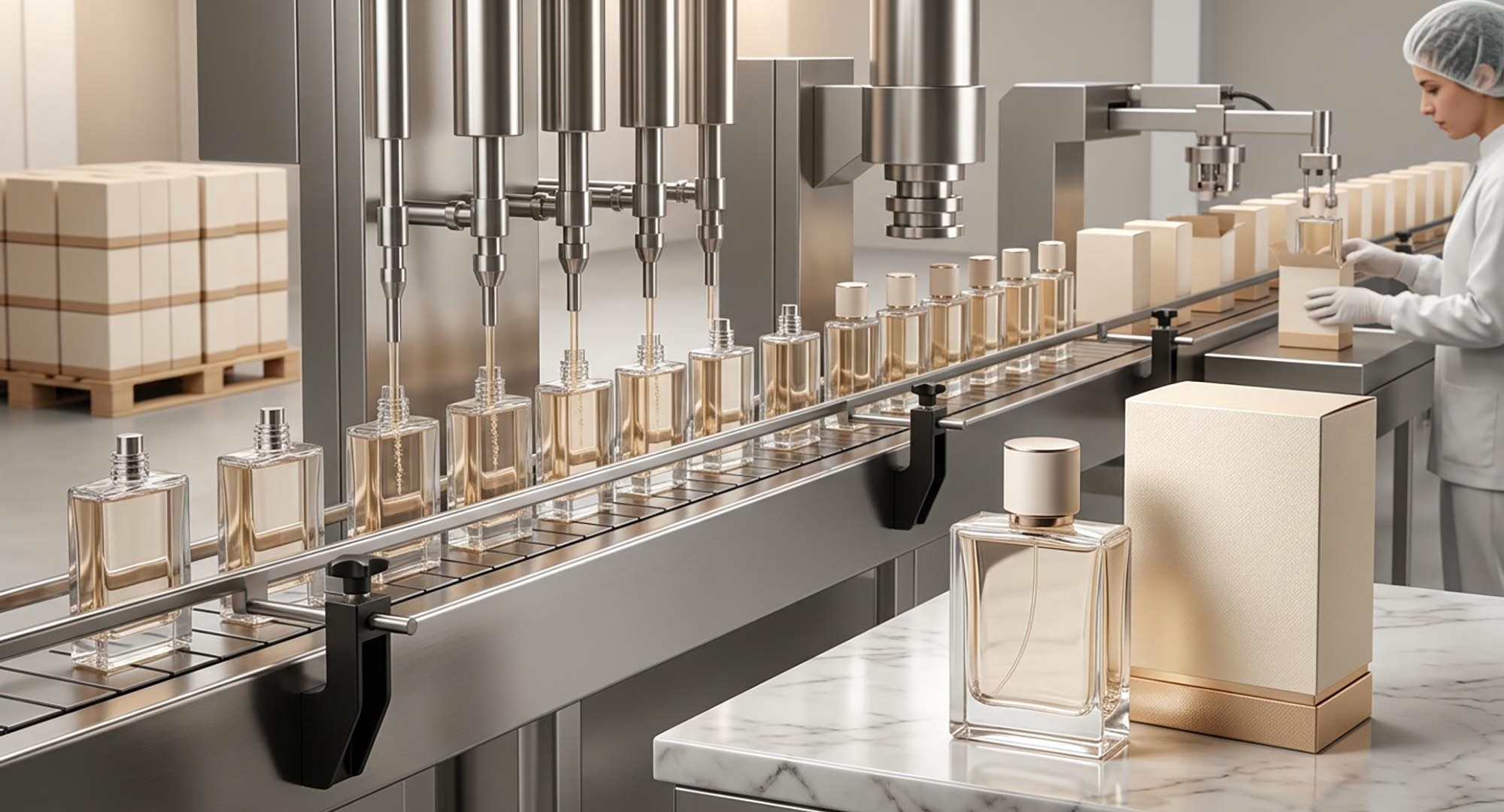
Five steps, and none of them include fragrance development.
- Brief and selection. Your customer, your price point, and a shortlist to smell. Days, not weeks.
- Packaging choice. Bottle, cap and box from stock components, or custom if you have time for it.
- Usually the slowest step, and it sits on your side of the table.
- Pre-production sample. The complete unit exactly as it will ship. Approve it properly.
- Seven to thirty days at IGOP, depending on volume and finishing.
From decision to delivered stock, six to eight weeks is realistic with stock components. A custom formulation would add several weeks at the front of that.
Artwork is where schedules slip. Have a designer briefed before you start, not after the sample arrives.
What Does White Label Perfume Cost?
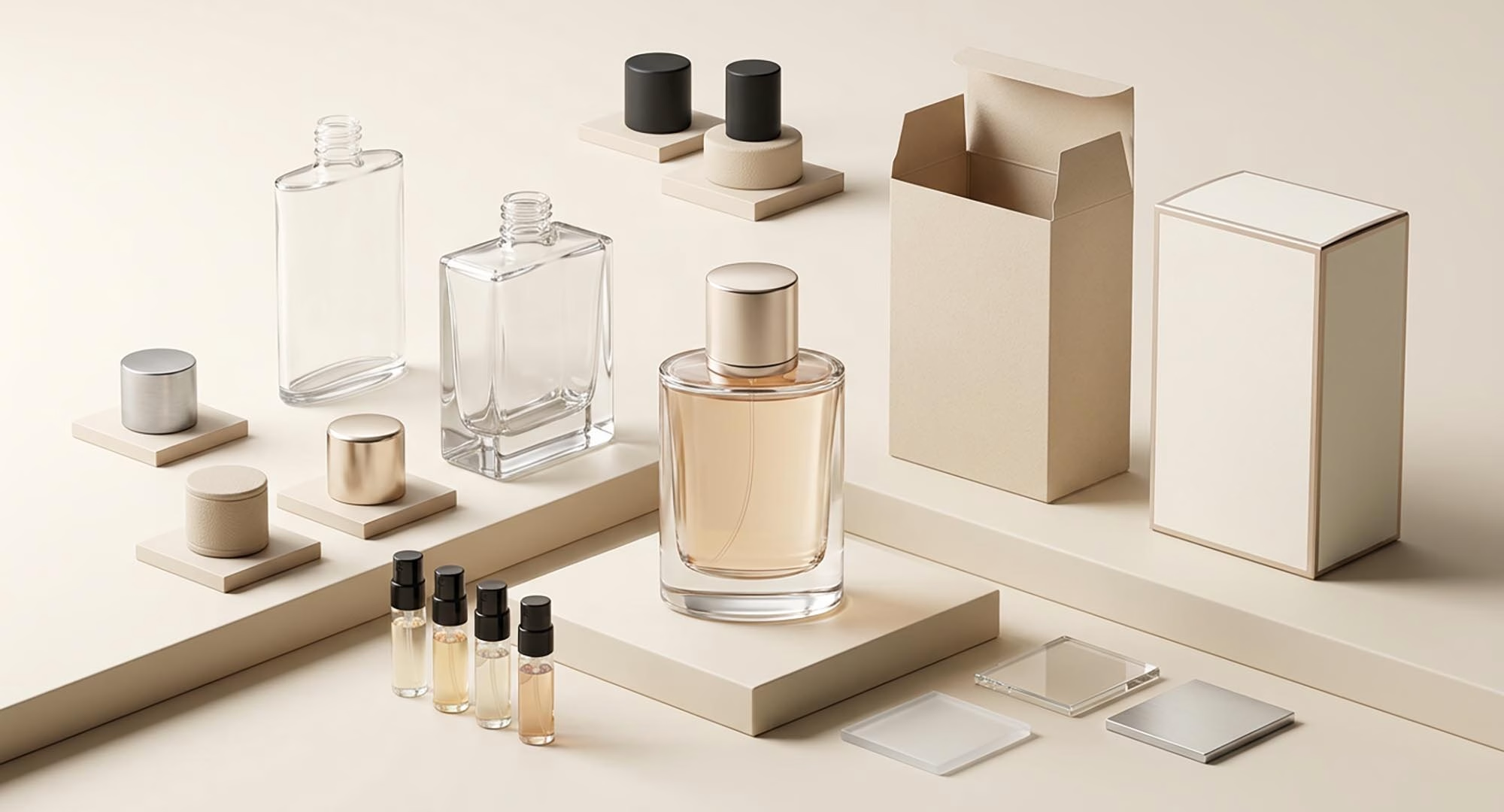
Cheaper than private label, and the saving is not where most people look.
The fragrance itself is rarely the largest cost in a finished bottle. What white label removes is development time, sampling rounds and the cost of a formulation that might not work.
Beyond that, the unit price follows the same drivers as any perfume. Volume first, then oil grade and concentration, then glass weight, then box construction, then decoration.
Orders typically start around 1,000 units. That figure moves with packaging rather than ambition, and the minimum order page explains what pushes it in each direction.
Ask for sampling, artwork and delivery costs in writing at quotation stage. They are small individually and surprising together.
How Many Units Should a First Order Be?
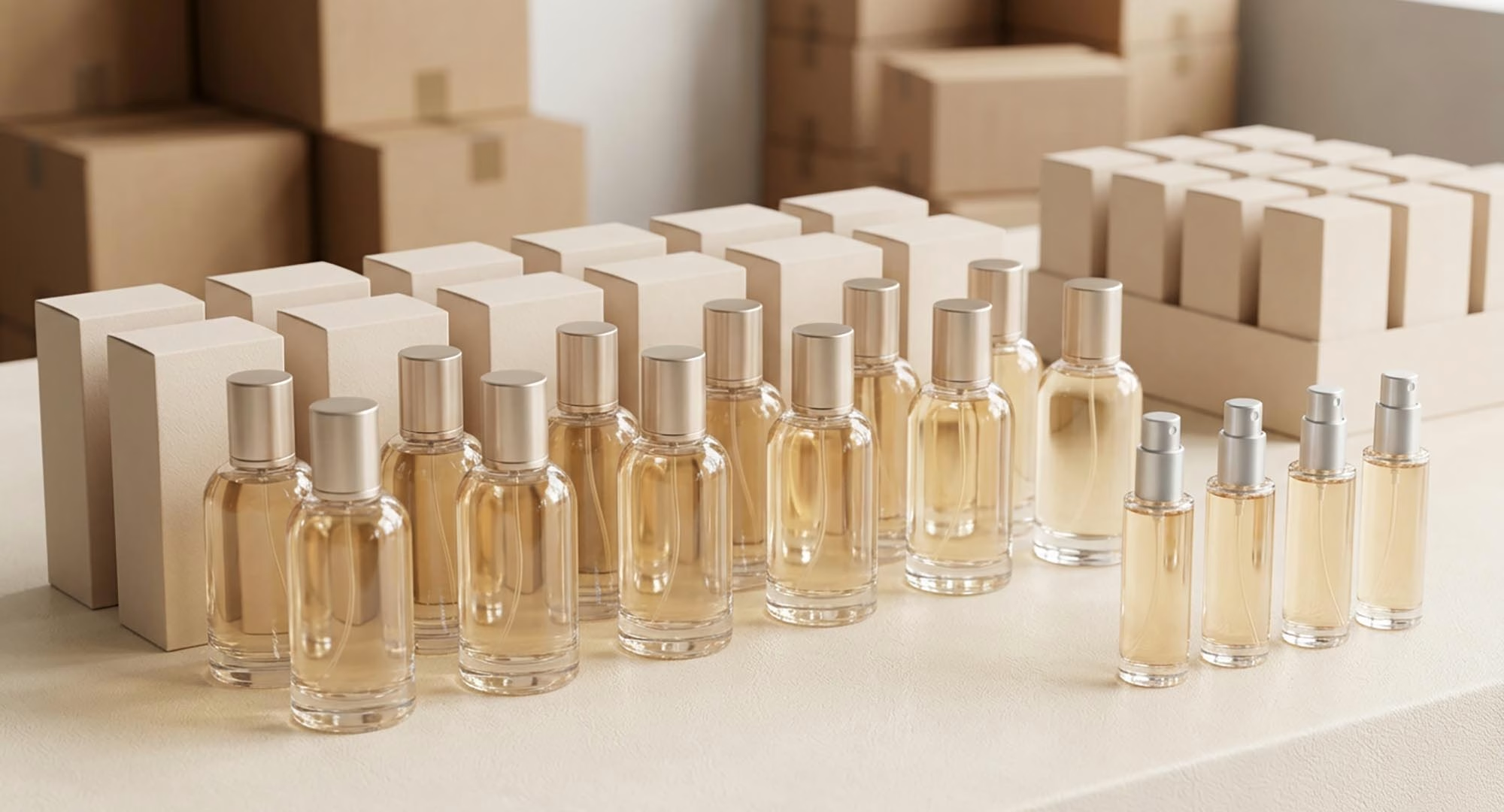
Enough to learn something. Not enough to hurt if you are wrong.
White label lowers the cost of being wrong, which is its real value to a new brand. You have not spent months on a formulation, so a scent that underperforms is a lesson rather than a disaster.
A first run of around a thousand units gives you something meaningful to test with. You can stock a kiosk, seed a marketplace listing, hand out testers and still have stock left when the first reorder conversation happens.
Order testers deliberately rather than as an afterthought. Fragrance sells by being smelled, and a retail point without testers converts badly.
Resist deep first orders even when the unit price tempts you. The saving on a large run is real, and so is the cash it locks into a warehouse before you know whether the product moves.
Reorders are the moment that matters. Once the formula and artwork are settled, a repeat run is production time alone, which makes shallow and frequent a workable strategy at this stage.
White Label for Gifting and Corporate Orders
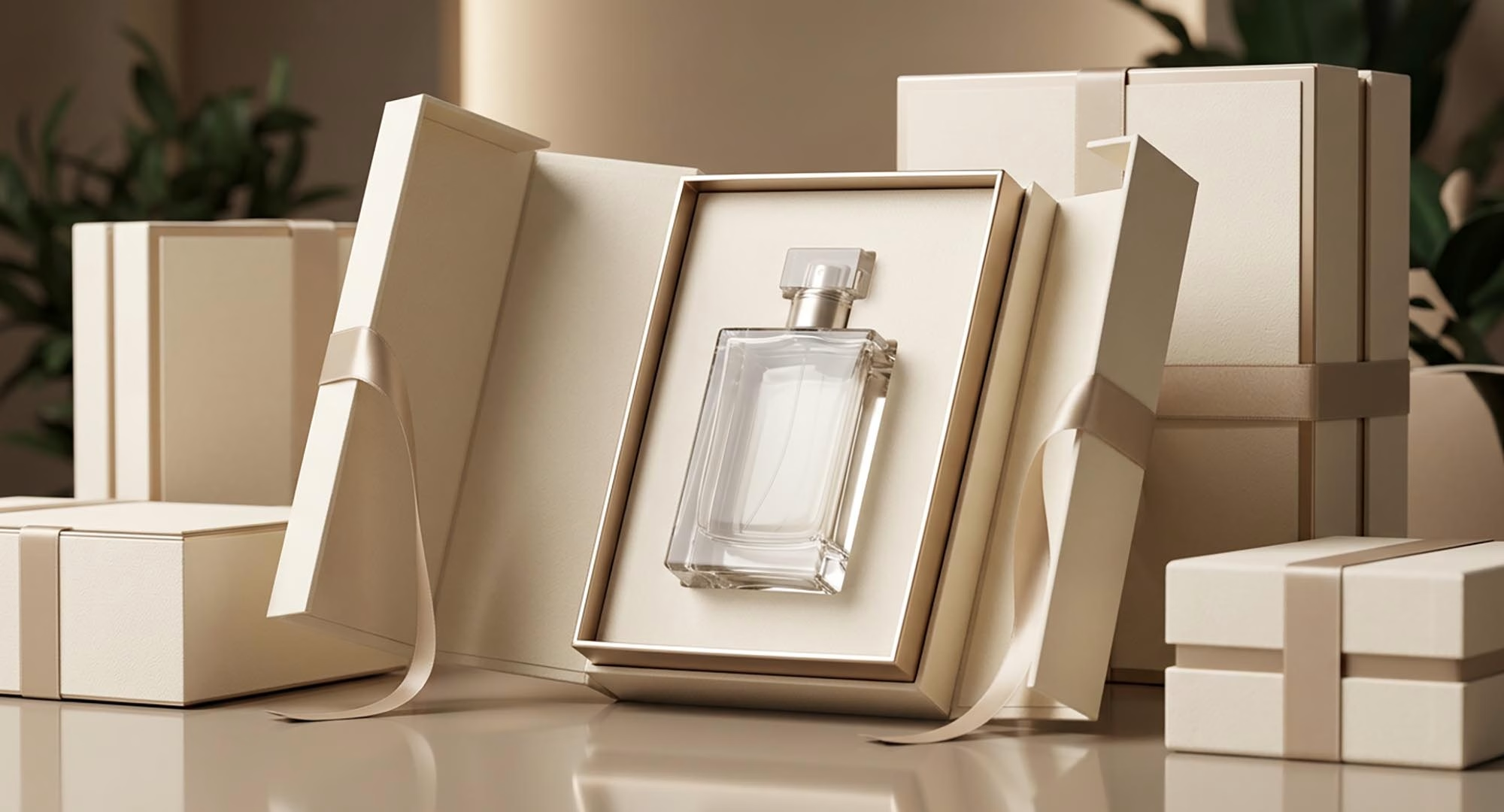
A quieter use of the route, and often the most profitable one.
Corporate buyers need a branded product by a fixed date for an event, a campaign or a seasonal giveaway. They are not building a fragrance brand and have no interest in a development timeline.
White label fits that requirement precisely. The scent exists, the components are in stock, and the only genuinely custom work is the printing.
Volumes tend to be modest and the packaging expectation is high, because the product is representing somebody else’s brand. Gift boxes, ribbons and inserts do a lot of the work.
Seasonal demand in this market is concentrated. Ramadan and Eid gifting drives the largest share, and buyers commit three to four months ahead of the window rather than weeks.
If a corporate order is your entry point, ask about the production cut-off date before you discuss anything else. It governs everything that follows.
The Risks Nobody Mentions

Three, and all are manageable if you know about them before you commit.
- Scent availability. A library composition can be discontinued. Ask what happens to your product if it is, and whether the factory will hold the formulation for you.
- Shared profile. A competitor may launch something that smells close. Brand and packaging become your defence, so invest there.
- Ingredient rules change over time. The International Fragrance Association publishes the standards most of the industry works to, and any reformulation should be flagged to you before it ships, not after.
None of these are reasons to avoid white label. They are reasons to ask three specific questions before signing.
When Should You Move to Private Label?
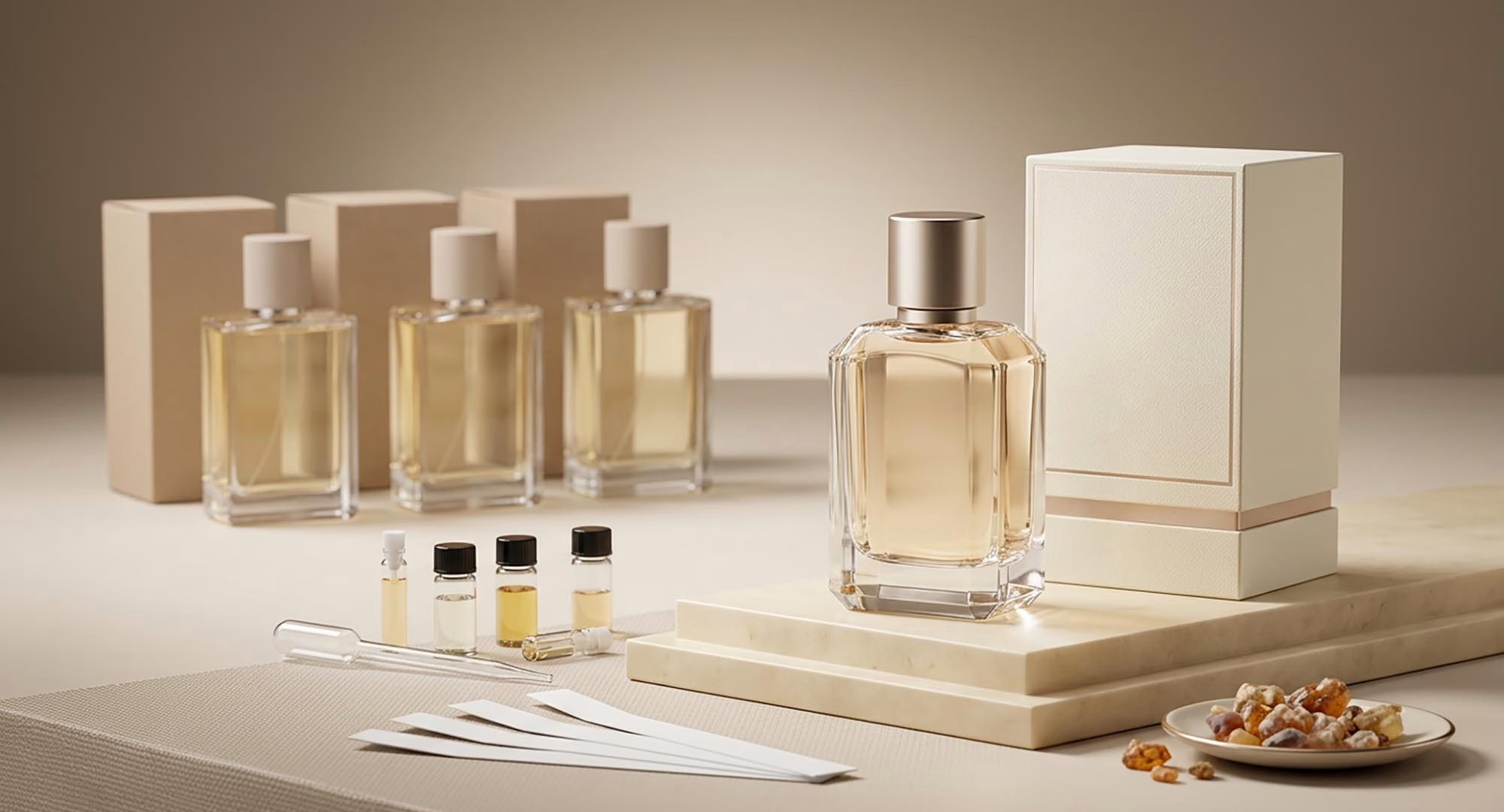
When the brand is proven and the scent has become the asset.
The signal is usually commercial rather than emotional. You are reordering consistently, you know your best seller, and you are now spending real money marketing a fragrance you do not control.
That is the point where exclusivity starts earning its cost. A custom formulation developed to your brief is yours alone, and nobody can undercut you with the identical product.
Many brands run both permanently. White label for entry-price and seasonal lines, private label for the signature range. There is no requirement to pick one.
The route is covered in full on the private label page.
Does White Label Hurt Your Brand?
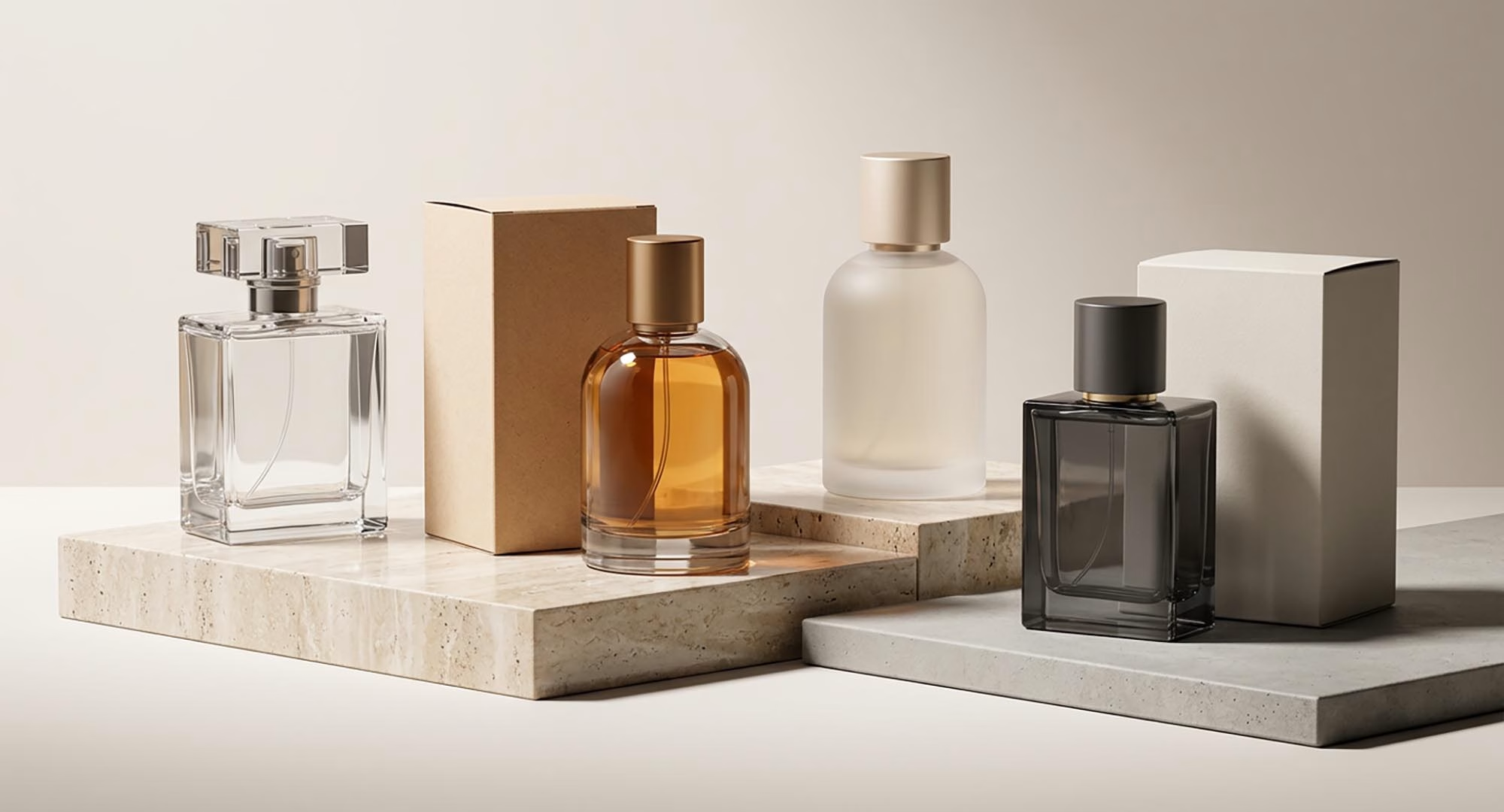
Only if your brand promise was the formula.
Most fragrance brands are not bought for their chemistry. They are bought for how they look, what they cost, how they are presented, and whether the customer likes the smell.
Stera Perfumes, a UAE label selling through its own store and regional marketplaces, is a reminder of how much of a fragrance brand lives in presentation and positioning rather than in the bottle.
Where honesty matters is in your claims. Describe the product accurately, avoid implying bespoke development you did not commission, and never suggest an association with a designer house.
Sell the product you actually have, confidently. That is a stronger position than an overstated one.
Choosing a White Label Perfume Manufacturer in UAE
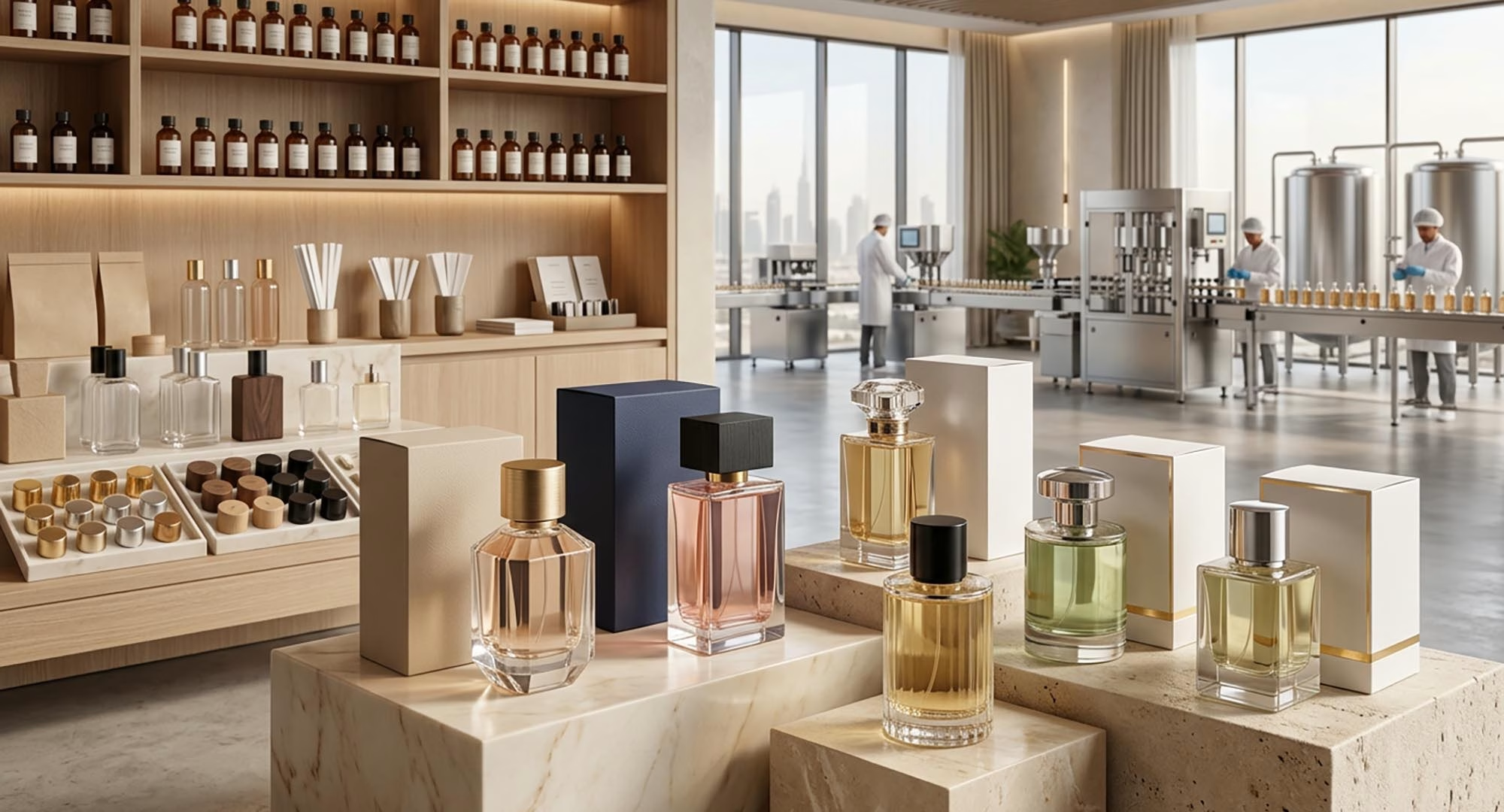
Judge the library and the packaging, in that order.
A wide scent range means you can find something genuinely right rather than settling. A deep component collection means the finished product can look like it belongs at your price.
IGOP has manufactured fragrance in the UAE for more than forty-five years and holds its own bottles, caps, boxes and decorative elements in-house, alongside perfumes, hair mists, body sprays, interior perfumes, candles and fragrance oils. The full range sits on the services page.
If you have a launch date and a price point, that is enough to start a conversation.
FAQ
What is a white label perfume manufacturer?
A factory that supplies an existing fragrance from its own library for you to sell under your brand. The scent is already developed and tested, so you choose from a range rather than commissioning something new. You control the bottle, packaging, concentration and volume, which is where most of the brand difference is created.
What is the difference between white label and private label perfume?
White label uses an existing factory fragrance that may also be sold to other buyers. Private label means a scent developed or reserved for you alone. White label is faster and cheaper to launch. Private label costs more and takes longer, but nobody else can sell the identical product.
How quickly can a white label perfume brand launch?
Six to eight weeks is realistic using stock bottles and boxes, with production itself taking seven to thirty days. The slowest step is usually artwork rather than anything the factory does, so brief a designer before you begin choosing scents.
Can I change the strength of a white label fragrance?
Yes. The composition is fixed but the concentration is adjustable, which changes how strong the scent is, how long it lasts and what it costs. Raising the concentration moves both the unit price and the shelf price, so decide it alongside your positioning rather than afterwards.
Will customers know my perfume is white label?
Not from the product. A great deal of fragrance sold in this region is white label and it is not something buyers ask about. What matters is that the scent suits your customer and the packaging matches the price. Just avoid claims about bespoke development you did not commission.
READY TO ELEVATE YOUR BRAND'S FRAGRANCE EXPERIENCE ?
READY TO ELEVATE YOUR BRAND'S FRAGRANCE EXPERIENCE ?
READY TO ELEVATE YOUR BRAND'S FRAGRANCE EXPERIENCE ?
Ready to Elevate Your Brand's Fragrance Experience ?
Partner with IGOP and transform your fragrance ideas into market-leading products. Our expertise, capacity, and commitment to quality ensure your vision is realized, exactly the way you want it. Your vision, your budget, our expertise.
