
Low MOQ Perfume Manufacturer in UAE: Small First Production Runs
What Is the Real Minimum Order for Perfume in the UAE?
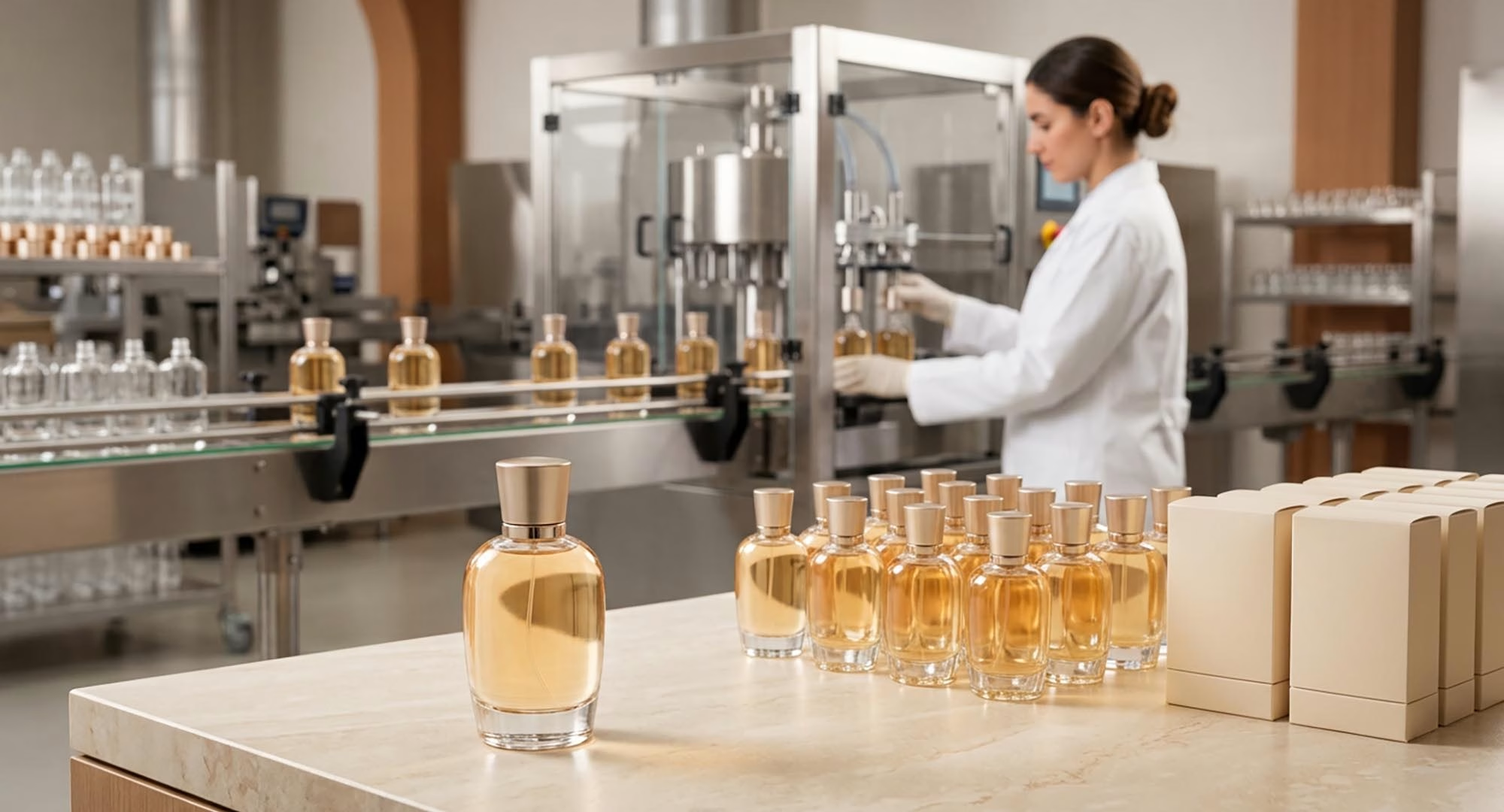
Around 1,000 units. Lower than most people are told.
This is the question that stops more new brands than any other, usually because the first quote they received came from a trading company rather than a factory.
IGOP produces from about 1,000 units upward, through to a million and beyond. A thousand bottles is a genuine first order, not a favour.
But the honest answer has a condition attached, and it is the part nobody explains properly.
Your minimum is decided by your packaging, not by your ambition. Two brands can approach the same factory on the same day and be quoted minimums that differ by a factor of ten.
Understanding why is the difference between a workable first run and a quote that ends the project.
Why Do Factories Set Minimums at All?
Not to be difficult. Because of setup.
Every production run carries fixed costs that happen once, no matter how many bottles come off the line.
- Line changeover. Equipment has to be cleaned down between products to avoid carrying scent across.
- Compounding setup. Weighing, mixing and quality checks take the same effort for a small batch as a large one.
- Component ordering. Suppliers of glass, caps and cartons have their own minimums.
- Print setup. A print run has a setup cost before the first label is produced.
Spread those across 200 bottles and the unit cost is absurd. Spread them across 1,000 and it starts to make sense.
That is the whole logic. A minimum is the point where the arithmetic stops working against you.
What Does a Low MOQ Perfume Manufacturer Actually Offer?
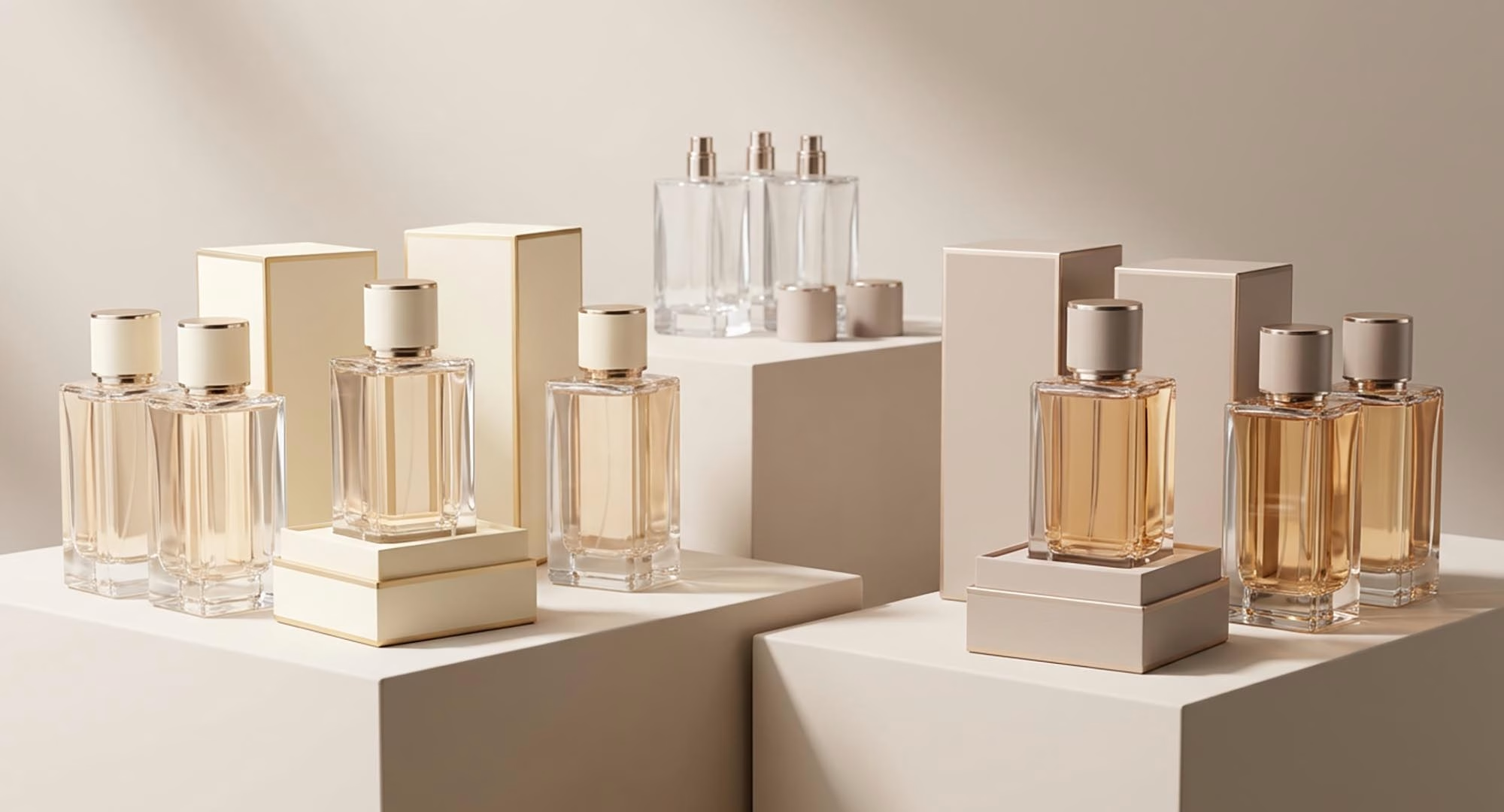
Flexibility on the things that drive setup cost.
A low MOQ perfume manufacturer is not simply a factory willing to lose money on small runs. It is one structured so that small runs are not expensive to produce.
- A stock component range. Bottles, caps and boxes held in-house rather than ordered per project.
- An existing scent library. Formulations already developed, so nothing has to be created from scratch.
- Label-based branding. Customisation through print rather than through moulded glass.
- Shared formats. The same bottle serving many customers, which keeps component costs low for all of them.
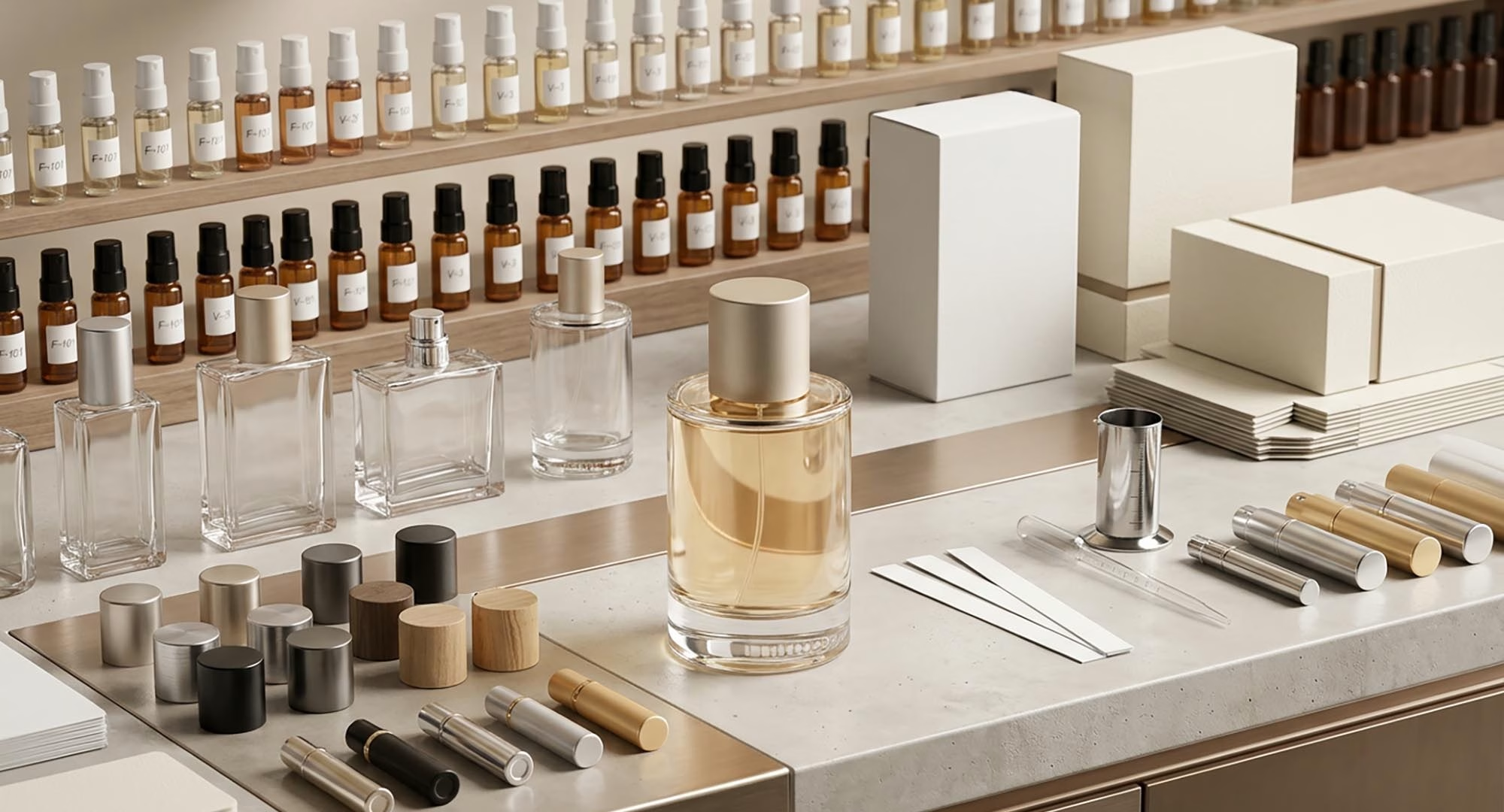
IGOP holds its own bottles, caps, boxes and decorative elements. That is the mechanism behind a workable minimum, and it is worth asking any supplier whether they do the same.
What Pushes Your Minimum Up
Four things, in rough order of impact.
- A custom bottle mould. The biggest single driver. Tooling costs tens of thousands and only justifies itself across very large volumes.
- A bespoke box construction. Custom die-cutting carries its own setup, though far less than glass.
- Bespoke fragrance development. The formulation work has a cost that has to sit somewhere.
- Unusual decoration. Multiple finishing passes each add a setup.
Notice what is not on that list. Wanting a good product is free. It is wanting a uniquely shaped product that raises the floor.
What Keeps Your Minimum Down
The mirror image, and all of it is available to a first-time brand.
- Stock bottles and caps. Choose from what the factory already holds.
- A library fragrance. Select rather than commission. Exclusivity can come later.
- A printed label or a single-pass print on glass. Distinctive without being expensive.
- A standard carton size. Boxes are cheap to brand and expensive to reinvent.
A product built entirely from those four choices can still look excellent. Most customers cannot tell a stock bottle from a bespoke one, and none of them are checking.
What they notice is whether the product looks like it belongs at the price you are asking.
The Mould Question
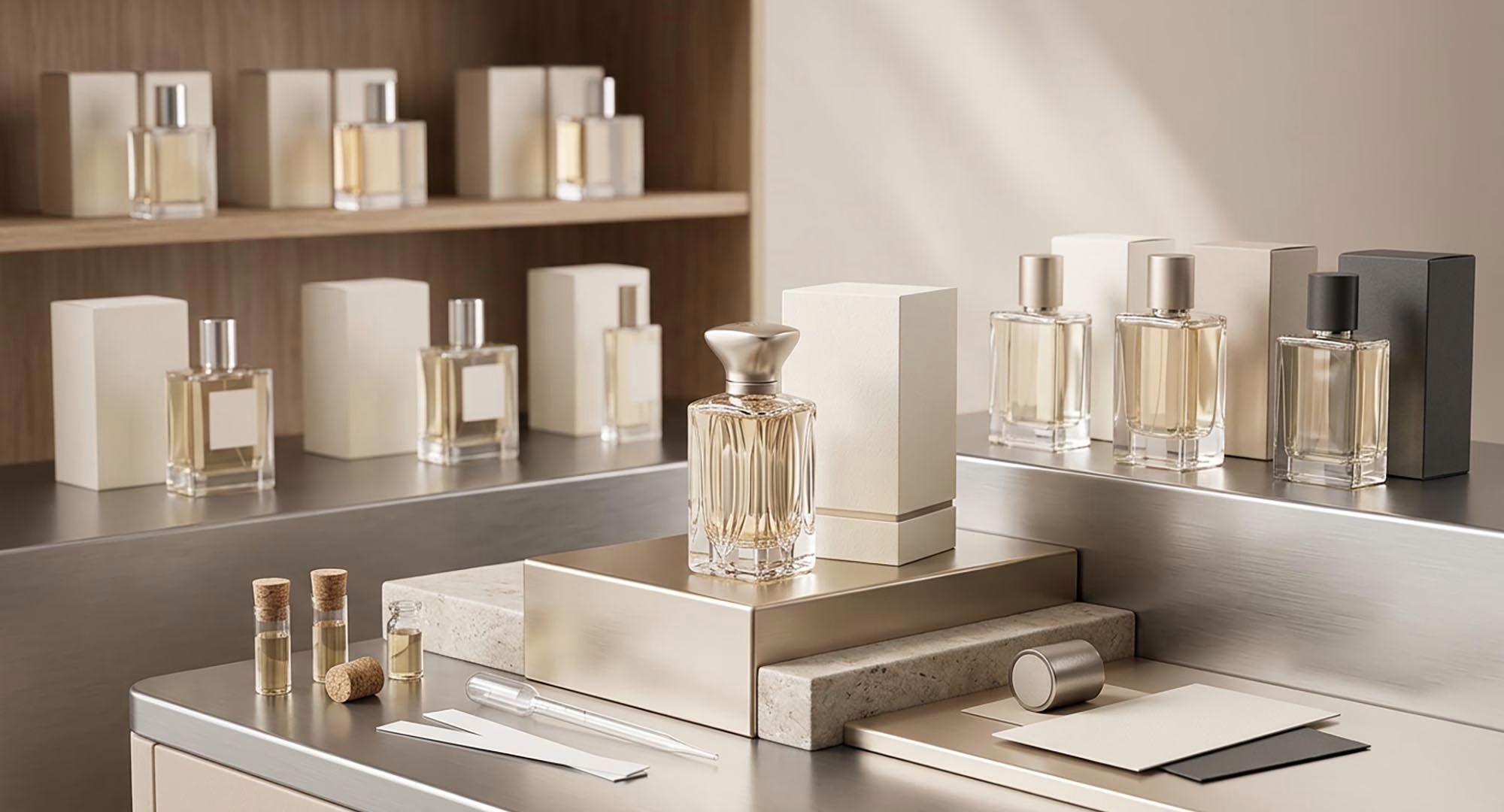
Worth its own section, because it is where most inflated minimums come from.
A custom glass bottle requires a mould. Somebody has to pay for that tooling, and it is not a small number.
A factory quoting you a very high minimum is often quoting the volume needed to absorb a mould you never asked for. Ask directly whether the quote assumes custom glass.
There is a middle path that brands overlook. Take a stock bottle shape and make it yours through cap choice, colour, decoration and box design. The silhouette is shared. Nothing else has to be.
If you do eventually commission a mould, settle who owns it. Whoever paid for the tooling usually controls it, and that control decides how easily you can move factories later.
Is 1,000 Bottles Actually a Lot?
It sounds like a lot in a spreadsheet. It behaves differently in a shop.
A retail kiosk selling five units a day clears a thousand bottles in under seven months. A marketplace listing with modest traction does it faster.
A brand supplying three stockists, each taking a small monthly order, moves through a first run within a year without anything remarkable happening.
Set against that, a thousand units is roughly a year of inventory for a cautious launch. That is a sensible amount to hold, not a reckless one.
The number only looks frightening if you imagine selling it all yourself, one bottle at a time, from a standing start.
What a First Run Really Costs You
More than the invoice, and the extras are predictable.
What the Factory Charges For
The unit price is the visible number. Three others arrive alongside it and should be quoted upfront.
Sampling during development. Artwork, which someone must produce as print-ready files at the correct dimensions for curved glass. Delivery to wherever the stock is going.
What Nobody Quotes You
Then the costs that are yours rather than the factory’s. Photography, listing fees, retail margin and whatever you spend getting anyone to notice the product exists.
Budget the marketing before you order the stock. A warehouse full of perfume nobody has heard of is the most common way a first run goes wrong.
Ordering Too Few Is Also a Mistake
The opposite error, and it is quieter.
Below a few hundred units, the per-bottle cost rises to a point where your retail price stops being competitive. You end up with an expensive product you cannot price properly.
There is a second problem. A tiny run gives you no room to supply a stockist who wants a trial order, no testers and no stock left when something sells better than expected.
Running out early is worse than it sounds. A retailer who sells through and cannot reorder quickly will give the shelf space to somebody else.
The Units You Forget to Count
- Fragrance sells by being smelled. Every retail point needs one, and they get used up.
- Samples for stockists. Buyers want product in hand before they commit to shelf space.
- Press, influencers and gifting. Whatever your launch plan involves, it consumes stock.
- Damages and returns. Small, but never zero.
How Fast Can You Reorder?
Faster than the first run, which changes how you should think about all of this.
- Confirm the repeat. Same formula, same components, same artwork.
- Check component stock. Bottles and caps from the standing range are immediate.
- Reprint if needed. Labels and cartons to the printer’s schedule.
- Seven to thirty days depending on volume.
- Straight back to you or your stockist.
Because the specification and artwork already exist, a reorder is essentially production time. That makes shallow and frequent a viable strategy rather than a compromise.
Start your second order while the first is still selling well, not after it has run out.
Red Flags When a Minimum Sounds Too Good
Very low minimums are sometimes real and sometimes a warning.
- No factory address. If nobody will say where production happens, you are talking to an intermediary.
- No pre-production sample. Any supplier unwilling to show you a complete finished unit should be avoided.
- Vague component descriptions. A cap should be specified by part, not described as gold.
- No answer on reorders. A supplier who can do 200 units once may not be able to do it again.
- Silence on fragrance safety. The International Fragrance Association publishes the standards most of the industry formulates against, and a factory should be able to explain how it applies them.
A genuine low minimum comes from stock components and an existing library. If neither is being offered, ask how the number is possible.
Should You Split a First Run Across Two Scents?
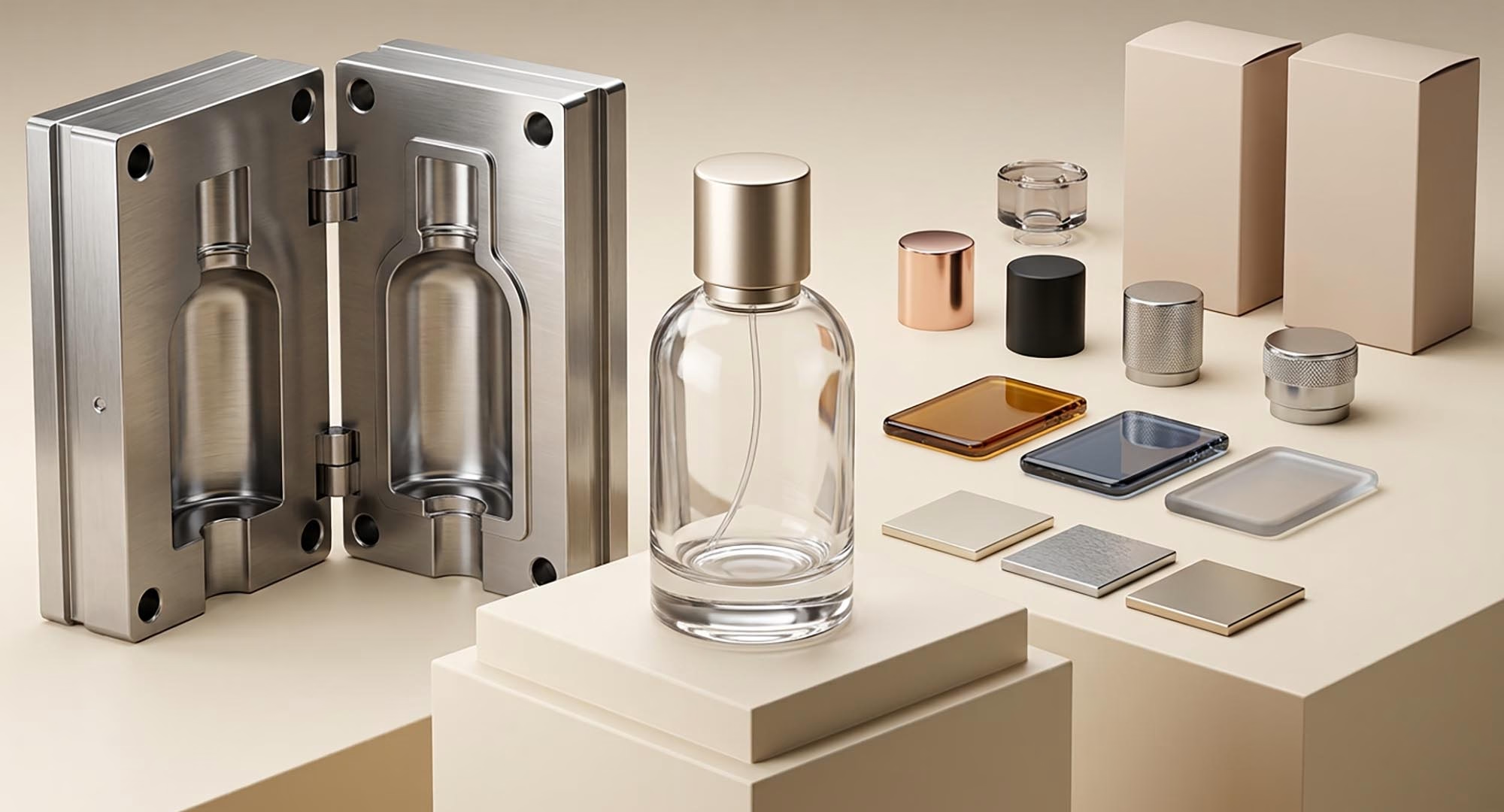
Often yes, and it is the question most new brands get wrong.
Two scents at 500 units each teaches you far more than one scent at 1,000. You learn which direction your customer actually prefers, which is information worth having before your second order.
The catch is component cost. Splitting only works economically if both products share the same bottle, cap and carton, with the difference living in the juice and the label.
Ask the factory whether a split run is possible at your quantity before you assume it. Some will, some will treat it as two separate runs.
Growing Past the First Order
The path is usually the same, and knowing it helps you plan the first step.
Run one proves the concept with stock components and a library scent. Run two deepens the quantity once you know what sells. Run three is where exclusivity starts to earn its cost.
That is the point to consider a custom formulation, and eventually custom glass, because by then you are spending real money marketing a product you want to own outright.
Al Bait Al Dimashqi, a UAE perfume label now distributing across the Gulf, is a reminder that most established brands began with a single modest run.
The private label route covers what that step involves, and the white label page explains the faster starting point.
Choosing a Low MOQ Perfume Manufacturer in UAE
Ask one question and listen carefully to the shape of the answer.
Ask what your minimum would be with your specific packaging choices. A supplier that answers with a range and an explanation understands the work. One that repeats a single headline figure is quoting its convenience.
A serious low MOQ perfume manufacturer will also tell you when a small run is the wrong idea, which is a better sign than one that agrees to everything.
IGOP has manufactured fragrance in the UAE for over forty-five years, producing from around 1,000 units upward across perfumes, hair mists, body sprays, interior perfumes, candles and fragrance oils, with components held in-house. The full range is here.
Bring your packaging idea and your target shelf price, and the number becomes a real conversation.
FAQ
What is the minimum order for private label perfume in the UAE?
Around 1,000 units at most established factories, including IGOP. The figure depends heavily on your packaging rather than the factory’s preference. Stock bottles, caps and boxes with a printed label keep the minimum at that level, while a custom-moulded bottle can raise it dramatically because of tooling costs.
What is a low MOQ perfume manufacturer?
A factory structured so that small production runs are genuinely economical, usually by holding its own stock range of bottles, caps and boxes and maintaining an existing library of fragrances. Without those two things, small runs carry setup costs that make the per-bottle price uncompetitive.
Can I order fewer than 1,000 bottles of perfume?
Sometimes, but it is rarely wise. Below a few hundred units the setup costs push your unit price to a level where you cannot price the product competitively at retail. You also have no room for testers, stockist samples or a sell-through faster than expected.
Why do some perfume factories quote very high minimums?
Usually because the quote assumes a custom bottle mould. Tooling for bespoke glass is expensive and only makes sense across large volumes, so the minimum reflects the quantity needed to absorb it. Ask directly whether the quote is based on custom glass, then ask what a stock bottle would change.
How quickly can I reorder after my first production run?
Much faster than the first run took, because the formula, components and artwork already exist. Allow seven to thirty days of production depending on volume, plus print time if labels or cartons need reprinting. Start the reorder while stock is still selling rather than once it has gone.
READY TO ELEVATE YOUR BRAND'S FRAGRANCE EXPERIENCE ?
READY TO ELEVATE YOUR BRAND'S FRAGRANCE EXPERIENCE ?
READY TO ELEVATE YOUR BRAND'S FRAGRANCE EXPERIENCE ?
Ready to Elevate Your Brand's Fragrance Experience ?
Partner with IGOP and transform your fragrance ideas into market-leading products. Our expertise, capacity, and commitment to quality ensure your vision is realized, exactly the way you want it. Your vision, your budget, our expertise.
