
Contract Perfume Manufacturing Company in UAE: Third-Party Production
What Is Contract Perfume Manufacturing?
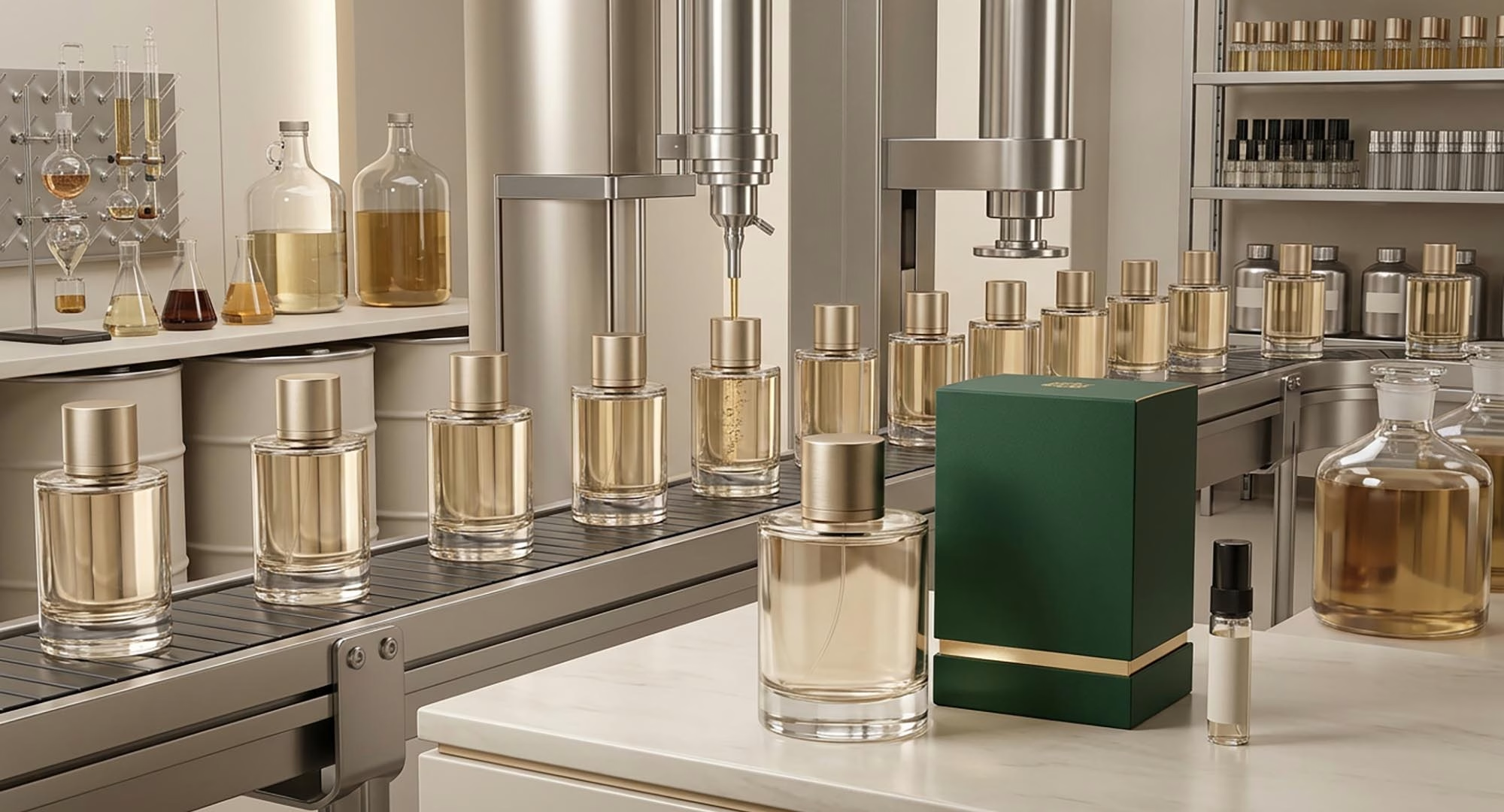
Production to your specification, under your brand, in someone else’s factory.
The distinction that matters is ownership. In contract perfume manufacturing, the formula, the artwork and usually the packaging specification already belong to you. The factory supplies capacity and process.
That is different from private label, where the factory develops or supplies the scent and you brand the result. Different again from white label, where an existing product is relabelled.
If you are still deciding which route fits, the private label guide covers the other two in detail.
Contract manufacturing suits brands that already know what their product is. The question is no longer what to make. It is who can make enough of it, reliably, at the right cost.
When Does a Brand Move to Contract Perfume Manufacturing?
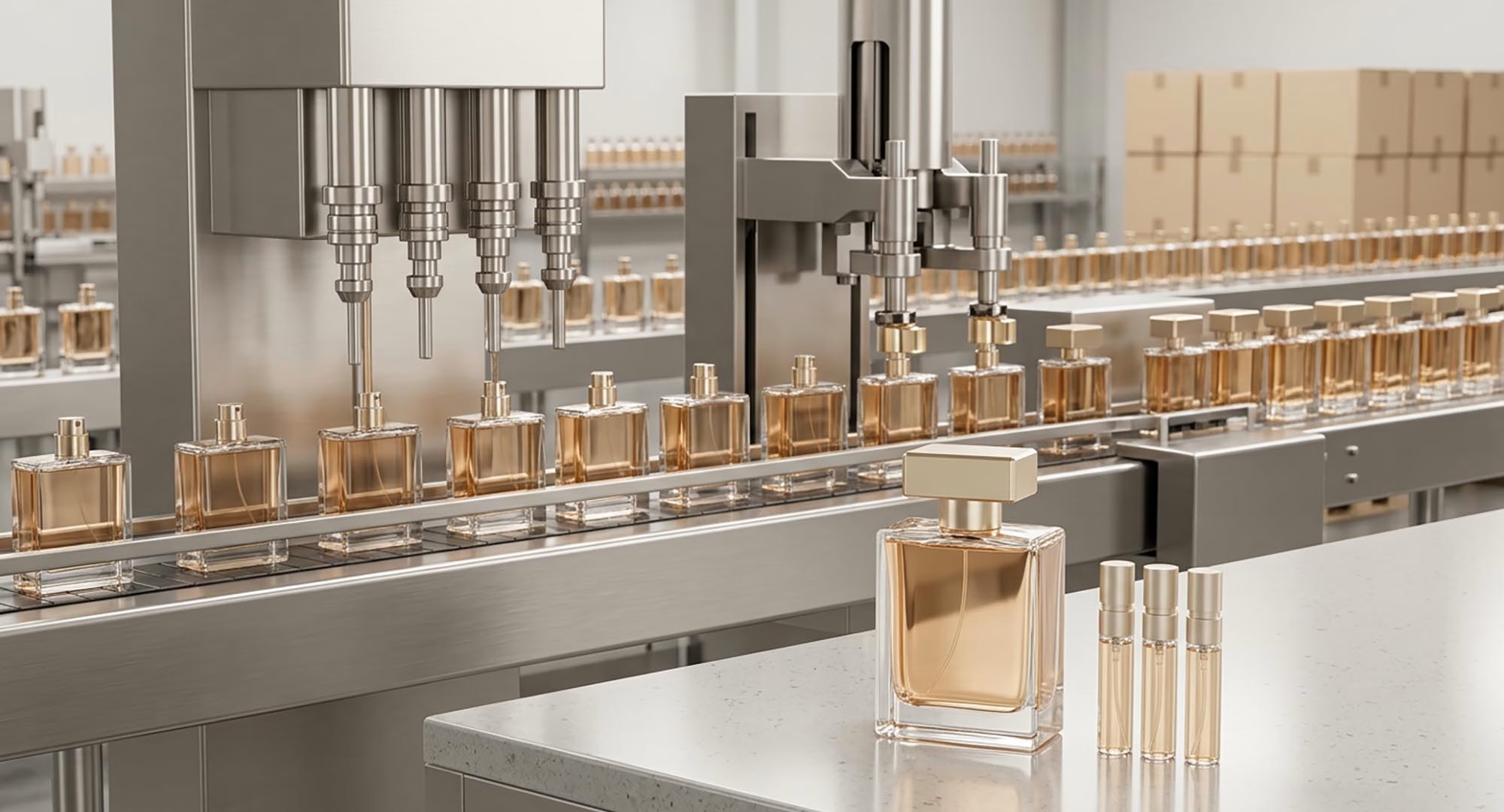
Usually at one of four moments. None of them are comfortable.
- Outgrowing a supplier. Your volumes have passed what the current factory can absorb without your deadlines slipping.
- A quality drift. Batches stopped matching. Customers noticed before you did.
- A commercial breakdown. Price rises, ownership changes, or a supplier that has started serving a competitor.
- Bringing production closer. Freight, lead times and tariffs have made distant manufacturing less attractive than it looked.
The fourth has become the common one. Brands that manufactured far from their market are recalculating what a twelve-week shipping window actually costs them in tied-up cash.
Whatever the trigger, the brief is the same. Replicate what we already sell, do it consistently, and do not make our customers notice the change.
What Does Production Capacity Actually Mean?
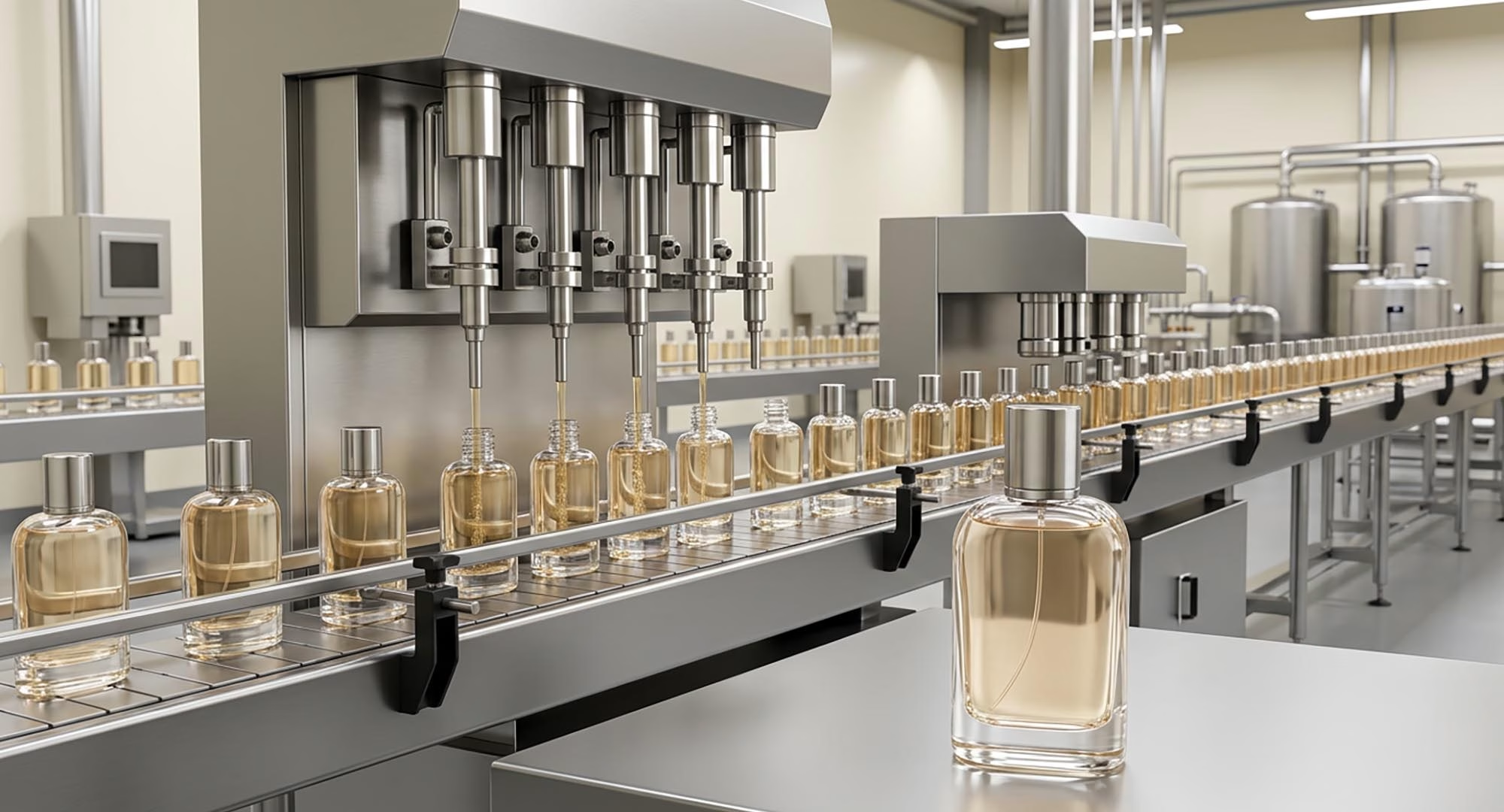
It is a more useful question than it sounds, because capacity is quoted in ways that hide the real constraint.
Daily Output and Order Range
IGOP runs a 16,000 square foot plant in Ajman Industrial Area 1, with output up to around 15,000 bottles a day and orders from roughly 1,000 units to a million and beyond.
Those two figures matter together rather than separately. A high daily ceiling is only useful if the factory will also take your smaller runs without penalising you.
Ask for both numbers. A supplier that answers only the big one is telling you what it wants, not what you need.
The Reorder Question
First orders get attention everywhere. Reorders are where factories separate.
Once the formula is on file and the artwork is approved, a repeat run should be production time alone. Seven to thirty days at IGOP, depending on volume and decoration.
Ask specifically what a reorder looks like in a busy month, because that is the month you will need one.
Who Owns the Formula, the Mould and the Artwork?
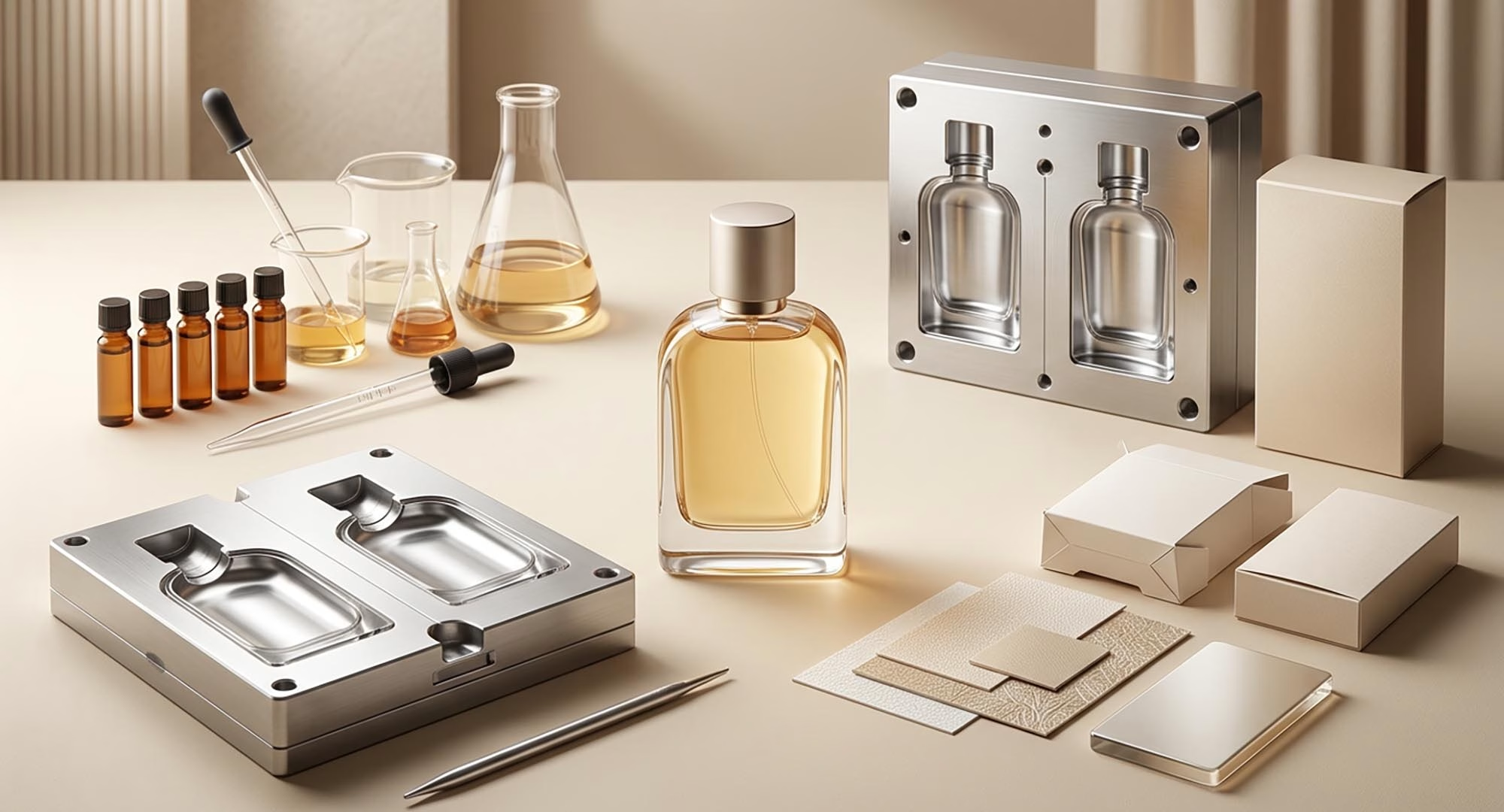
Settle this before the first sample, not after the first success.
Three assets get created or transferred in a contract manufacturing relationship, and each can be held differently.
- The formula. If you arrived with it, it stays yours. If the factory adjusted it to work on their line, ask who owns the adjustment.
- The mould. Custom glass requires tooling. Whoever paid for it usually controls it, and that control decides how easily you can move.
- The artwork. Print-ready files should sit with you, in an editable format, not only with the printer.
Brands discover these terms at exactly the wrong moment, which is the day they want to leave. A supplier confident in its work will put the answers in writing without hesitation.
How Do You Move Production to a New Factory?
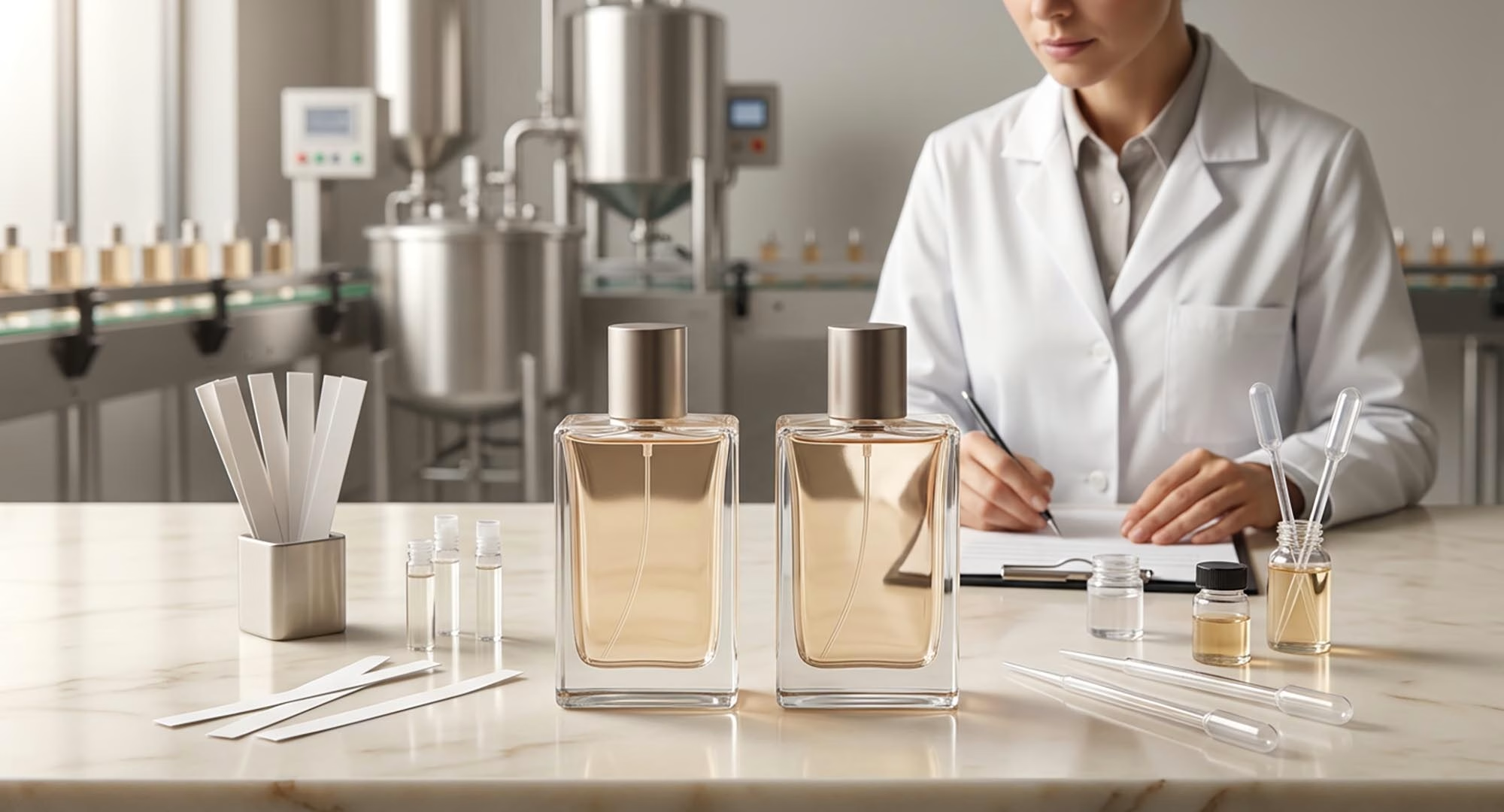
Seven steps. The first two decide whether the rest go smoothly.
- Benchmark what you have. Send the current product, sealed and unopened, as the reference. Not a description of it.
- Get a matching sample. A capable factory can reverse-engineer a fragrance closely. Smell the result blind against the original.
- Check the packaging fit. Your existing bottle may not run on a different line without adjustment.
- Agree ownership terms. Formula, mould and artwork, in the contract rather than the email thread.
- Run a small parallel batch. Produce a limited run at the new factory while the old supply is still flowing.
- Compare after four weeks. Fragrance changes as it settles. A sample that matched on day one may not match on day thirty.
- Switch once, cleanly. Do not run two suppliers on the same product longer than you must. Batch variation is how brands lose customers quietly.
The step brands skip is the sixth. It is also the one that catches the problems, because a fragrance that matched perfectly in the meeting room can move noticeably once it has sat in the bottle for a month.
What Does Contract Perfume Manufacturing Cost?
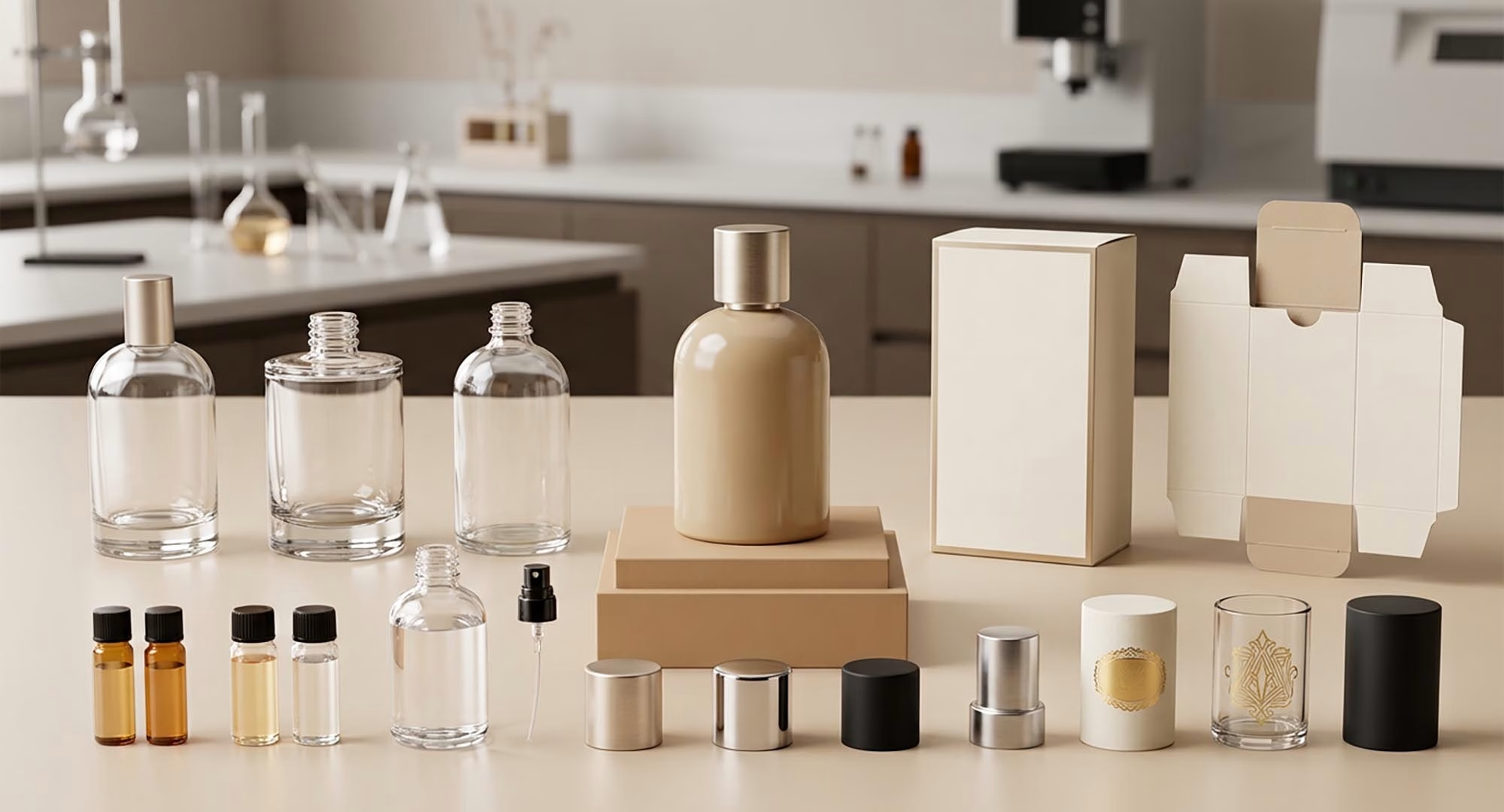
Less than most brands assume at volume, and the savings arrive from a direction they did not expect.
At contract volumes, the fragrance oil stops being the dominant line. Packaging and logistics take over.
Where the Money Actually Goes
- Bottle, cap, sprayer and box. Typically the largest share of a finished unit at scale.
- Oil and alcohol. Significant, and controllable through concentration and grade.
- Every finishing pass on the glass is a separate operation with its own cost.
- Filling and labour. Smaller than most brands expect once volumes rise.
- The line that manufacturing close to your market quietly removes.
This is why sourcing components and filling in one place changes the maths. Handling packaging in-house removes a margin layer and a handover, and both show up in the unit price.
What Should Be in the Agreement?

Six clauses do most of the protective work. None of them are unusual to ask for.
- Whether your formula can be sold or adapted for anyone else, and for how long.
- Batch tolerance. How much variation is acceptable between runs, and what happens when a batch falls outside it.
- Lead times. Stated in the contract rather than agreed order by order, so a busy month does not become your problem.
- Price validity. How long a quoted unit price holds, and what triggers a revision.
- Notice period. How much warning each side gives before ending the arrangement.
- Exit terms. Who holds the formula, the mould and the artwork if you leave.
Brands often skip this stage because the first conversation went well. That is precisely why it is easy to do now. Nobody negotiates well after a problem.
A supplier that resists putting any of this in writing has told you something important, and it is cheaper to learn it at this stage than two years in.
What Goes Wrong, and How to Prevent It
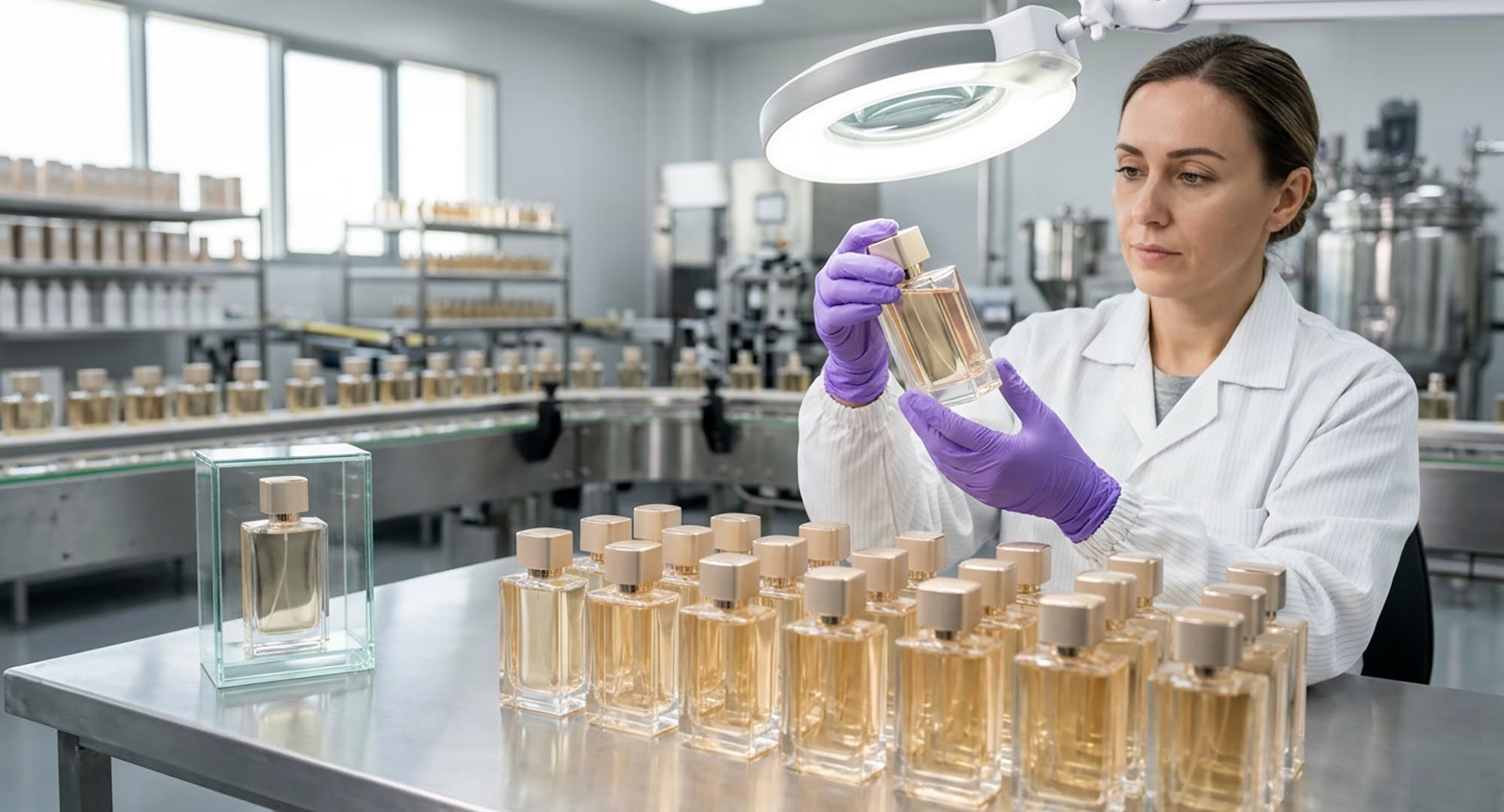
Four failures account for most unhappy contract relationships.
- Batch drift. Small formulation changes accumulate. Prevent it by keeping a sealed reference sample from the approved batch and checking new production against it.
- Component substitution. A cap supplier changes and nobody mentions it. Specify components by part, not by description.
- Capacity crowding. Your run gets scheduled behind a larger client. Agree lead times in the contract, not per order.
- Regulatory surprises. Ingredient rules differ by market. The International Fragrance Association publishes the standards most manufacturers formulate against, and your factory should be able to explain how it applies them.
None of these are exotic. They are all foreseeable, which means they are all preventable in a contract.
How Much Should You Order on the First Run?
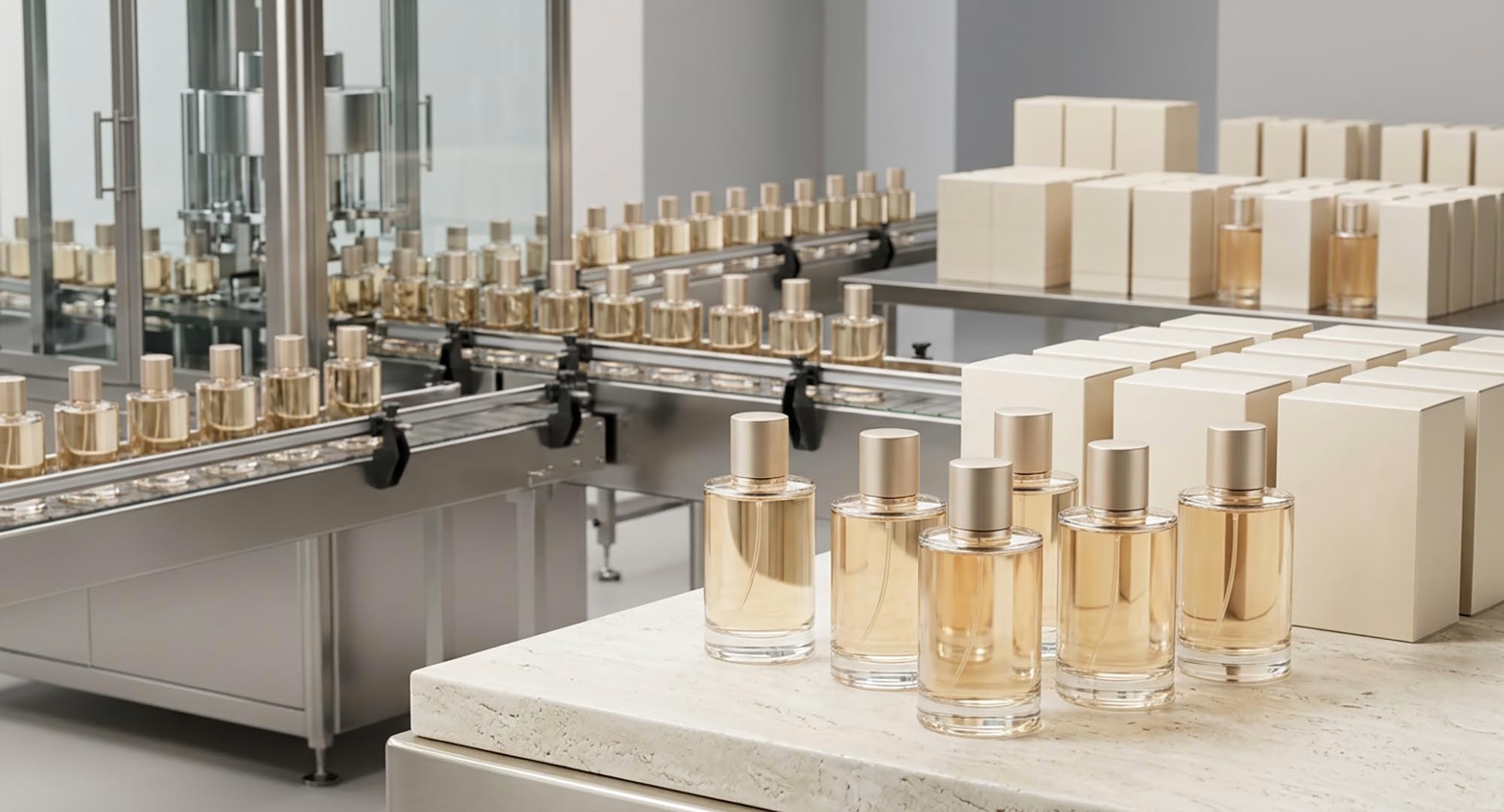
Less than your confidence suggests. More than your caution wants.
The temptation at contract volumes is to order deep, because the unit price keeps falling as quantity rises. That maths is real, and it has sunk a lot of brands.
A first run at a new factory is a test of the relationship as much as the product. You are checking consistency, communication and whether the stated lead time survives contact with a busy week.
Order enough to prove the economics and to cover the sales window you can actually forecast. Not a year of stock at a price that looked irresistible on a spreadsheet.
There is a cash argument too. Fragrance does not spoil quickly, but stock sitting in a warehouse is money you cannot spend on the marketing that moves it.
The brands that scale smoothly tend to order shallow and often at first, then deepen once the supplier has proved itself across three or four cycles.
Contract Manufacturing Is Not a Fragrance House
Worth stating plainly, because the two get confused during supplier searches.
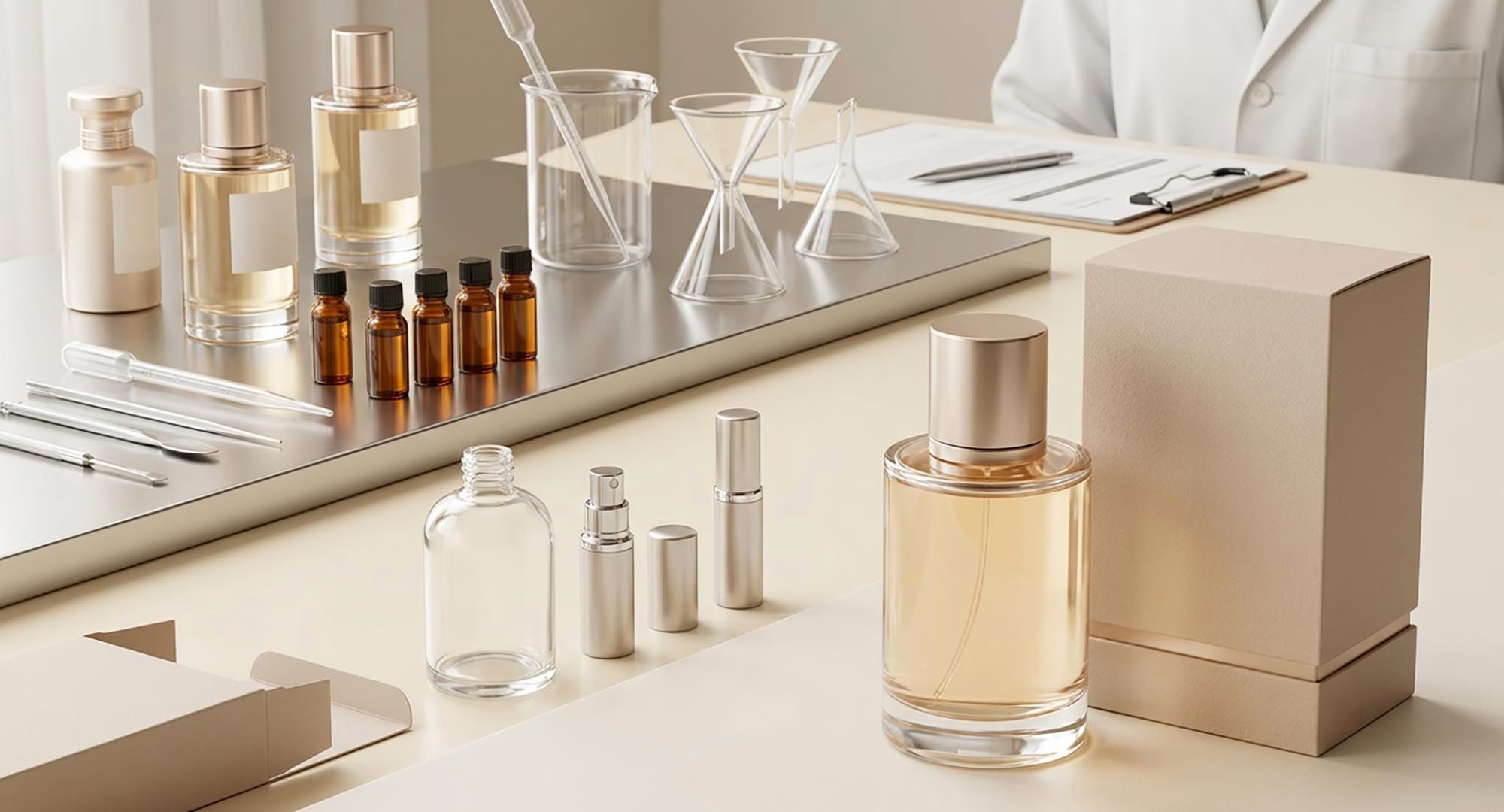
A fragrance house creates and sells scent compositions. It does not fill your bottles, source your boxes or palletise your stock.
A contract manufacturer produces finished, saleable units. Some, IGOP included, also supply fragrance oils in bulk to other producers, which is a separate service rather than the same one.
If a supplier quotes you per kilo of oil, you are talking to a fragrance house. If it quotes per finished bottle, you are talking to a manufacturer. The confusion costs brands weeks.
Choosing a Contract Perfume Manufacturing Partner in UAE
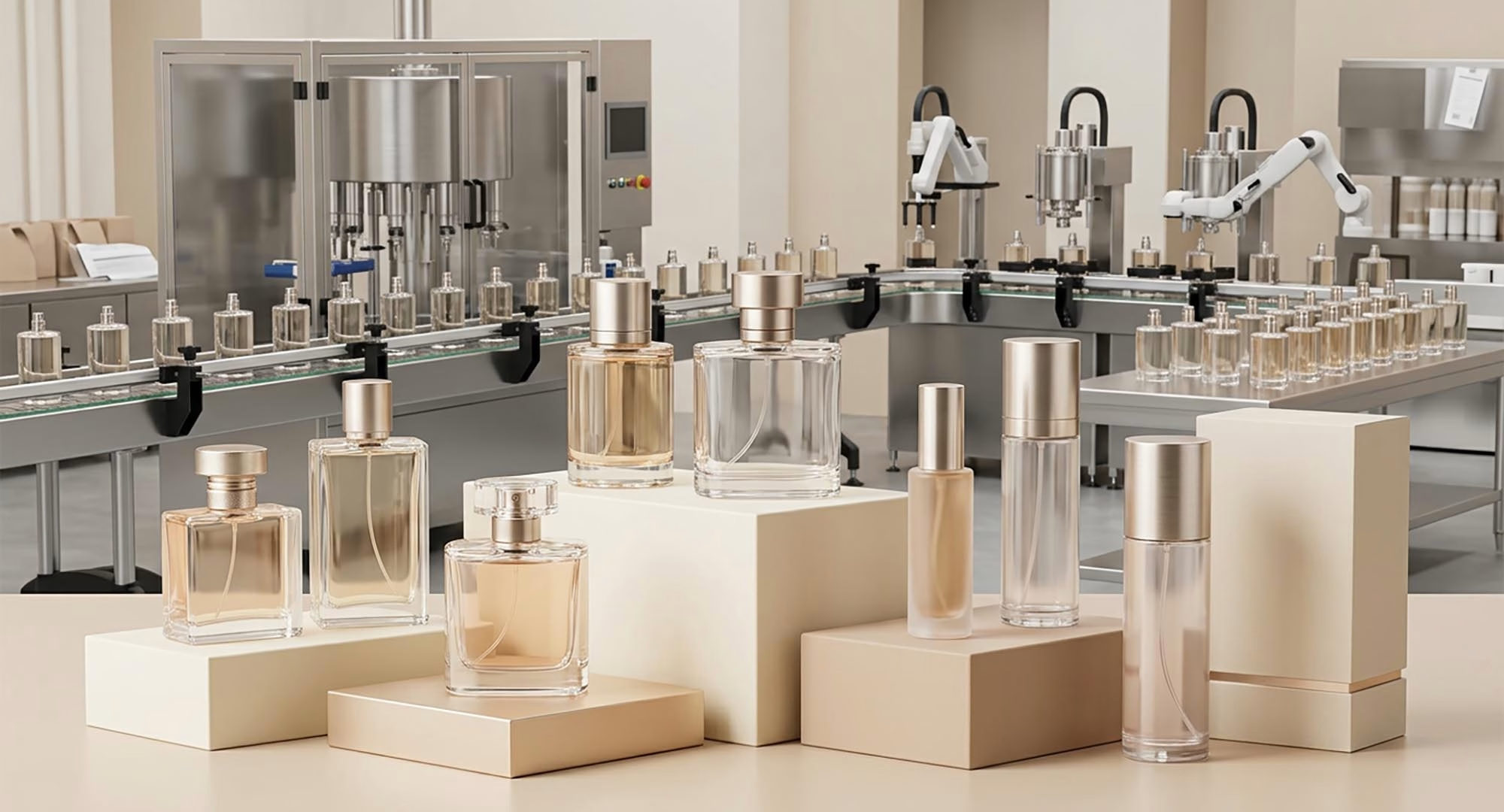
Judge the factory on the boring things. Consistency, communication and what happens when something goes wrong.
Anyone can produce a good first batch. The relationship is tested on the fourth, in a month when the plant is busy and your retailer has moved a deadline.
The UAE supply chain helps here. Oils, glass, caps and print all sit within a short drive of the northern emirates, which is why a component problem is a two-day conversation rather than a two-month one.
Established regional brands work this way routinely. Al Bait Al Dimashqi, a UAE perfume label selling across the Gulf, is one example of a brand operating at that kind of distribution scale.
IGOP has produced fragrance in the UAE for over forty-five years across perfumes, hair mists, body sprays, interior perfumes, candles and fragrance oils. The full capability list is on the services page, and a production conversation is the sensible first step.
FAQ
What is contract perfume manufacturing?
Production of a fragrance to your own specification, under your brand, in a third-party factory. You supply or own the formula and the factory supplies capacity, filling, packaging and finishing. It differs from private label, where the factory develops or provides the scent and you brand the finished result.
Can a contract manufacturer match our existing fragrance?
product closely enough that customers do not notice a change. Send a sealed sample of the current product rather than a description, and compare the match again four weeks later, because fragrance settles and a day-one match can drift.
What minimum order does contract perfume manufacturing need?
It varies widely by factory. IGOP takes orders from around 1,000 units up to a million and beyond, which covers both a cautious trial batch and full production. Ask any supplier for its minimum and its maximum, since a factory geared only for very large runs will treat smaller orders as an inconvenience.
Who owns the formula in a contract manufacturing agreement?
That depends entirely on the contract, which is why it should be agreed before the first sample. If you arrive with a formula it normally stays yours, but any adjustment made by the factory to run it on their equipment can be treated differently. Custom bottle moulds follow whoever paid for the tooling.
How long does it take to switch perfume manufacturers?
Allow two to three months end to end. Matching the fragrance takes a few weeks of samples, ownership terms take time to agree, and a sensible transition includes a small parallel batch before you commit fully. Production itself is the short part, at roughly seven to thirty days.
READY TO ELEVATE YOUR BRAND'S FRAGRANCE EXPERIENCE ?
READY TO ELEVATE YOUR BRAND'S FRAGRANCE EXPERIENCE ?
READY TO ELEVATE YOUR BRAND'S FRAGRANCE EXPERIENCE ?
Ready to Elevate Your Brand's Fragrance Experience ?
Partner with IGOP and transform your fragrance ideas into market-leading products. Our expertise, capacity, and commitment to quality ensure your vision is realized, exactly the way you want it. Your vision, your budget, our expertise.
