
Private Label Perfume Manufacturer in the UAE: From Concept to Packed Bottle
What Does a Private Label Perfume Manufacturer in UAE Actually Do?
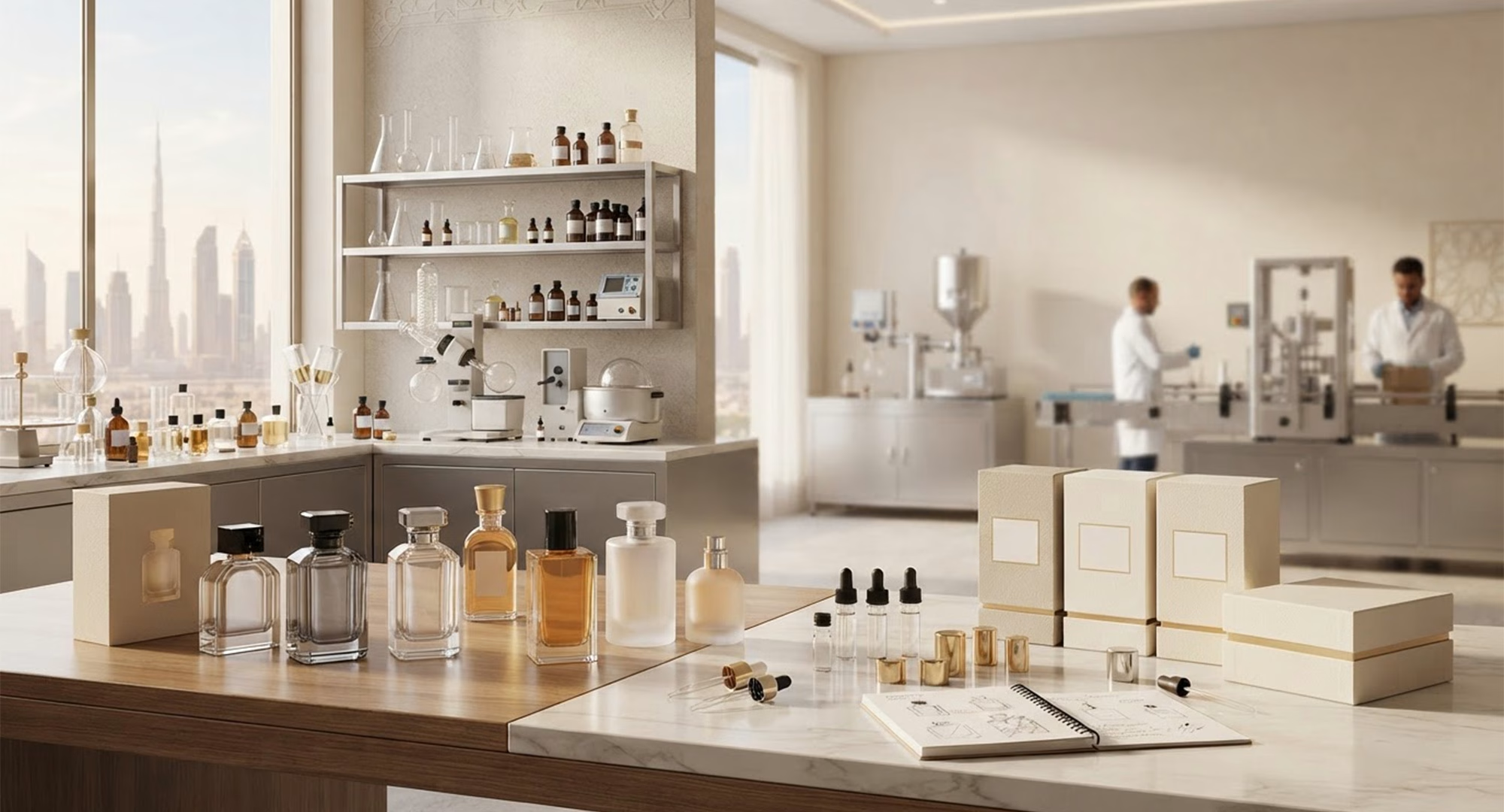
Everything between your idea and a sealed carton.
You bring a brand. The factory brings the perfumers, the bottles, the caps, the boxes and the people who fill them. Your name goes on the front. Their process sits behind it.
That is the short version. The longer version explains why most first-time brand owners underestimate the job.
A finished perfume is not one product. It is a scent, a bottle, a cap, a sprayer, a label, a box and a shipping carton. Source that yourself and you are managing seven suppliers. Use a private label perfume manufacturer in UAE and you are managing one.
Private Label, White Label and Contract Manufacturing Are Not the Same Thing
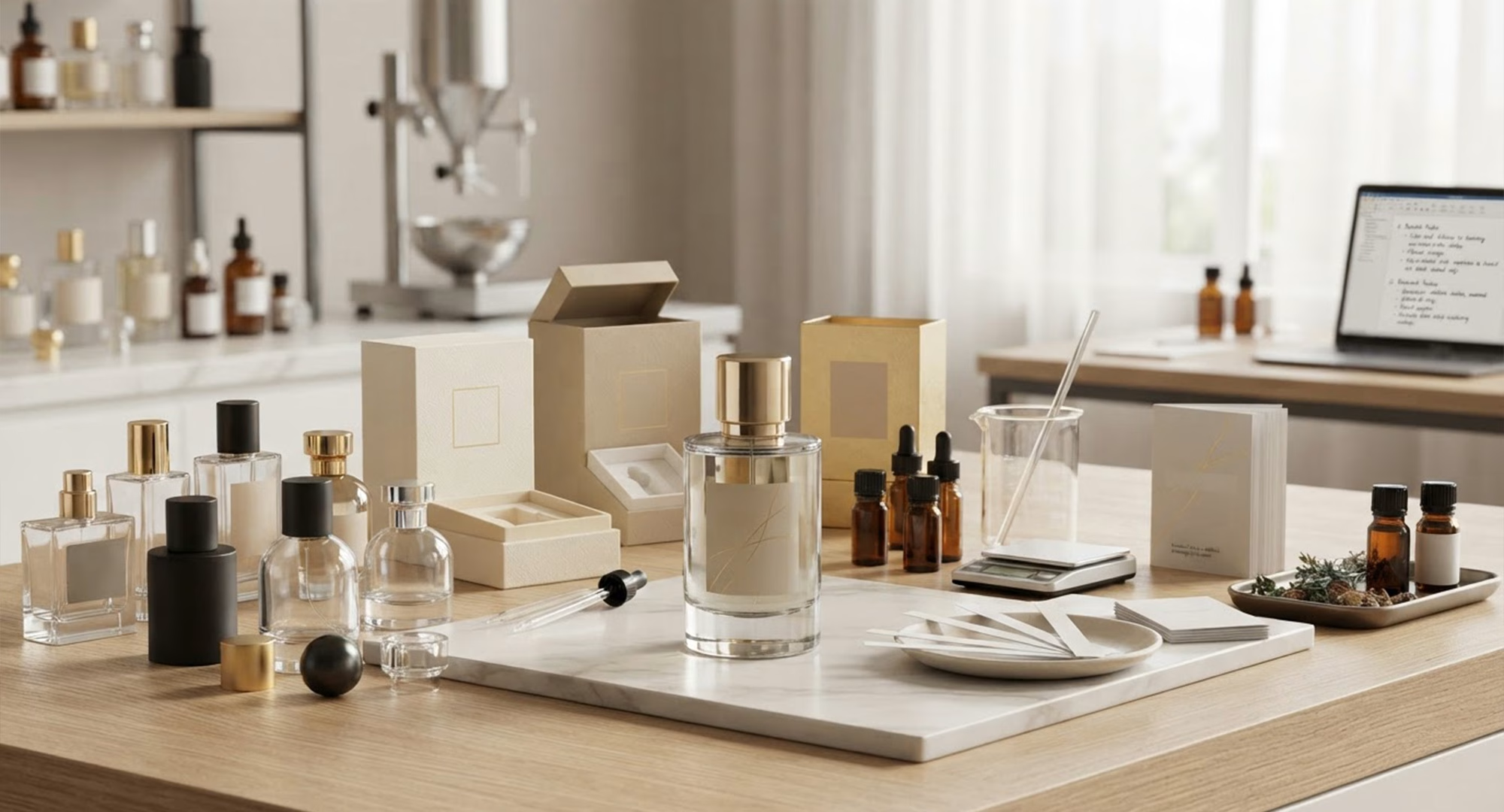
The three terms get used interchangeably. They should not be, because each one carries a different price and a different risk.
- Private label. A scent developed or chosen for you, packaged as your brand, and not offered to anyone else. Most new brands start here.
- White label. An existing fragrance from the factory library, put into your bottle under your name. Faster and cheaper, and covered fully on the white label page. The trade-off is that a competitor may be selling the same juice.
- Contract manufacturing. You already own the formula and the factory produces it to your specification, as the contract manufacturing page sets out.
Ask for the wrong one and the quote you receive will not be the quote you end up paying. Settle this in the first email.
How Does the Process Work, From Brief to Packed Bottle?
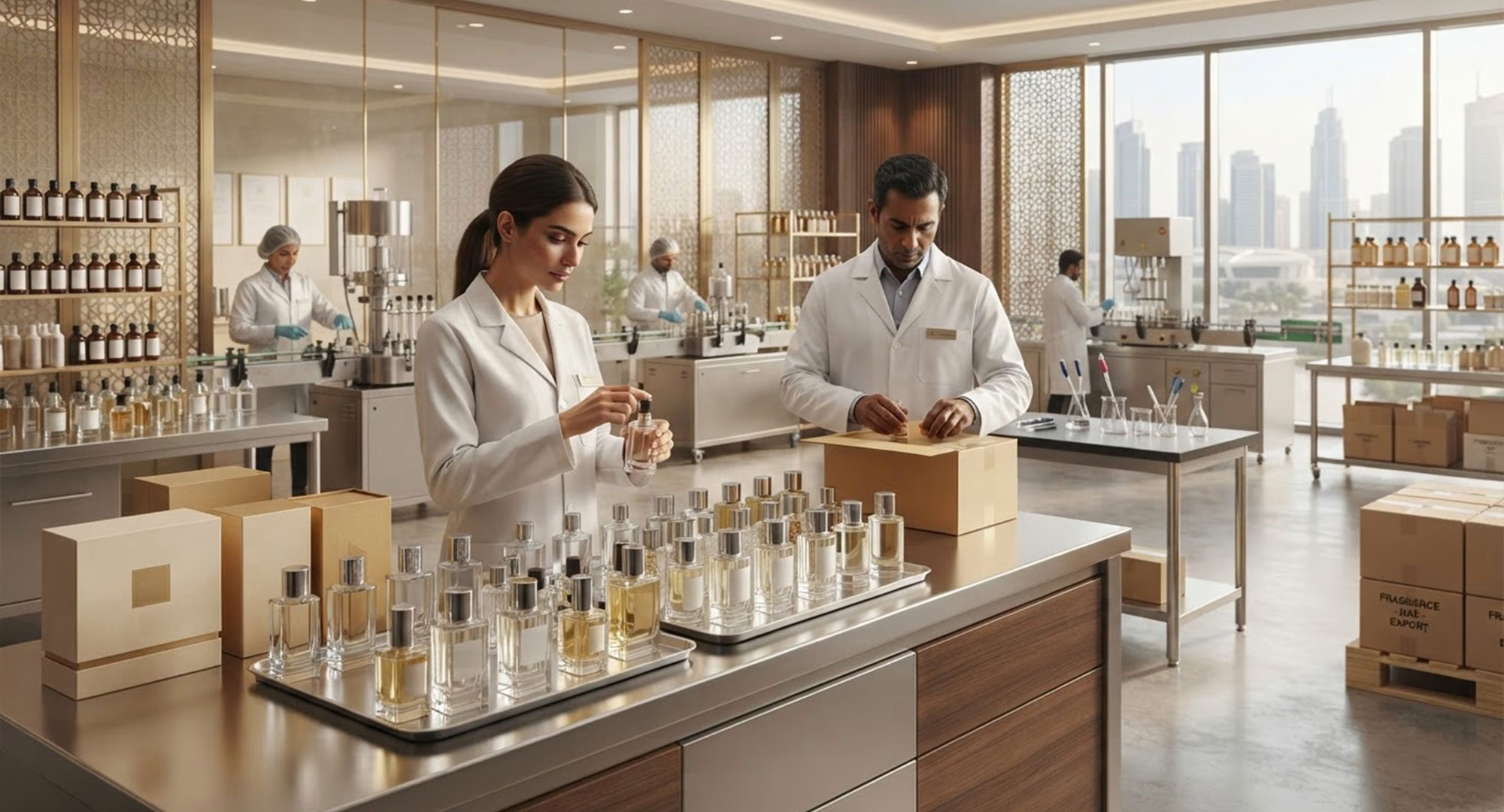
Six stages. Brands spend the longest on the second one, and that is normal.
- Who buys this, at what shelf price, in which market. A good factory asks about your customer before it asks about your scent.
- Scent development. Samples go back and forth until one is right. Custom development takes longer than selecting from an existing library, and the difference can be several weeks.
- Packaging selection. Bottle shape, cap, sprayer, box construction and decoration. IGOP holds its own in-house collection of bottles, caps and boxes, which removes a sourcing cycle most brands do not budget for.
- Pre-production sample. The full unit, exactly as it will ship. Approve this carefully. It is the last cheap moment in the project.
- Filling, capping, labelling, boxing and shrink wrapping. Capacity at the Ajman plant runs to around 15,000 bottles a day.
- Packed, cartoned and ready for your warehouse, your retailer or your freight forwarder.
Stage four is where projects are saved or lost. A sample approved in a hurry becomes a warehouse full of something you did not want.
What Can You Private Label Besides Perfume?
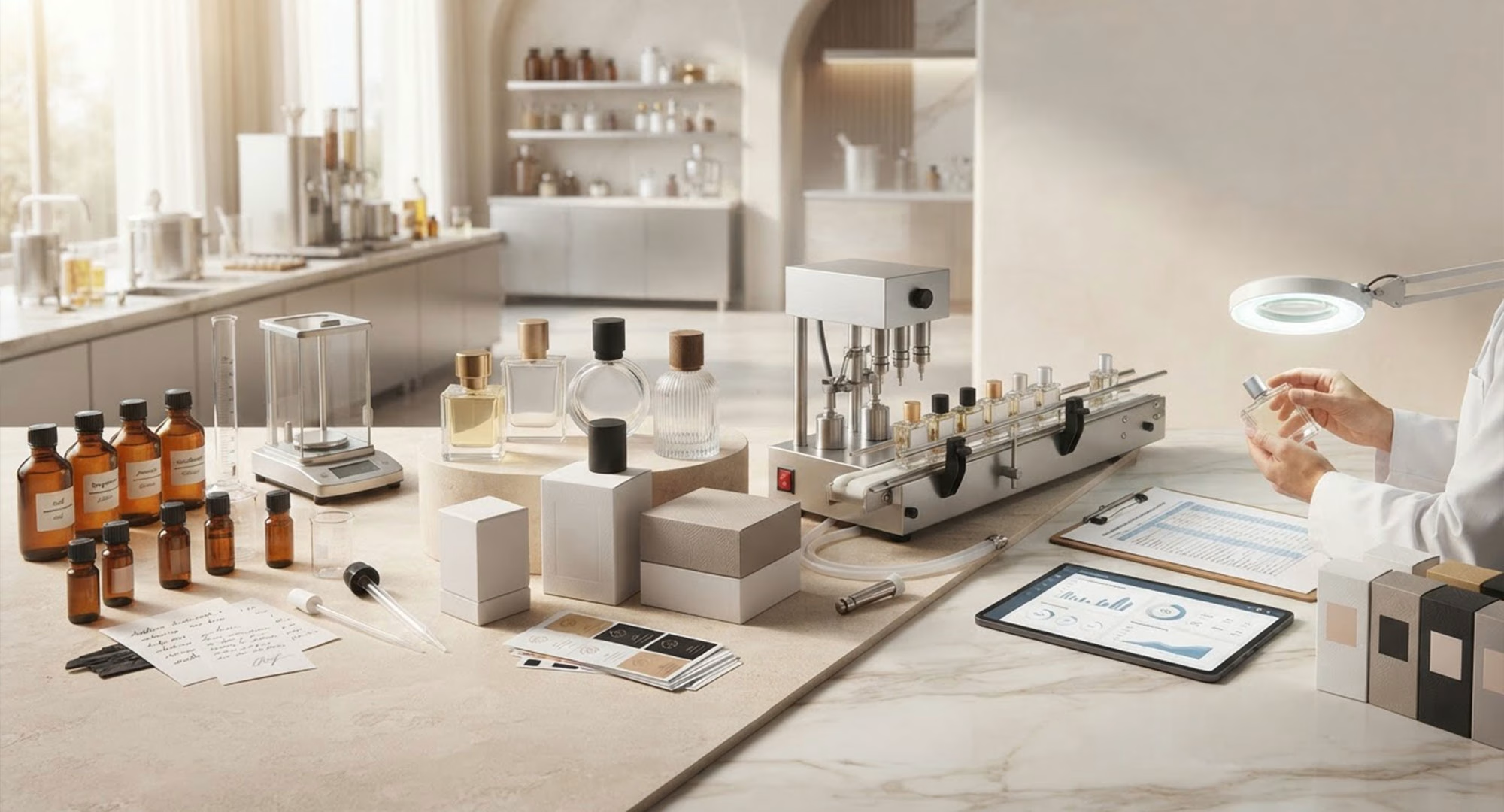
More than most brand owners realise, and it matters for your second product.
A brand rarely stays a single bottle. The customer who buys your signature scent is the same customer who buys the matching hair mist eighteen months later. Choosing a factory with the range already in place saves you repeating this whole exercise with someone new.
The current production lines cover six categories.
- Niche, designer-inspired, masstige and mass-market. Four very different cost structures, one production floor.
- Hair mists. Lighter alcohol content and a hair-safe formulation. Usually paired with an existing eau de parfum as a set.
- Body sprays and all-over sprays. Larger formats at supermarket and pharmacy price points, normally in six-figure runs.
- Interior perfumes. Room and ambient sprays for home brands, hotels and facilities contracts.
- Blended wax, fragrance load and vessel options, with gift-box sets a common finish.
- Fragrance oils. Class A oils for luxury work and cost-effective alternatives for volume applications, supplied in bulk to other manufacturers as well as used in-house.
One practical note. Keeping a scent consistent across a spray, a mist and a candle is harder than it sounds, because each format carries fragrance differently. Raise it early if a coordinated range is the plan.
What Does a Private Label Perfume Manufacturer in UAE Cost?
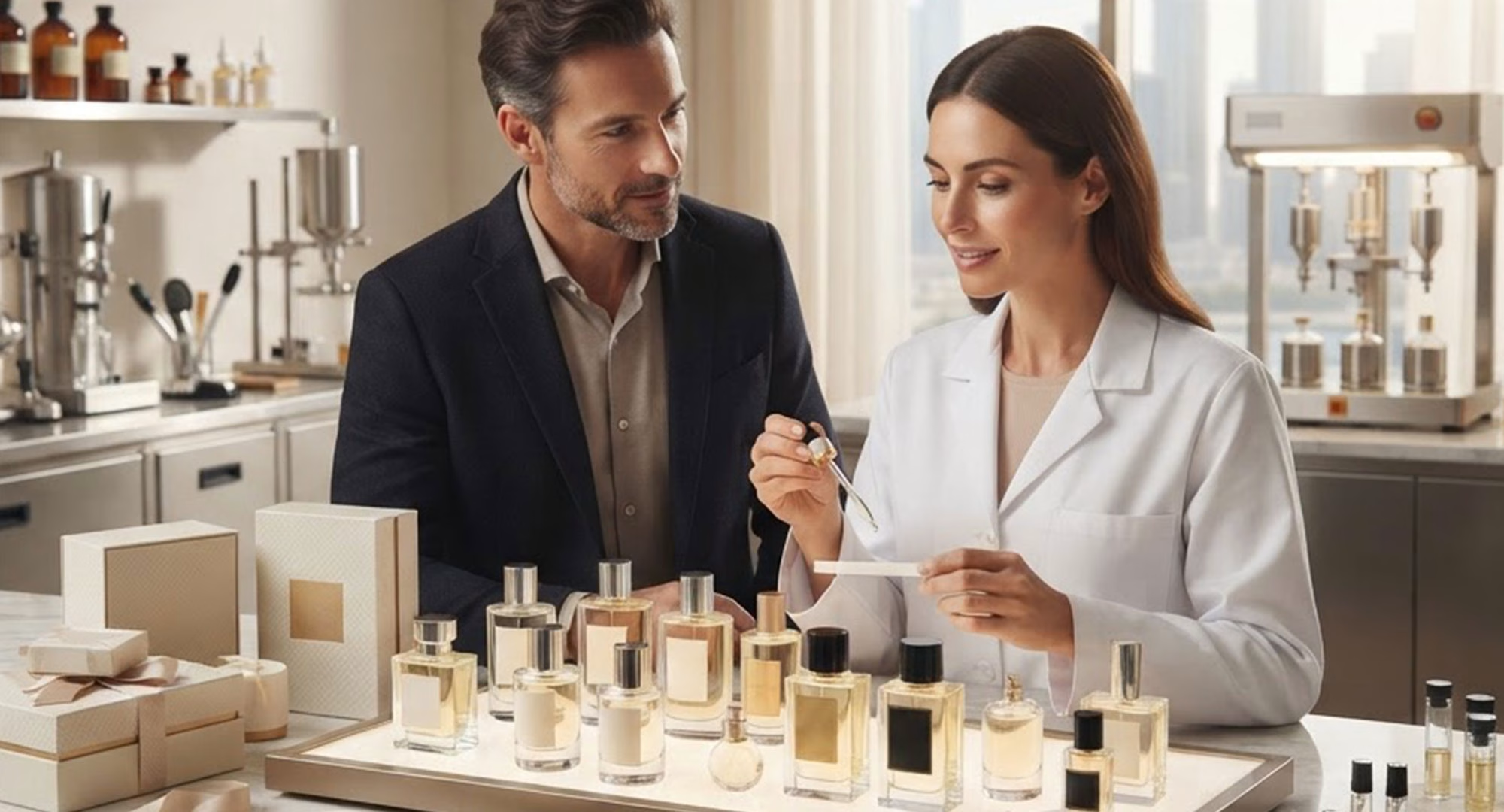
Less than most people assume, and structured differently from what they expect.
Nobody can quote a perfume blind. The same 50ml bottle can cost a few dirhams or many times that, and the gap has almost nothing to do with the factory margin.
Almost all of it sits in decisions you control. Work out your target shelf price first, then let the factory build backwards into it. That conversation is far more productive than asking for a price list.
What Moves the Unit Price
- The single biggest lever. Unit cost falls sharply between 1,000 and 10,000 units, then flattens.
- Oil grade and concentration. Class A oils in a high concentration cost considerably more than a commercial-grade oil in a lighter formulation. Both have a legitimate market.
- Bottle weight. Heavy glass reads as premium and prices like it. It also costs more to ship.
- Box construction. A printed folding carton and a rigid magnetic box are not close in price.
- Hot stamping, embossing, spray coating and metallised caps each add a step and a cost.
The Costs Nobody Quotes You
Three lines show up after the quote is signed, and they catch people out.
- Developing and shipping samples takes time and materials.
- Someone has to produce print-ready files at the right dimensions for a curved surface.
- Freight and duty. Relevant the moment your stock leaves the country.
Ask for these in writing at quotation stage. A manufacturer that lists them upfront is telling you something useful about how it works.
How Small Can a First Production Run Be?
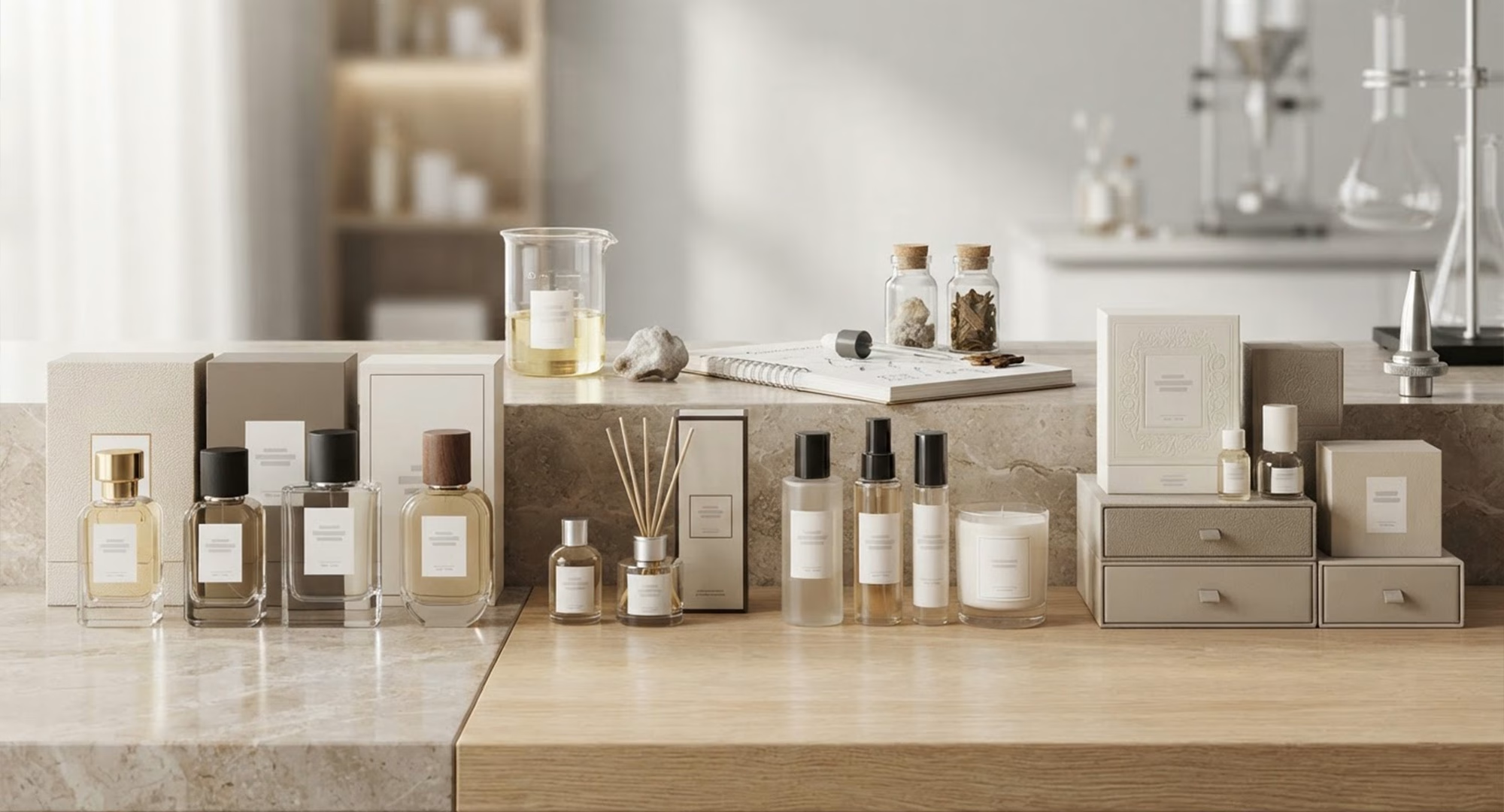
Smaller than the internet suggests.
This is the question that stops most new brands before they start, usually because they have been quoted a number by a trading company rather than a factory.
IGOP takes orders from around 1,000 units up to a million and beyond. For a new brand testing one scent, 1,000 bottles is a real business, not a hobby order.
The number moves with your packaging choices, not your ambition. A stock bottle with a printed label holds the minimum down. A custom-moulded bottle raises it sharply, because glass moulds carry their own tooling economics. The minimum order page covers this in detail.
If a supplier quotes a five-figure minimum without asking what packaging you want, they are quoting their convenience rather than your project.
How Long Does Production Actually Take?
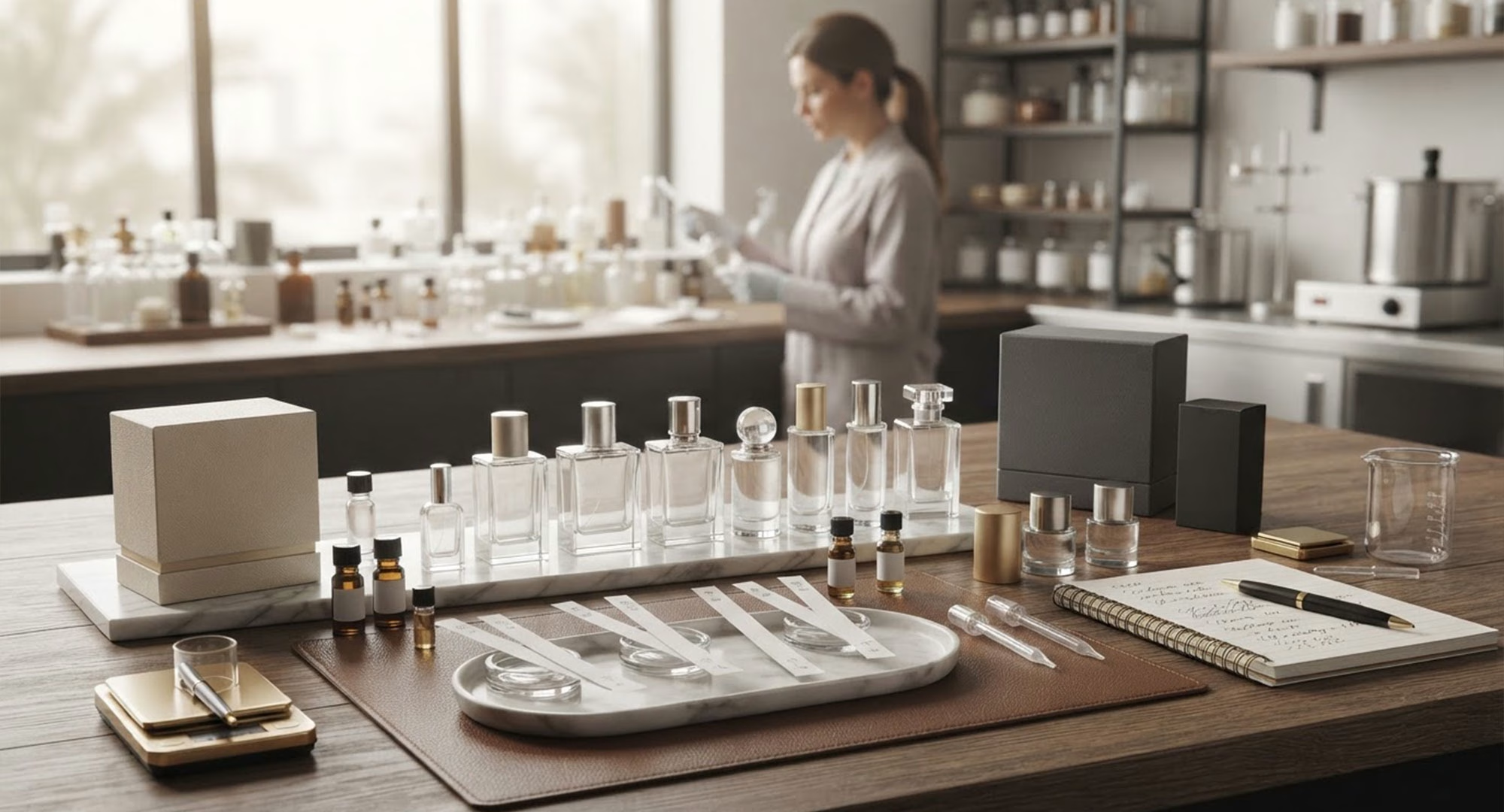
Seven to thirty days once everything is approved.
That range is wide for a reason. The short end applies when you select an existing scent and stock packaging. The long end applies to custom development, bespoke decoration and large volumes.
What the range does not include is the part before approval. Scent development can add two to six weeks on its own, and artwork sits on your side of the table more often than the factory’s.
Plan backwards from your launch date. Then add a fortnight, because artwork always takes longer than anyone expects.
Reorders run faster. The formula is on file, the packaging is specified and the artwork is approved, so a repeat run is production time alone. Brands that plan their second order while the first is still filling rarely run out of stock.
What Should You Ask Before You Sign?
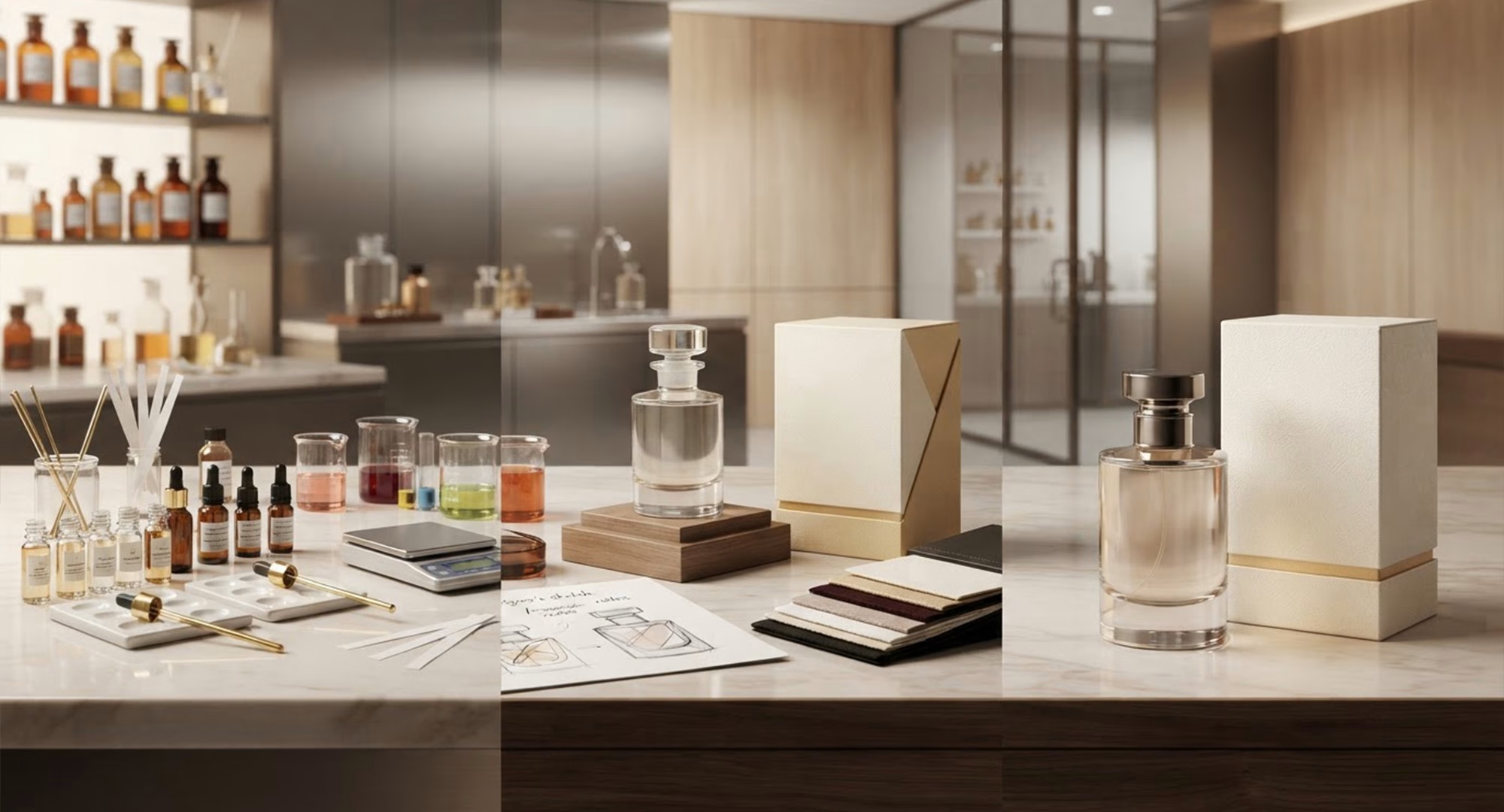
Six questions worth putting to any factory bidding for your work, including this one.
- What exactly is my minimum, with my packaging? A general figure is not an answer.
- Is my formula exclusive to me? Private label should mean private. Get it in writing.
- Who owns the formula if we stop working together? The answer varies more than you would think.
- How do you handle fragrance safety standards? The International Fragrance Association publishes the standards most of the industry formulates against. Ask how a supplier applies them.
- Can I see and smell a full pre-production sample? If the answer is no, walk away.
- What is the reorder lead time? Your second order matters more than your first. Brands die on stockouts.
Why Manufacture in the UAE at All?
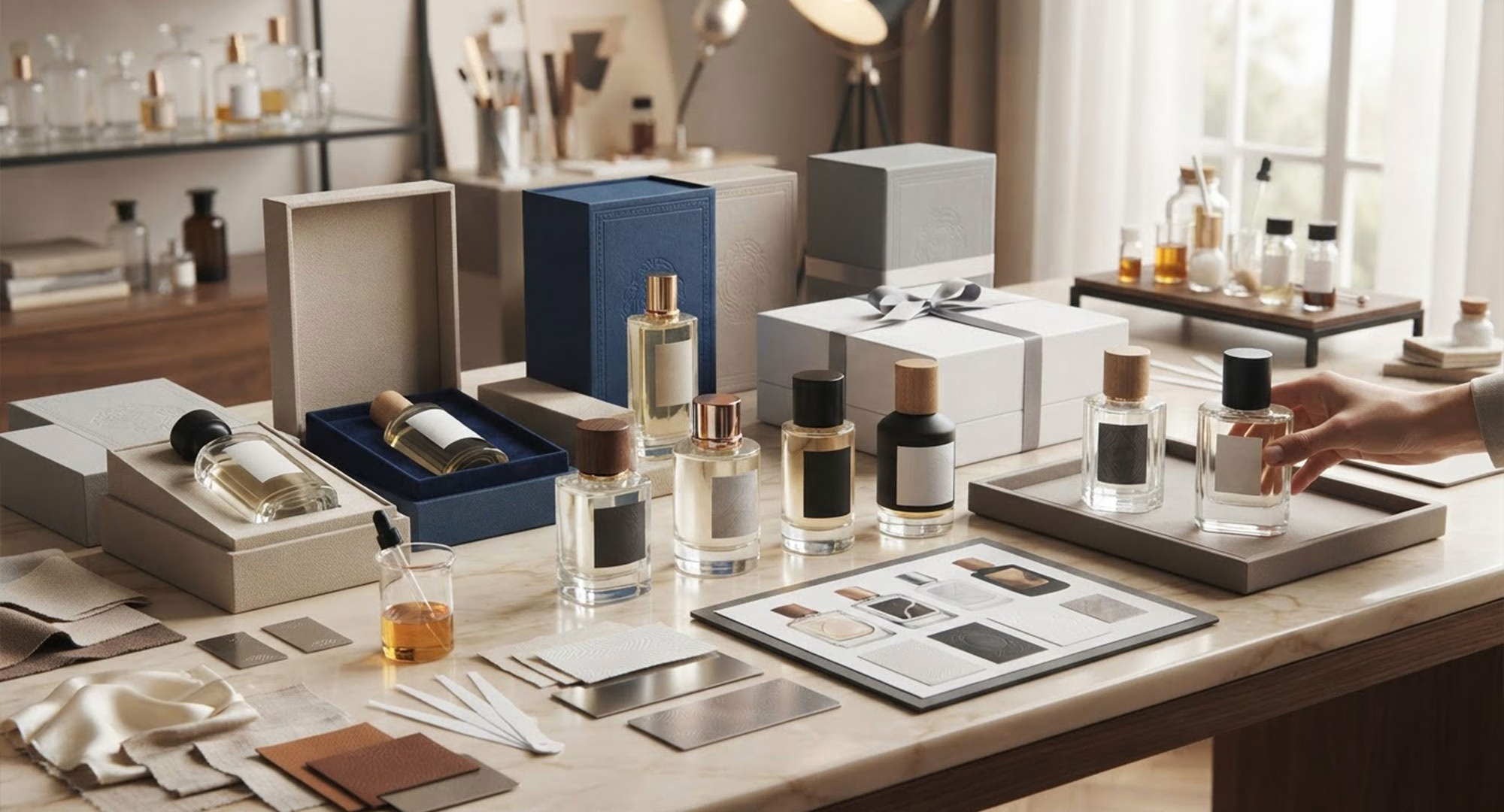
Two reasons. One is logistical, one is commercial, and the second is worth more than most brands realise.
The Supply Chain Is Already Here
Fragrance manufacturing depends on a dozen inputs arriving on time. Oils, glass, caps, sprayers, print, cartons. In most countries those come from four directions and three time zones.
The Gulf is one of the highest per-capita fragrance markets in the world, and decades of demand have pulled those suppliers into the same few square kilometres. A factory in Ajman or Sharjah can source a bottle and a box locally in days rather than weeks.
That shows up in your lead time, and it shows up again every time something goes wrong. A cap shade that arrives off-tone is a two-day problem here. It is a two-month problem when the supplier is on another continent.
What Made in UAE Signals
The commercial reason is about how your product reads on shelf.
Made in UAE carries weight across the Gulf, Africa and South Asia. For an oriental or oud-led brand it is provenance, not a shipping detail. Buyers in those markets associate the origin with the category, much as they associate leather goods with Italy.
Local brands use this directly. Stera Perfumes, a UAE fragrance label selling through its own store and regional marketplaces, is a straightforward example of what a finished private-label brand looks like once it reaches shelf.
Choosing a Private Label Perfume Manufacturer in UAE: Where to Start
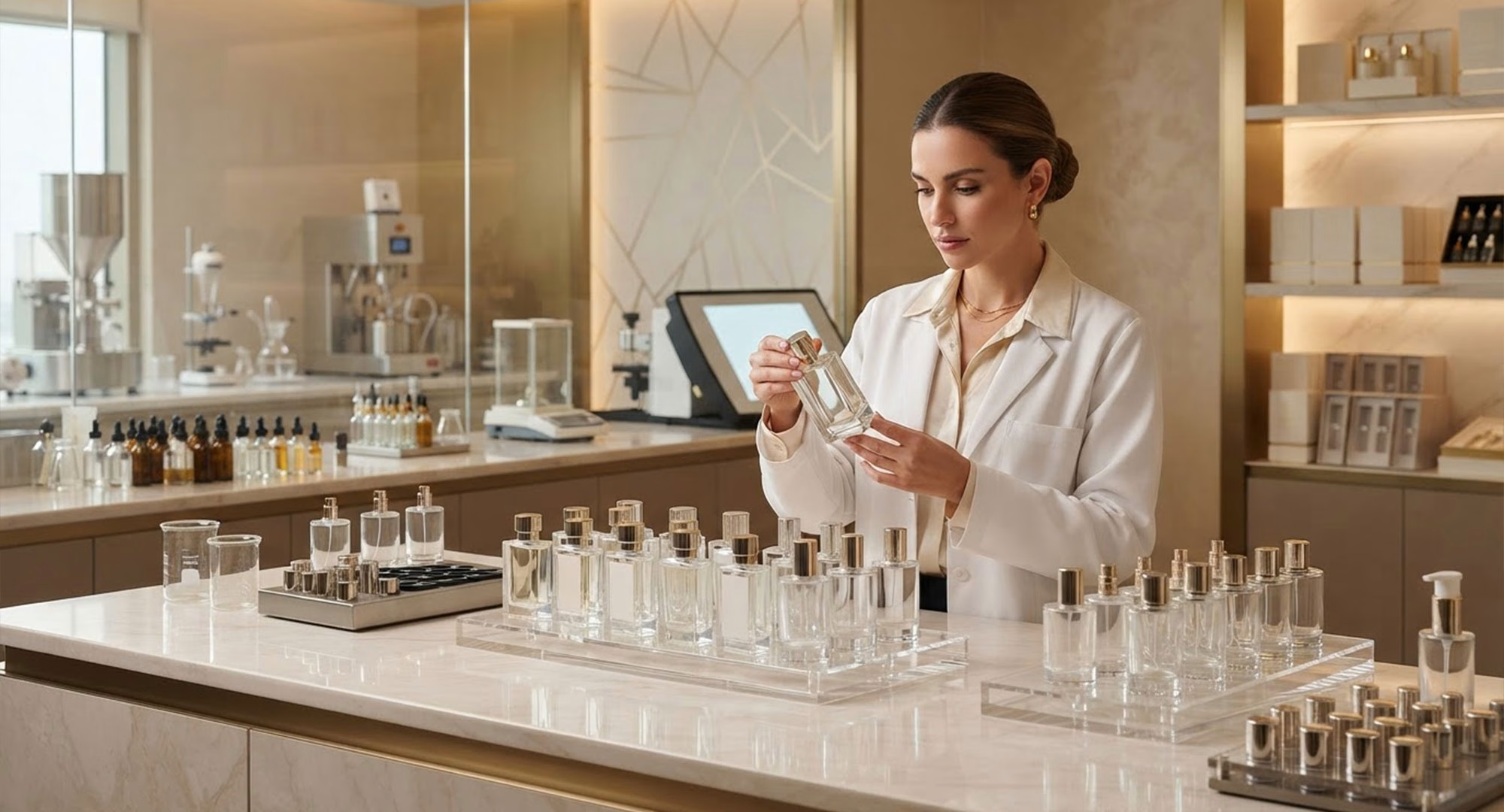
Start with the brief, not the scent. A factory that understands your shelf price will steer the formulation sensibly. One that starts with samples is selling before it is listening.
IGOP has been manufacturing fragrance in the UAE for more than forty-five years, from a 16,000 square foot facility in Ajman Industrial Area 1. The range covers perfumes, hair mists, body sprays, interior perfumes, candles and fragrance oils, with packaging handled in-house.
If you have a brief, or only half of one, the useful next step is a conversation about what you are trying to launch. Bring your target shelf price. It shapes everything else.
FAQ
What is a private label perfume manufacturer in UAE?
A factory that produces fragrance under your brand name rather than its own. It handles formulation, filling, packaging and finishing, and you keep ownership of the brand. A private label perfume manufacturer in UAE will usually supply the bottle, cap, box and decoration as well as the juice inside.
What is the minimum order for private label perfume in the UAE?
How long does private label perfume production take?
Typically seven to thirty days after final approval, depending on volume and how much of the packaging is bespoke. Scent development and artwork happen before that window and can add several weeks, so plan from your launch date backwards. Repeat orders are faster, because the formula, packaging and artwork are already settled.
What is the difference between private label and white label perfume?
Private label means a scent developed or reserved for you alone. White label means an existing fragrance from the factory library, sold under your name and potentially under other names too. White label is faster and cheaper. Private label protects you from finding the same scent on a rival shelf.
Can a manufacturer match or replicate an existing fragrance?
Yes, within limits. Factories routinely create alternatives inspired by well-known profiles, and IGOP offers this as part of its custom formulation work. What no reputable manufacturer will do is copy trademarked branding, so the fragrance direction can be matched while the name and packaging must be your own.
READY TO ELEVATE YOUR BRAND'S FRAGRANCE EXPERIENCE ?
READY TO ELEVATE YOUR BRAND'S FRAGRANCE EXPERIENCE ?
READY TO ELEVATE YOUR BRAND'S FRAGRANCE EXPERIENCE ?
Ready to Elevate Your Brand's Fragrance Experience ?
Partner with IGOP and transform your fragrance ideas into market-leading products. Our expertise, capacity, and commitment to quality ensure your vision is realized, exactly the way you want it. Your vision, your budget, our expertise.
