
Room Spray Manufacturers in UAE: Interior Perfume and Home Fragrance Production
What Counts as Home Fragrance?
Anything designed to scent a space rather than a person.
In practice that means two main products in most ranges. A room spray, sometimes called an interior perfume, and a scented candle.
They do the same job differently. A spray is immediate and controllable. A candle is slow, atmospheric and works over an evening.
Most home ranges carry both, in a shared scent, because customers use them at different moments and buy them together.
The category has grown quickly in this market, and not only for decorative reasons.
Homes here are air-conditioned and largely sealed for much of the year, which means interior scent has real work to do rather than being purely aesthetic.
Why Interior Perfume Is a Different Product
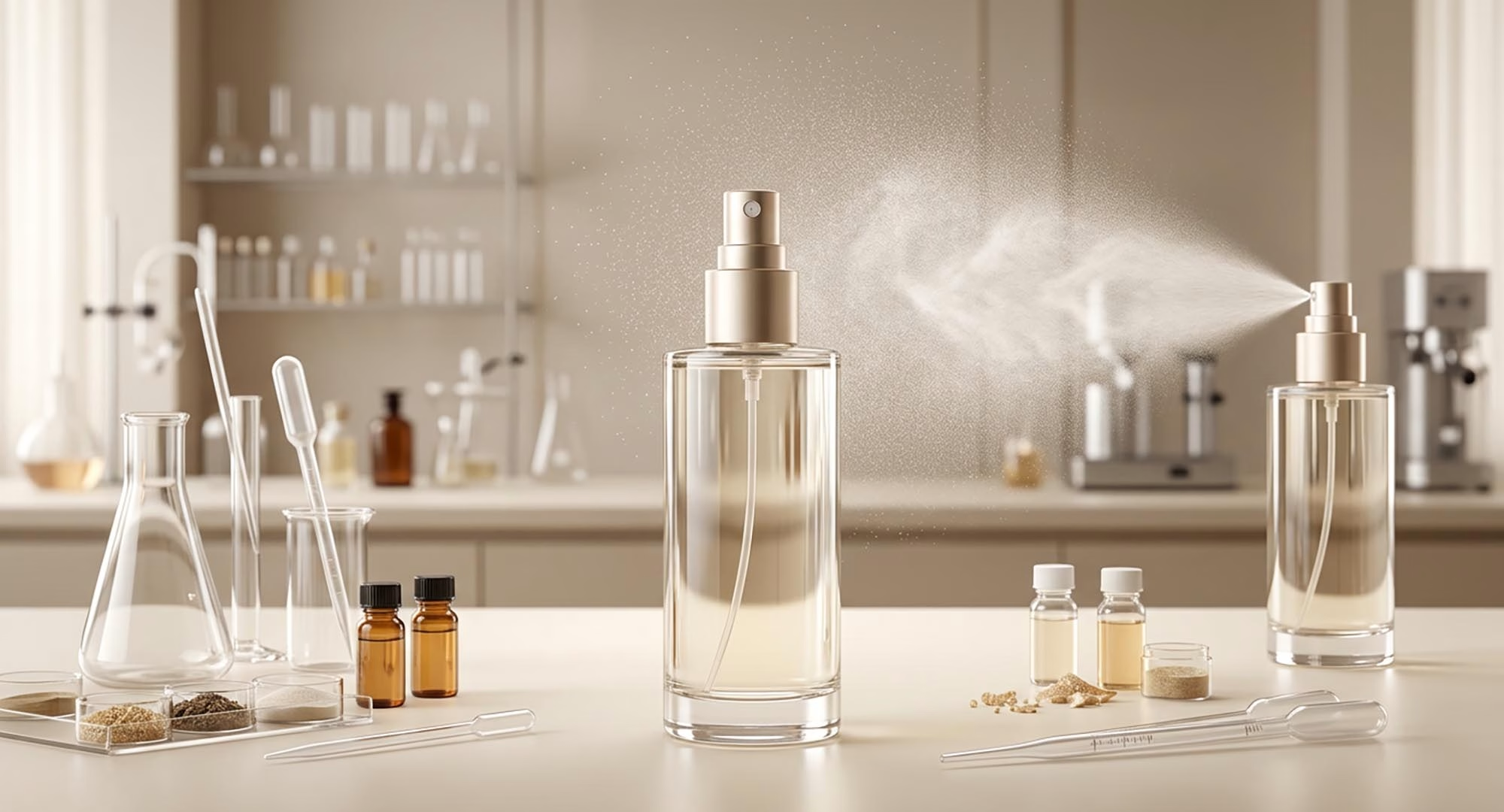
Because a room is not a wrist.
Personal fragrance is designed to sit close, develop slowly on warm skin and reveal itself over hours. Almost none of that applies to a room.
An interior perfume has to fill a volume of air quickly, read clearly from across a space, and then settle without becoming oppressive.
There is no skin chemistry involved and no warmth driving evaporation. The composition has to do all the work by itself.
Spraying a perfume formulation around a room does not produce a good interior product. It produces an expensive one that disappears in ten minutes.
Which is why this is a formulation category in its own right, not a repackaging exercise.
What Do Room Spray Manufacturers Produce?
- Room sprays. The core product. Instant scenting for a space, controlled by the user.
- Linen and fabric sprays. Lighter compositions intended for soft furnishings.
- Coordinated candles. The same scent in wax, sold alongside or as a set.
- Larger format sprays. Value or commercial sizes for frequent use.
How Room Spray Differs From Personal Fragrance
Four things change, and the first two are the important ones.
- Built to project into air rather than develop on skin.
- Spray pattern. A wider, more diffused output covering more space per press.
- Tuned to the volume of a room, not to the warmth of a body.
- Larger bottles, because the product is used more generously.
The sprayer is genuinely part of the specification here. A fine perfume atomiser produces a small cloud that falls straight down, which is the opposite of what a room needs.
Scent and Space: Why Room Size Changes Everything

A point that catches out almost every first-time buyer.
A composition that feels perfectly judged in a small bedroom can be undetectable in an open-plan living area. The same product, the same number of sprays, an entirely different result.
Ceiling height matters as much as floor area. Air conditioning matters too, because circulation moves scent around and dilutes it faster.
So the brief needs a room in mind. Ask yourself where this product will actually be used, then test the sample in exactly that kind of space.
Never approve an interior perfume by smelling it on a blotter. Spray it in a real room and wait twenty minutes.
Who Buys Private Label Home Fragrance?
Four groups, with different priorities.
- Home and lifestyle brands. Interior scent as a core product line.
- Fragrance brands. Extending a signature scent into the home.
- Hotels and hospitality. Property scenting and guest-facing retail.
- Gifting suppliers. Sets pairing a spray with a candle.
Hospitality is the most demanding and often the most valuable, because the orders repeat on a schedule rather than following retail seasons.
On the retail side, Craftier carries interior fragrance alongside personal scent, which is a common structure for a UAE brand extending into the home.
Hotels and the Signature Scent
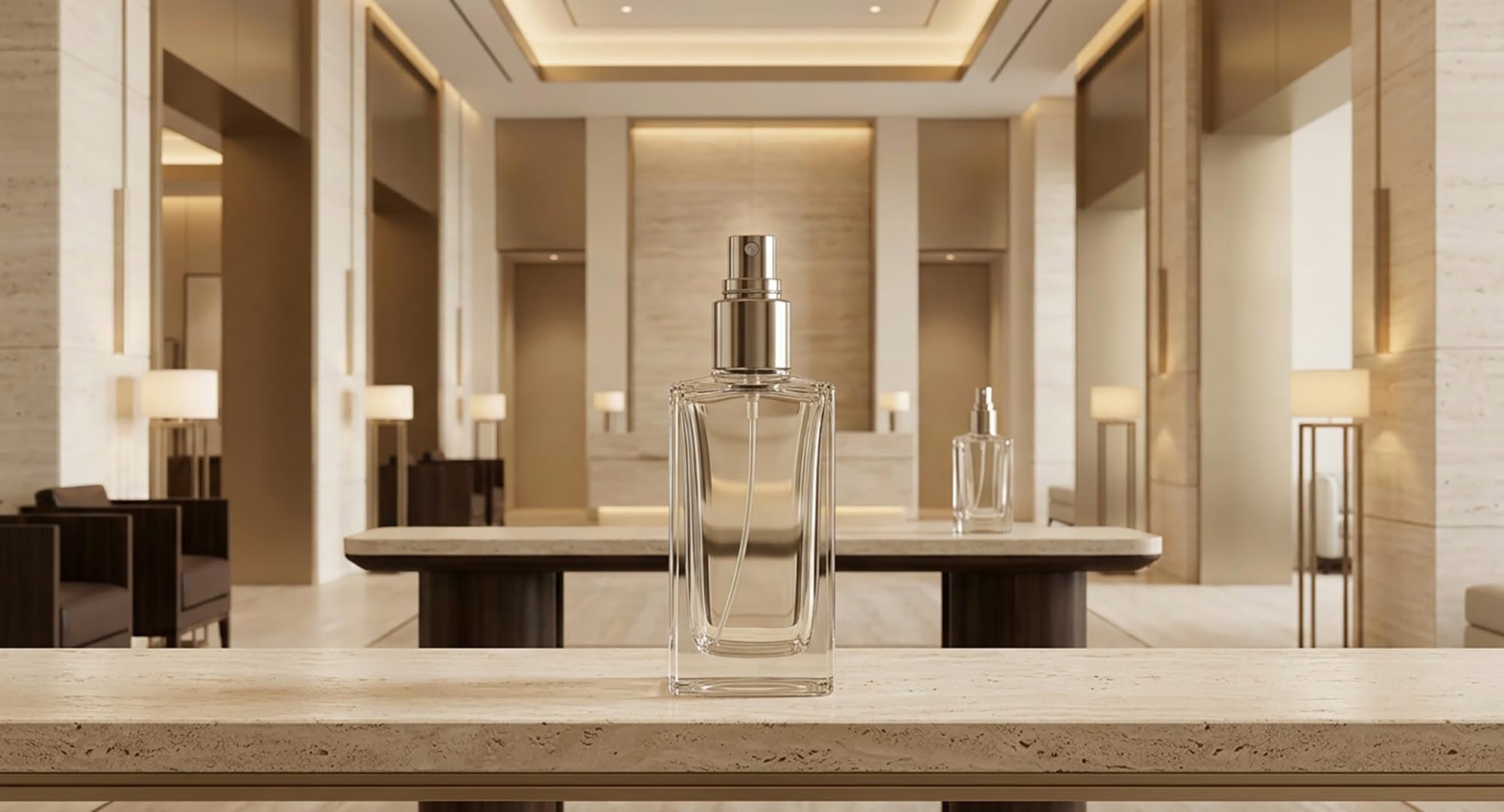
A specific requirement worth understanding properly.
Properties use scent as part of how they are remembered. Guests may never consciously register it, but they notice when it changes.
That places consistency above almost everything else. This year’s batch has to match last year’s, which depends on retained samples and disciplined batch control rather than on good intentions.
Volumes are usually steady rather than large, and the specification tends to be restrained. A vessel that suits an interior rather than a shelf.
Ask any supplier how they prove one batch matches another. The quality of that answer predicts the relationship.
Building a Coordinated Home Range
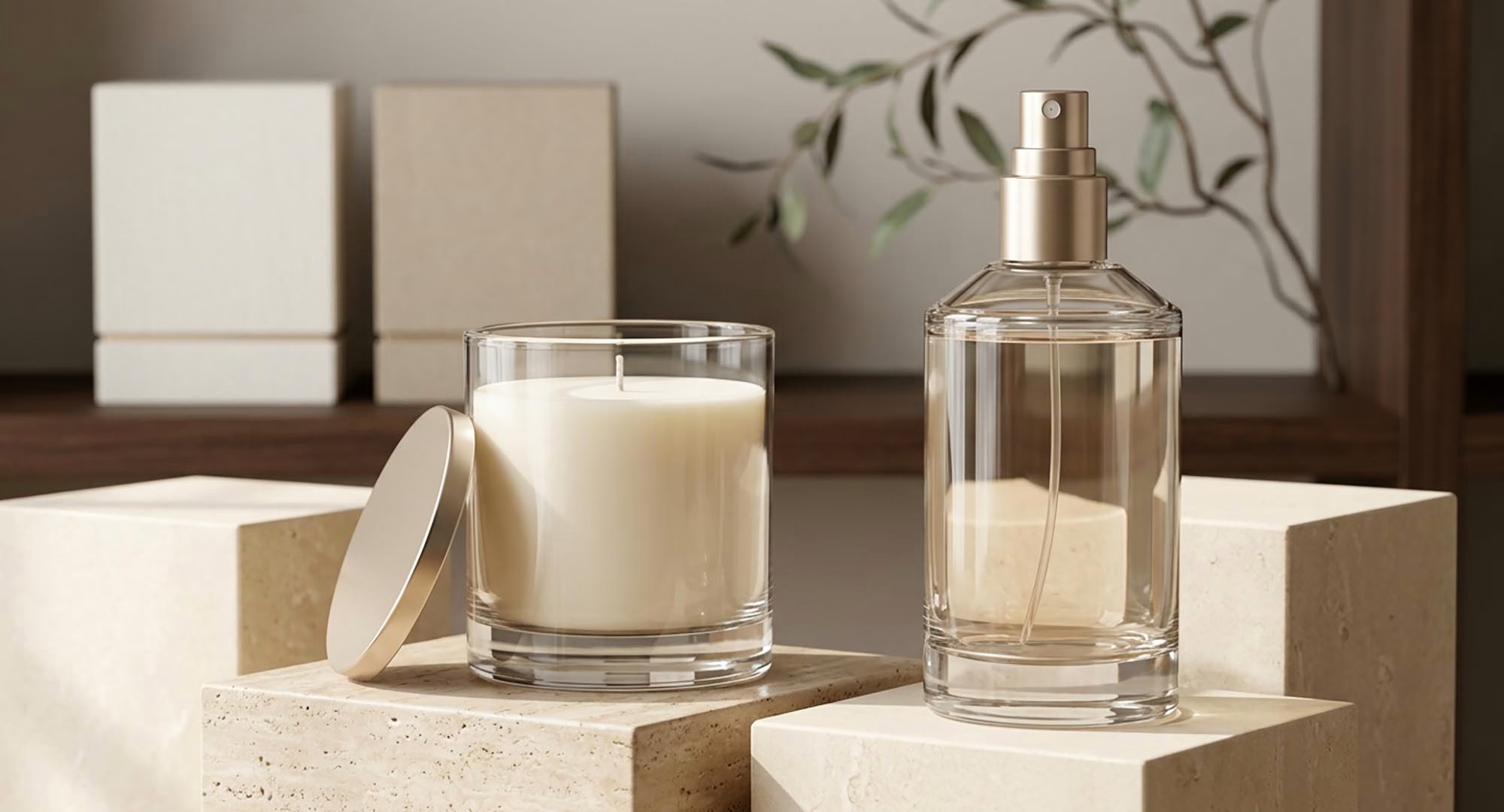
Where this category earns its margin.
A room spray and a candle in the same scent sell together far better than either does alone. The set looks designed, and it makes an easy gift.
The difficulty is technical. A fragrance does not smell identical in wax and in a spray, because each releases the composition differently.
A good factory adjusts the formulation for each format rather than using one oil across both. Ask specifically whether they do this, because the alternative is a set where the two halves do not quite match.
The candle page covers the wax side of that pairing in more detail.
Packaging for the Home
Different rules apply here, because the product is visible.
The Bottle Sits Out on Display
A perfume lives in a drawer or on a dressing table. A room spray sits in a living room, a bathroom or a hallway where guests see it.
That pushes design toward something that looks like an object rather than a cosmetic. Heavier glass, restrained labelling and finishes that suit an interior.
The Sprayer Does the Real Work
A wider, more diffused spray pattern is what separates an interior product from a perfume in a big bottle.
Test it on the actual formulation during sampling. A pump that performs well with water can behave differently with a fragrance base.
Formats and Sizes
- Gift sets, travel and entry price points.
- 200ml to 250ml. The standard retail size for a home product.
- 500ml and above. Commercial and hospitality use, or value refill formats.
What Does Private Label Room Spray Cost?
Usually less per bottle than a perfume, and more than buyers expect.
The fragrance concentration is lower than an eau de parfum, which helps. The bottle is larger, which does not.
At retail volumes the cost order is roughly the bottle and sprayer first, then the outer box, then the fragrance, then labelling and decoration.
Work backwards from your shelf price. A factory that knows your target can tell you which bottle and which concentration fit inside it.
Component options are covered on the packaging page.
Minimums and Lead Times
Five steps, and the same framework as other private label fragrance.
- Room type, scent direction, size and price point.
- From an existing library, or adapted from a scent you already sell.
- Bottle, sprayer, label and box. Test the sprayer properly.
- Pre-production sample. Approved by spraying in a real room, not on paper.
- Between seven and thirty days, depending on the run size.
Orders run from around 1,000 units, moving on packaging choices rather than product type. The minimum order page covers what changes it.
Safety and Labelling
Less onerous than candles, but not nothing.
An interior perfume is sprayed into air that people breathe, and often around furnishings, so the label should be clear about intended use.
- Usage guidance. Where to spray, and how much.
- Surface warnings. Whether the product should be kept off polished or delicate surfaces.
- Standard precautions. Keep away from flame, children and pets.
Agree who is responsible for the label content before artwork is produced, and ask which fragrance safety standards the formulation is built against.
Scent Direction for Interiors
What works on skin does not automatically work in a room.
Interior scent is shared. A perfume is a personal statement that one person chooses to wear, but a room spray is imposed on everyone who walks in, including people who did not pick it.
That pushes successful home compositions toward the comfortable rather than the striking. Clean woods, soft florals, light citrus and warm resins all sit well in a space over time.
Very sweet or very heavy compositions can be excellent for a short burst and exhausting across an evening. The test is not whether it smells good, but whether it still smells good an hour later.
Regional preference matters here as well. Oud, amber and smoky resinous compositions are traditional in this market and sell strongly, particularly around gifting seasons. The Arabic and oud page covers how those structures are built.
Brief the factory on the room and the occasion, not just the notes you like.
Common Mistakes
Five, and the first two cause most of the disappointment.
- Reusing a perfume formula. It vanishes in a large space and costs more than it should.
- Using a perfume atomiser. Wrong spray pattern for a room.
- Testing on a blotter. Judge the product where it will be used.
- Ignoring room size in the brief. A scent tuned for a bedroom fails in an open-plan space.
- Assuming a candle scent transfers directly. Each format needs its own adjustment.
None of these are expensive to avoid. All of them are expensive to discover after production.
Choosing Room Spray Manufacturers in UAE
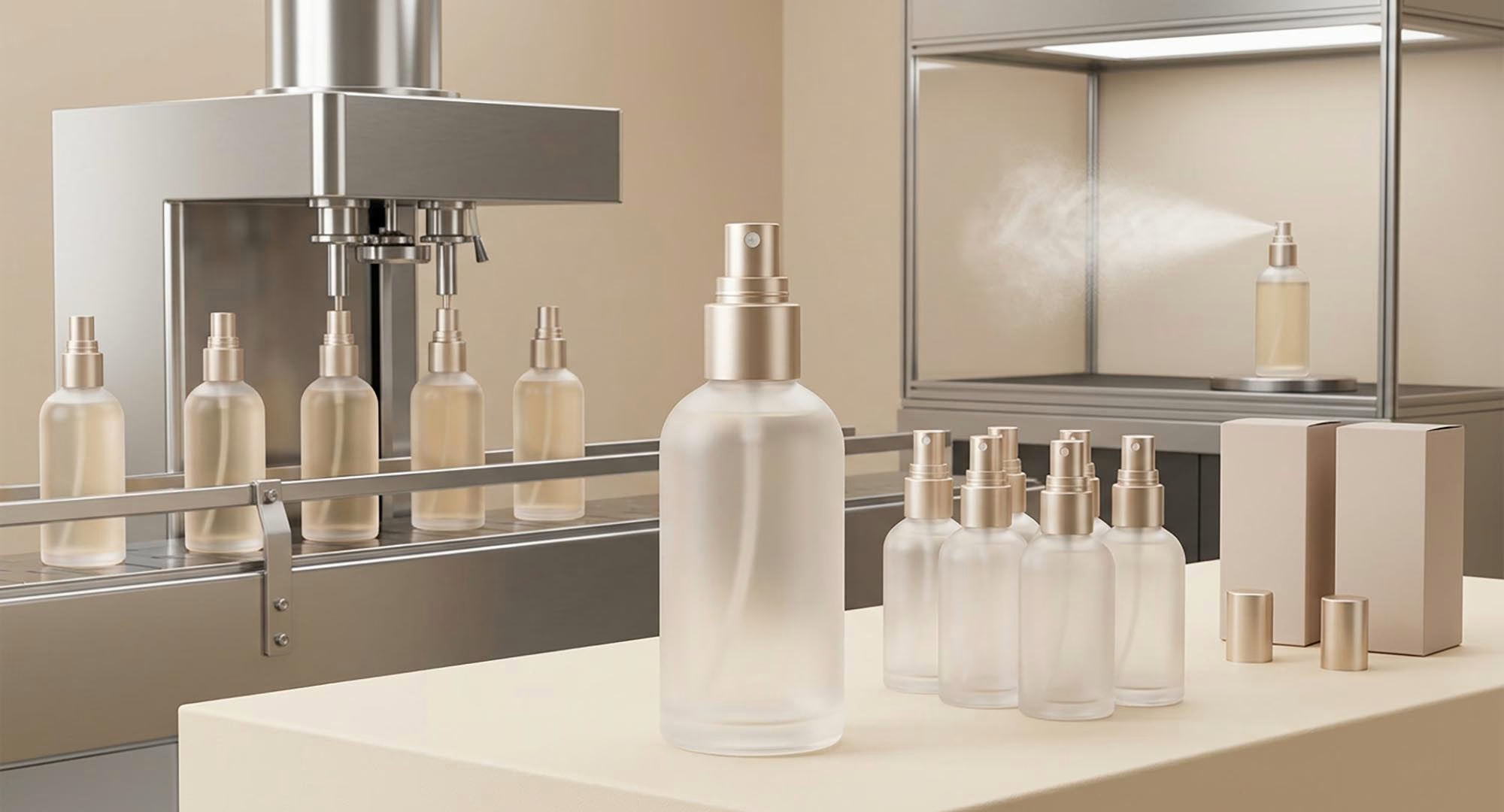
Ask two questions and the answers will tell you most of what you need.
Ask whether they formulate interior perfume separately from personal fragrance. Then ask to test the sprayer on the actual product.
The better room spray manufacturers will also want to know what kind of space the product is for before recommending anything, which is a good sign rather than an obstacle.
IGOP has manufactured fragrance in the UAE for more than forty-five years, producing interior perfumes and candles alongside perfumes, hair mists, body sprays and fragrance oils, with packaging components held in-house. The full range is here.
If you already have a scent and want it working in a room, that is a straightforward brief.
FAQ
What is the difference between a room spray and a perfume?
A room spray is formulated to project into a volume of air and read clearly across a space, with a wider spray pattern and a concentration tuned to room size. Perfume is built to develop slowly on warm skin, so spraying it around a room produces a weak result at a high cost.
Can I have a room spray made to match my perfume?
Yes, and it is a common range extension. The composition needs adjusting rather than copying, because a fragrance behaves differently projecting into air than it does developing on skin. Ask whether the manufacturer reformulates for the format or simply uses the same oil.
What is the minimum order for private label room spray?
How do I know if a room spray is strong enough?
Test it in the kind of space where it will actually be used, then wait twenty minutes. A composition that feels well judged in a small bedroom can be undetectable in an open-plan area with high ceilings and air conditioning, which moves scent around and dilutes it quickly.
Should I sell a room spray and a candle as a set?
Sets perform well in this category, particularly for gifting, because they look considered and suit different moments in the same room. The important detail is that both products are formulated for their own format, otherwise the two halves of the set will not smell quite the same.
READY TO ELEVATE YOUR BRAND'S FRAGRANCE EXPERIENCE ?
READY TO ELEVATE YOUR BRAND'S FRAGRANCE EXPERIENCE ?
READY TO ELEVATE YOUR BRAND'S FRAGRANCE EXPERIENCE ?
Ready to Elevate Your Brand's Fragrance Experience ?
Partner with IGOP and transform your fragrance ideas into market-leading products. Our expertise, capacity, and commitment to quality ensure your vision is realized, exactly the way you want it. Your vision, your budget, our expertise.
