
Bulk Fragrance Oil Suppliers in UAE: Class A and Commercial-Grade Oils
What Is a Fragrance Oil?

The concentrated scent itself, before anything is done with it.
A finished perfume is mostly alcohol. The part that actually smells of something is the fragrance oil, and it typically makes up a modest share of the bottle.
That oil is a blend, often of dozens of individual materials, built by a perfumer to produce a specific character. Naturals, synthetics and fixatives all play a part.
Buying it in bulk means buying the scent without the product around it. What happens next is up to you.
Some buyers dilute it into perfume. Others put it into wax, into cleaning products or into a hundred other things. If you want finished bottles rather than the ingredient, the private label route is a different conversation entirely.
Each of those applications behaves differently, which is why the grade and the specification matter more than the price per kilo.
Who Buys Fragrance Oil in Bulk?
A different customer from the one buying finished bottles.
- Perfume manufacturers. Producers making their own finished goods who need oil as an input.
- Candle makers. Where fragrance load and heat stability decide whether a product works.
- Personal care producers. Adding scent to formulations of their own.
- Home care and cleaning manufacturers. Where cost per kilo governs everything.
- Brand owners with their own filling. Buying oil and compounding in-house.
What unites them is that they are manufacturers themselves. They are not buying a product, they are buying an ingredient, and the conversation is technical rather than commercial.
What Do Fragrance Oil Suppliers Offer?
Two things, and the second matters more than most buyers realise.
The first is the oils themselves, across a range of grades and scent families. The second is consistency, which is what turns a supplier into a partner.
An oil that smells wonderful once is a sample. An oil that smells identical across twelve deliveries over three years is a supply chain.
IGOP supplies fragrance oils in bulk, both Class A oils and cost-effective alternatives, alongside its own finished production across perfumes, hair mists, body sprays, interior perfumes and candles.
That combination is worth noting. A supplier that also manufactures finished goods has to live with the consistency of its own oils.
Class A Oils and Cost-Effective Alternatives
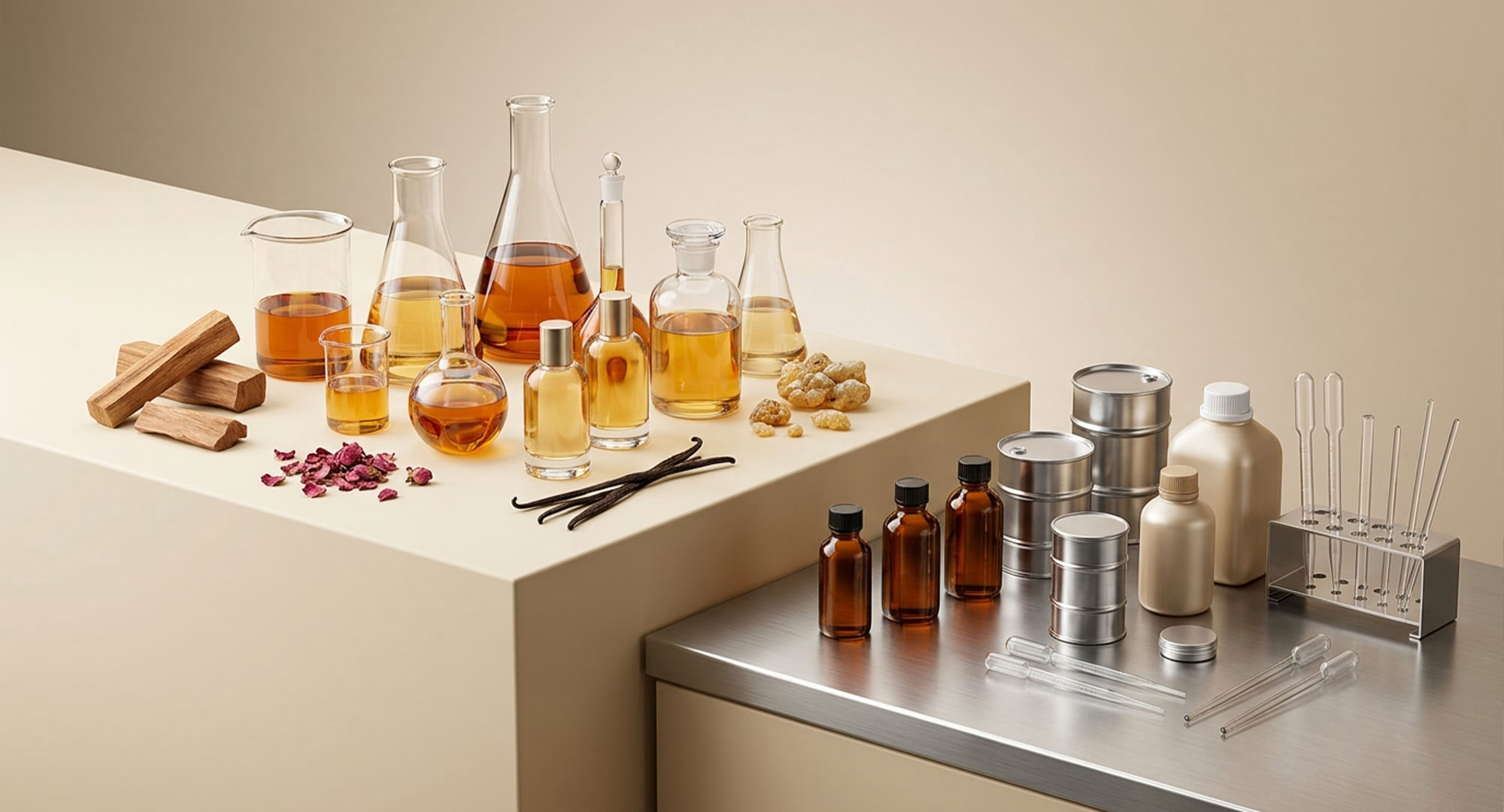
The distinction that governs the whole purchase.
Class A Oils
Built with higher-grade materials, greater complexity and closer attention to how the composition develops over time.
They cost more per kilo, and they belong in products where the fragrance is the reason someone is buying. Fine perfume, premium candles, luxury personal care.
In those applications the material quality is visible to the customer, and economising on it undermines the product you are selling.
Cost-Effective Alternatives
Simpler compositions built to deliver a clear, recognisable scent at a much lower cost per kilo.
These are the right answer for high-volume applications where fragrance supports the product rather than being the product. Home care, value body sprays, cleaning ranges, mass-market items.
Using a Class A oil in a floor cleaner is not a mark of quality. It is a margin error.
Why Grade Matters More Than Price
Because the wrong grade costs more than the right one.
A cheap oil in a premium candle produces a product that smells thin when burning, which generates returns and poor reviews. The saving on materials is wiped out immediately.
An expensive oil in a value product produces a margin that does not work, and a price the shelf will not support.
Neither mistake is about the oil being bad. Both are about the oil being wrong for what it was asked to do.
Start from the application and the retail price, then choose the grade. Never the other way round.
Matching Oil to Application

Five common uses, each with its own constraint.
- Fine fragrance. Complexity and development over hours are what matter. Grade is worth paying for.
- Heat stability and hot throw decide everything. An oil that performs in alcohol may not perform in wax.
- Body sprays and mists. Clear character at low concentration, at a cost that suits a value price point.
- Interior and home fragrance. Projection into air rather than development on skin.
- Home and personal care. Stability in the base formulation, and cost per kilo above all.
The candle case catches people out most often. Wax holds and releases fragrance differently from alcohol, and an oil has to be specified for it rather than assumed to work. The candle page covers how fragrance load and burn interact.
Concentration and Dosage
Buying oil is only half the decision. Using it correctly is the other half.
Dosage is the proportion of oil in your finished product, and it varies enormously by application. Fine fragrance sits far higher than a room product, which sits higher than a cleaning formulation.
More is not automatically better. Past a certain point, additional oil stops improving the scent and starts causing problems, particularly in wax where it affects the burn.
Ask your supplier for a recommended dosage range for your specific application, then test at several points within it. The optimum is rarely at the top of the range.
Consistency Between Batches

The single most important question to ask a bulk supplier.
Fragrance oils are blends, and blends can drift. Raw material batches vary, suppliers change, and small differences accumulate into a noticeable shift.
For a manufacturer, that is a serious problem. Your customers know what your product smells like, and they notice when it changes even if they cannot say why.
- Retained samples. Does the supplier keep a sealed reference from each batch?
- Batch matching. Is new production checked against that reference before dispatch?
- Will you be told if a reformulation is unavoidable, before it ships?
A supplier that answers all three clearly is worth more than one offering a slightly better price.
Exclusivity on a Custom Scent
Worth settling early if the fragrance is central to your product.
Most bulk oils are library compositions, available to anyone. That is usually fine, particularly in home care or value applications.
If you commission a custom oil, exclusivity becomes a real question. Ask whether the composition is reserved for you, for how long, and whether any territory or category limits apply.
Put it in the agreement rather than the email thread. It is the kind of detail that only matters once the product is doing well.
How Bulk Oil Is Supplied and Stored
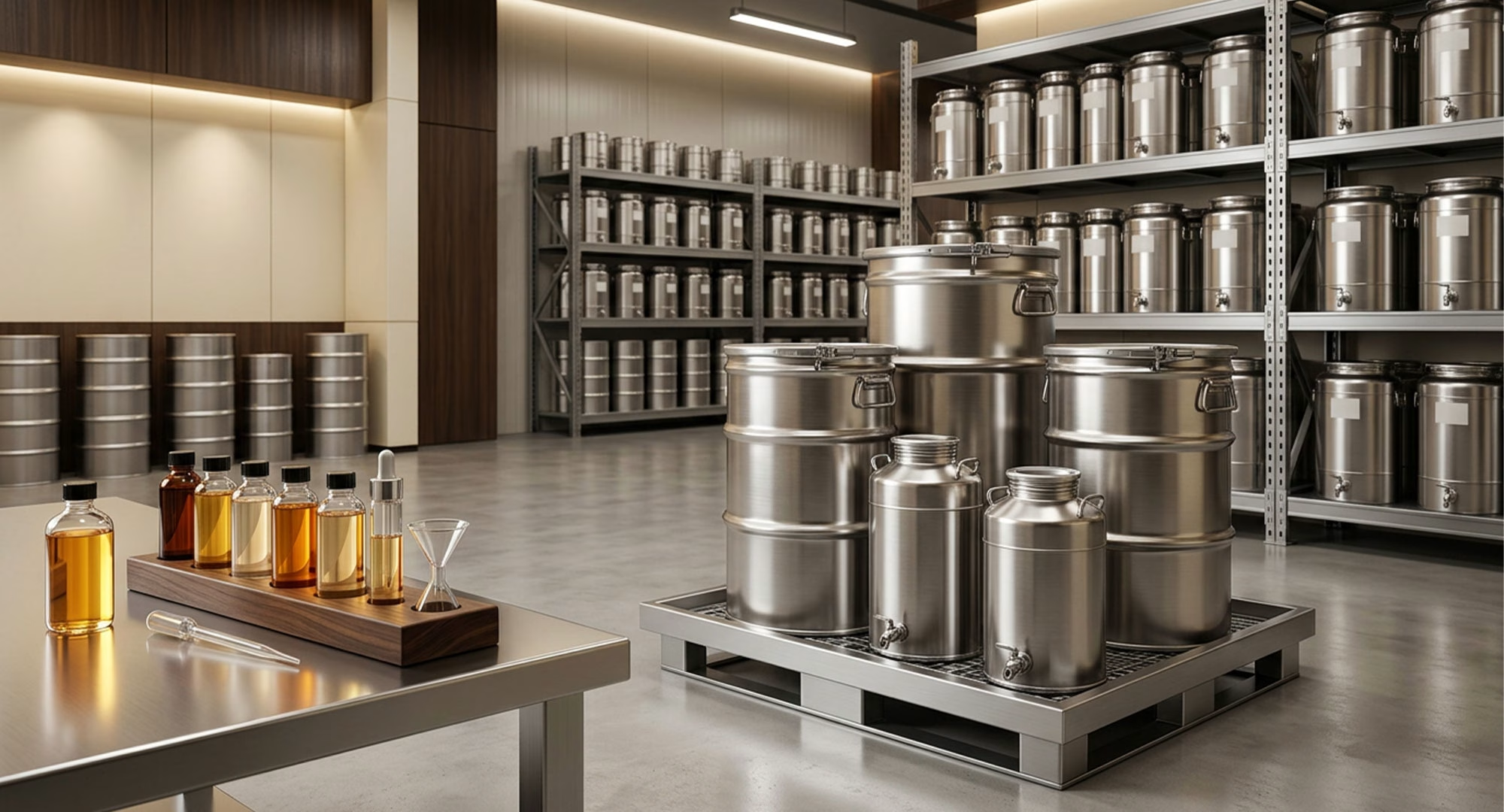
Practical considerations that affect what you should order.
Oils are supplied in sealed containers sized to the order, and quantity affects price per kilo considerably. Buying a year of stock is cheaper per kilo and worse for your cash position.
Storage matters more than many buyers expect. Heat, light and air all degrade fragrance materials over time, and this market supplies plenty of the first.
Keep oil cool, sealed and out of direct light, and order in quantities you will actually use inside a sensible period.
Ask about shelf life for the specific oil you are buying. It varies between compositions, and a supplier should be able to tell you.
Documentation and Standards
Ask for it upfront rather than when a customer or regulator asks you.
Any manufacturer using fragrance oil in a consumer product needs to know what is in it and how it should be handled. That means paperwork.
The International Fragrance Association publishes the standards most of the industry formulates against, covering how materials may be used across different product categories.
Ask any supplier what documentation accompanies an order and how they apply those standards to the compositions they sell. A clear answer is a good sign.
What Does Bulk Fragrance Oil Cost?
It ranges more widely than any other input in this industry.
Grade is the dominant variable. A Class A composition built with expensive naturals and a simple functional oil for a cleaning product are not in the same bracket.
Volume is the second. Price per kilo falls meaningfully with quantity, though not endlessly.
Complexity is the third. A composition using many materials, or rare ones such as genuine agarwood, carries that cost directly.
The useful approach is the same as everywhere else. State your application, your dosage and your target cost per finished unit, and let the supplier work backwards into it.
How to Evaluate a New Oil Before You Commit
Six steps. Skipping any of them is how a bulk order becomes dead stock.
- Smell it neat, briefly. Useful for direction only. It tells you almost nothing about performance.
- Dilute to your intended dosage. The oil must be judged at the strength you will actually use.
- Test in your real base. Wax, alcohol, a surfactant formulation. The base changes the result.
- Leave it and come back. Fragrance settles. A composition judged on day one is incomplete.
- Test in real conditions. Burn the candle, wear the spray, use the product as a customer would.
- Order a small quantity first. Prove the supply and the consistency before committing to volume.
The fourth step is the one most buyers skip, and it is where unpleasant surprises appear. Give a promising oil at least a week in your finished formulation before ordering deeply.
Common Mistakes When Buying in Bulk
Five, and they repeat constantly.
- Buying on price per kilo alone. The cheapest oil is expensive if it fails in your application.
- Not testing in the finished product. An oil smelled neat tells you very little about how it will perform.
- Ordering a year of stock. Ties up cash and risks degradation before you use it.
- Skipping the consistency question. The problem only appears on your third delivery.
- Assuming transferability. An oil that works in a spray may not work in wax or in soap.
The second is the costly one. Always test at your intended dosage in your actual formulation before committing to a bulk quantity.
Choosing Fragrance Oil Suppliers in UAE
Judge them on consistency and on how they talk about application.
The better fragrance oil suppliers will ask what you are making before recommending anything, and will steer you away from a grade that is wrong for your price point rather than selling you the most expensive option.
Ask about retained samples, batch matching and dosage guidance. Those three answers tell you whether you are dealing with a supplier or a reseller.
IGOP has manufactured fragrance in the UAE for over forty-five years, supplying Class A oils and cost-effective alternatives in bulk alongside its own finished production. The full range is here.
Finished UAE brands rely on exactly this supply chain. Al Bait Al Dimashqi is one regional label whose range depends on consistent oil supply across repeat production.
Bring your application, your dosage and your target cost, and the conversation gets specific quickly.
FAQ
What is the difference between Class A and cost-effective fragrance oils?
Class A oils use higher-grade materials and more complex compositions, and suit products where the fragrance is the reason for purchase, such as fine perfume or premium candles. Cost-effective alternatives deliver a clear recognisable scent at a much lower cost per kilo, which suits home care and value products.
Can I use the same fragrance oil in perfume and candles?
Not reliably. Wax holds and releases fragrance differently from alcohol, and an oil that performs well in a spray can produce a weak hot throw or affect the burn in a candle. Ask your supplier to recommend an oil specified for your particular application and test it at your intended dosage.
What is the minimum quantity for bulk fragrance oil?
It varies by supplier and by composition, and price per kilo falls as quantity rises. The sensible approach is ordering what you will use within a reasonable period rather than the cheapest bracket, since fragrance oils degrade with heat, light and air over time.
How do I know a fragrance oil will smell the same next year?
Ask whether the supplier keeps retained samples from each batch and checks new production against that reference before dispatch. Also ask whether you would be told in advance if a reformulation became unavoidable. Blends can drift, and consistency is what separates a supplier from a reseller.
How should bulk fragrance oil be stored?
Cool, sealed and away from direct light. Heat, light and exposure to air all degrade fragrance materials, and this climate supplies plenty of heat. Ask your supplier about the shelf life of the specific composition you are buying, as it differs between oils.
READY TO ELEVATE YOUR BRAND'S FRAGRANCE EXPERIENCE ?
READY TO ELEVATE YOUR BRAND'S FRAGRANCE EXPERIENCE ?
READY TO ELEVATE YOUR BRAND'S FRAGRANCE EXPERIENCE ?
Ready to Elevate Your Brand's Fragrance Experience ?
Partner with IGOP and transform your fragrance ideas into market-leading products. Our expertise, capacity, and commitment to quality ensure your vision is realized, exactly the way you want it. Your vision, your budget, our expertise.
