
Perfume Factory in Ajman: Visit Our 16,000 sq ft Manufacturing Unit
Why Is Ajman a Perfume Manufacturing Hub?
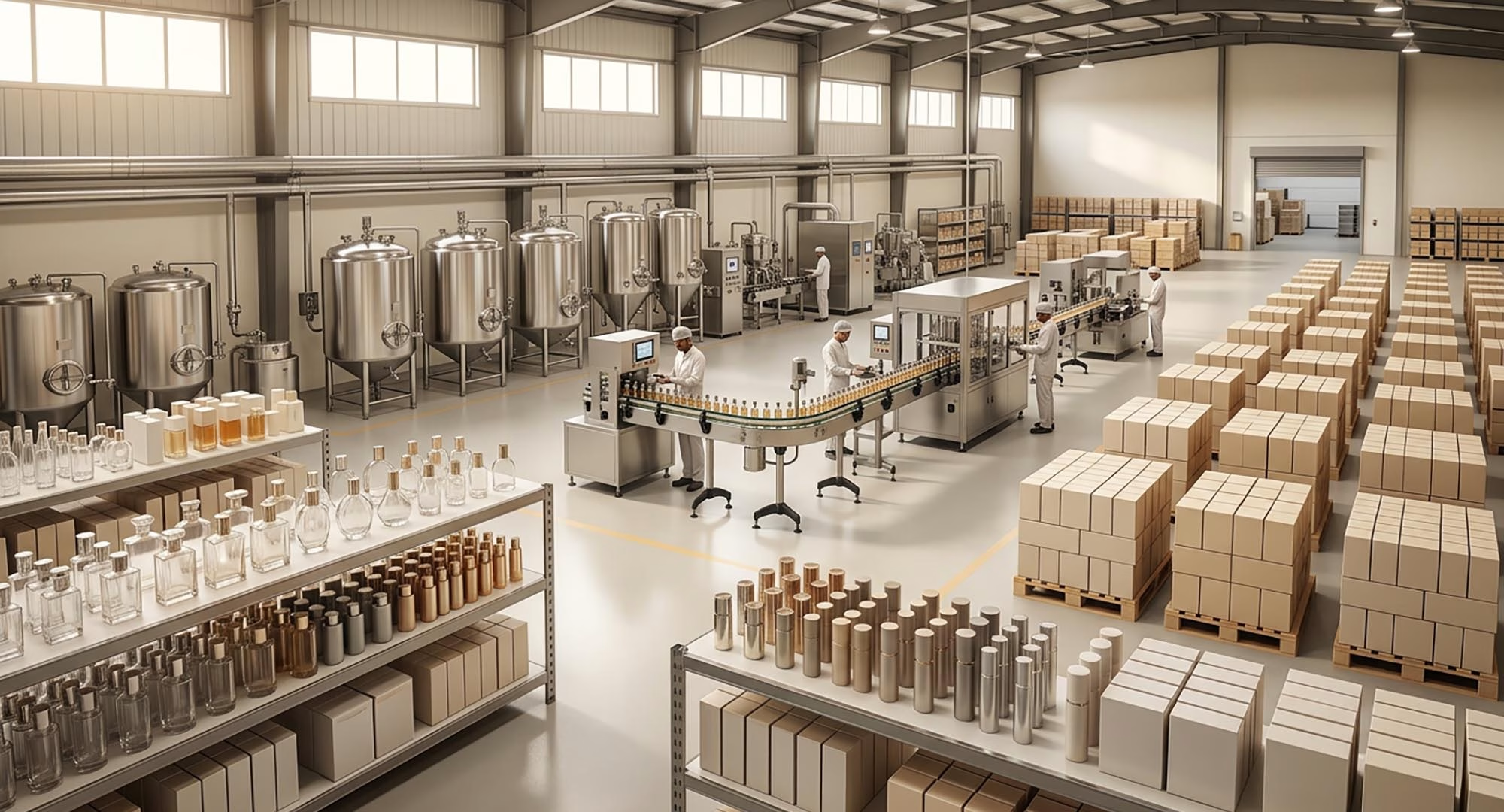
Space, cost and proximity. In that order.
Ajman is small, industrial and sits within an hour of Dubai and minutes from Sharjah. Industrial plots cost a fraction of what equivalent space costs further south.
Fragrance production needs more room than people imagine. Compounding vessels, maturation tanks, filling lines, component storage for glass and cartons, and a finished goods area that fills up fast before a shipment.
Put that footprint in a premium industrial zone and the cost lands in the unit price of every bottle. Put it in Ajman and it does not.
The result is a cluster. Fragrance manufacturers, glass suppliers, cap makers and carton printers all operate within a short drive of each other across the northern emirates.
Clusters like this build slowly and then become self-reinforcing. Suppliers move to where their customers already are, which draws more manufacturers, which draws more suppliers.
That density is the real advantage, and it is invisible until something goes wrong. A wrong cap shade is a same-day fix here.
What Is Inside a Perfume Factory in Ajman?
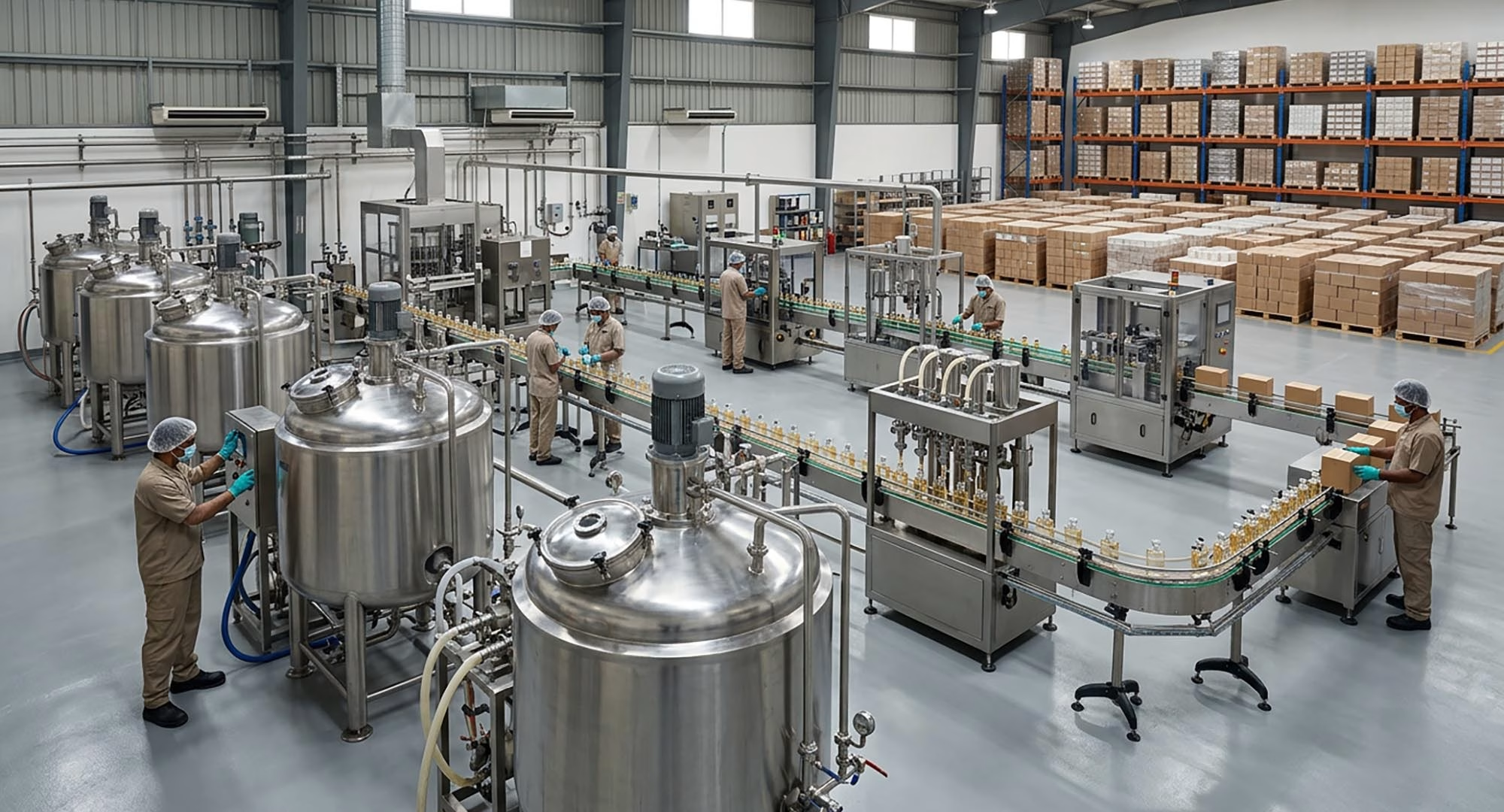
Four areas, and the sequence rarely changes from one plant to another.
Compounding and Maturation
Fragrance oils, alcohol and fixatives are combined to formula. The mixture then sits.
Maturation is the step outsiders find surprising. A freshly compounded perfume does not smell finished. It needs time for the materials to settle into each other, and rushing it produces a product that smells sharp and thin.
This is also why a sample approved on day one should be checked again weeks later.
Filling, Capping and Labelling
The matured liquid is filtered, then filled to volume, capped and sealed. Labels go on either before or after filling depending on the component.
Fill accuracy matters more than it sounds. A bottle consistently under volume is a compliance problem. Consistently over is margin leaking out of every unit.
Packing and Finishing
Cellophane wrapping, boxing, cartoning and palletising. The least glamorous part of the plant and the one that decides whether stock arrives saleable.
Ask to see this area specifically. It tells you more about a factory’s standards than the filling line does, because filling machines look impressive almost regardless of how carefully the plant is run.
The Numbers Behind the Plant
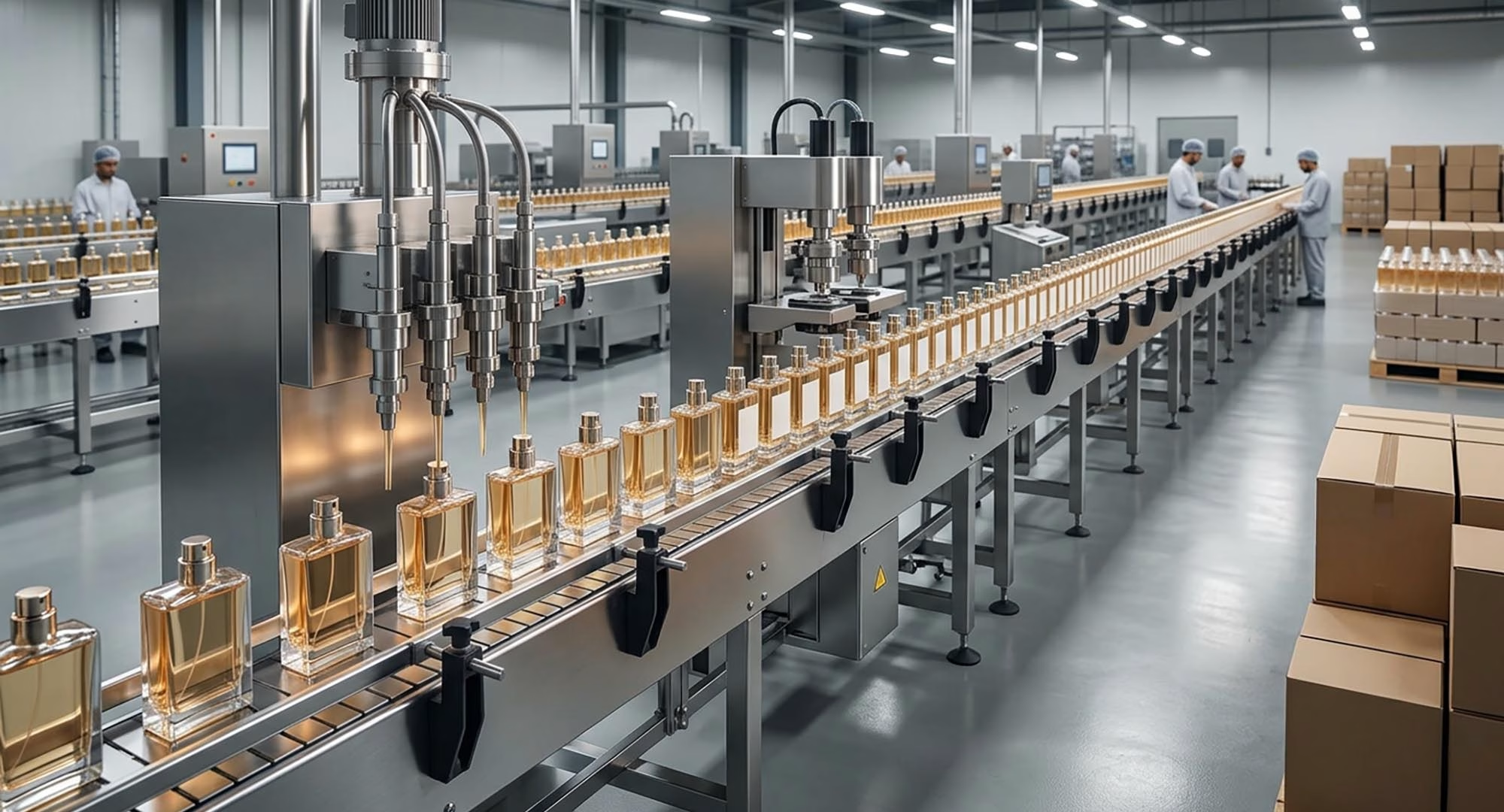
IGOP runs a 16,000 square foot facility in Ajman Industrial Area 1, with around 35 staff and output up to roughly 15,000 bottles a day.
Orders run from about 1,000 units to a million and beyond, with production taking seven to thirty days once approvals are complete.
The company has been manufacturing fragrance in the UAE for more than forty-five years.
Those figures matter as a pair rather than individually. A high daily ceiling is only useful if the same plant will also take a first run of a thousand bottles without treating it as a nuisance.
Can You Visit the Factory?
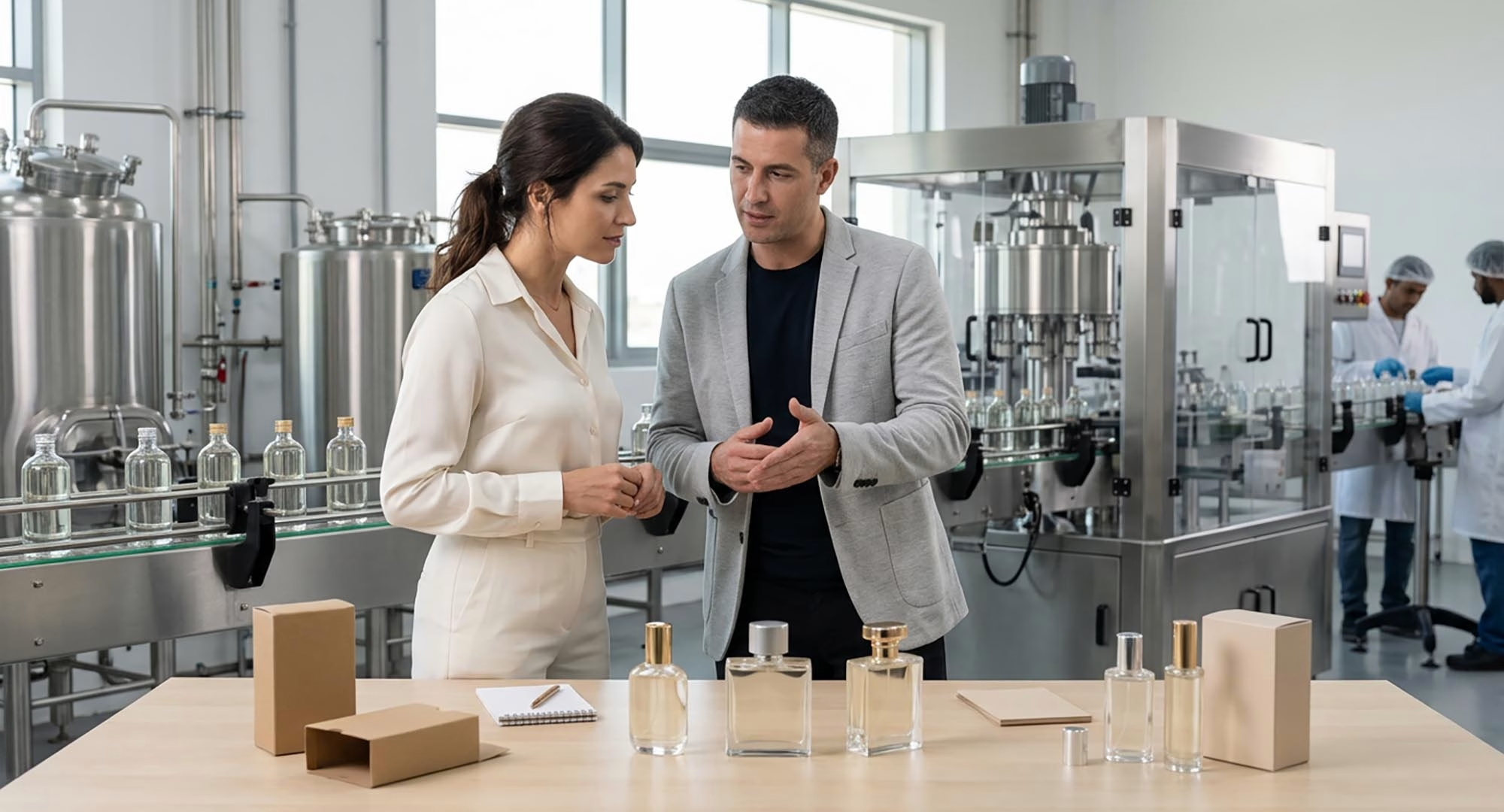
Yes, by arrangement. And you should.
Buyers who visit make better decisions. You learn things in twenty minutes on a production floor that no amount of emailing will tell you.
Whether the place is organised. Whether components are stored properly or stacked in a corner. Whether the people working there seem to know what they are doing.
A factory that is reluctant to show you the production area has given you your answer.
Visits are arranged in advance rather than by turning up, since production scheduling decides when there is something worth seeing. Arrange a visit here.
What to Look For on a Factory Visit
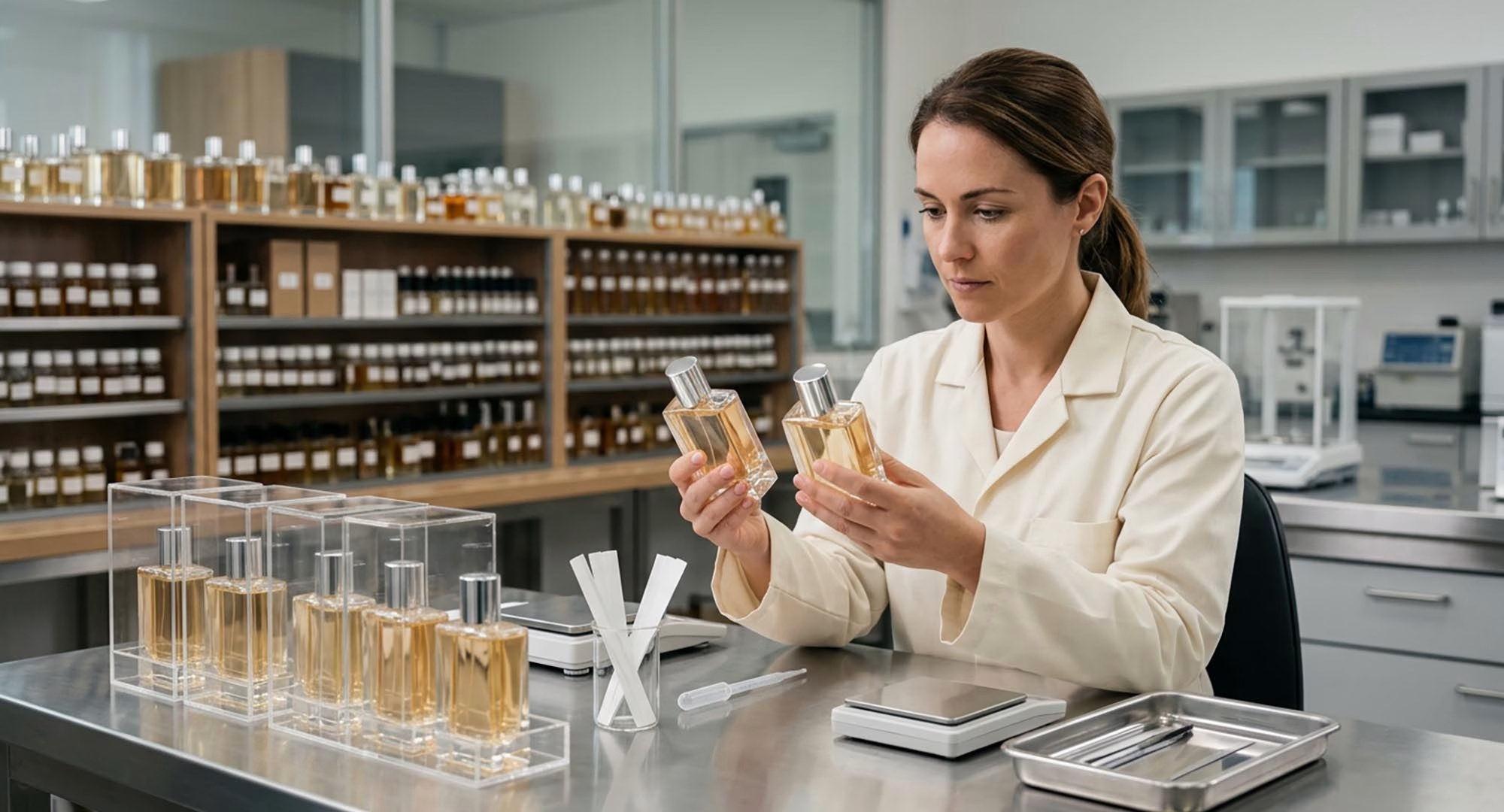
Seven things, in the order you will encounter them.
- Component storage. Glass and cartons kept clean, dry and off the floor. Dusty stock becomes dusty product.
- The compounding area. Whether formulas are documented and followed, or held in somebody’s head.
- Fill accuracy checks. Ask how often volume is verified during a run.
- Retained samples. Good factories keep a sealed sample of every batch. Ask to see the shelf.
- The finishing area. Where the product becomes saleable. Look for care, not speed.
- Finished goods storage. Temperature, tidiness and whether stock is traceable to a batch.
- The people. How long the production staff have been there. Continuity is quality.
Number four is the one to insist on. A factory that keeps retained samples can prove consistency. One that does not is asking you to take its word.
Questions Worth Asking While You Are There
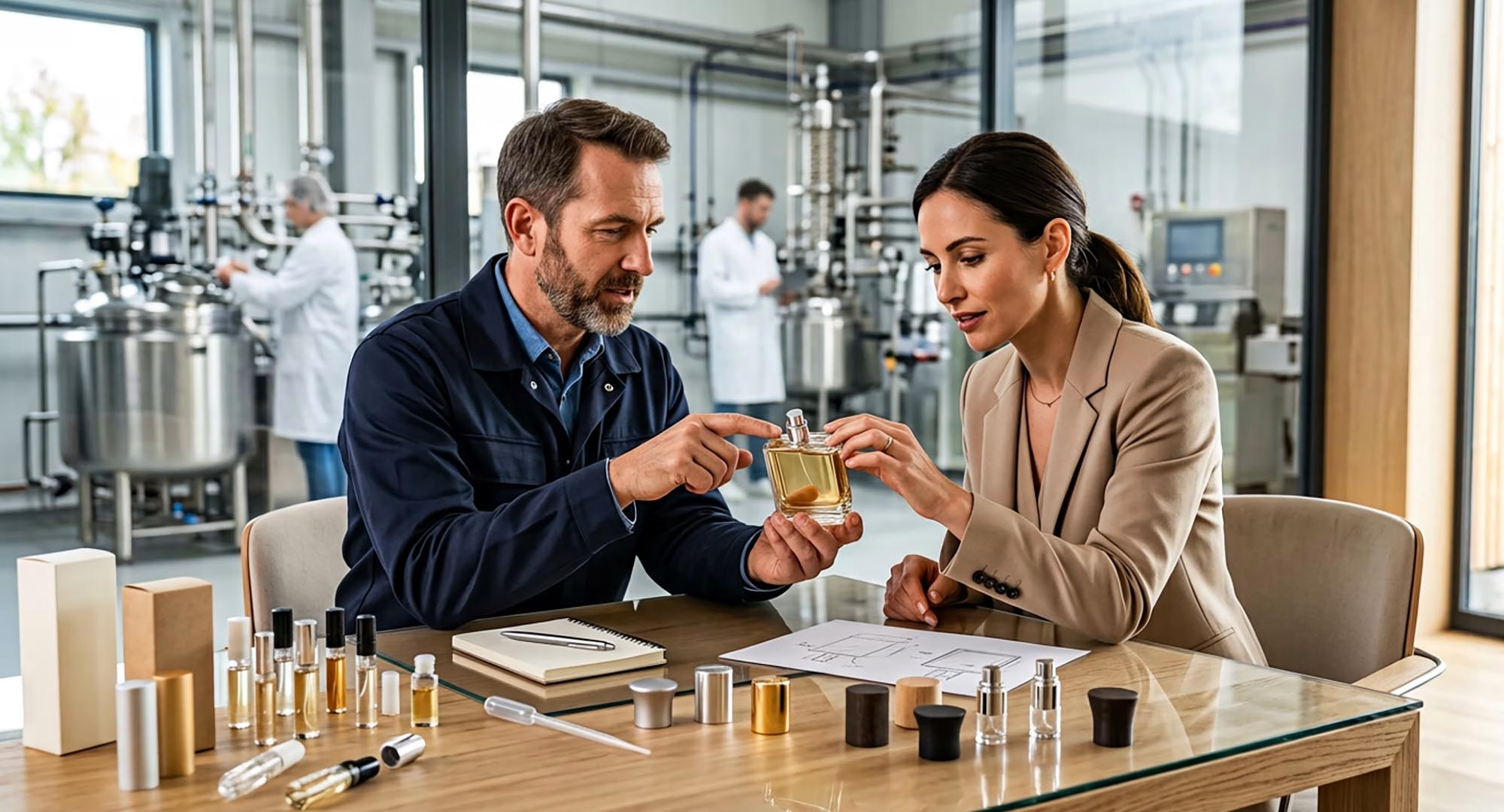
You are standing in the answer to most of them, which makes this the best time to ask.
- What runs on this line besides perfume? Shared equipment is normal. Cleaning protocols between products are what matter.
- How do you match a batch to the last one? The answer should involve a reference sample, not a memory.
- What is your busiest month? It tells you when your reorder will be slowest.
- Where do the bottles come from? In-house components remove a sourcing cycle and a margin layer.
- How do you handle fragrance safety standards? The International Fragrance Association publishes the guidance most of the industry formulates against.
- What happens if a batch fails? Every factory has failures. Only some have a process.
How to Get to Ajman Industrial Area 1
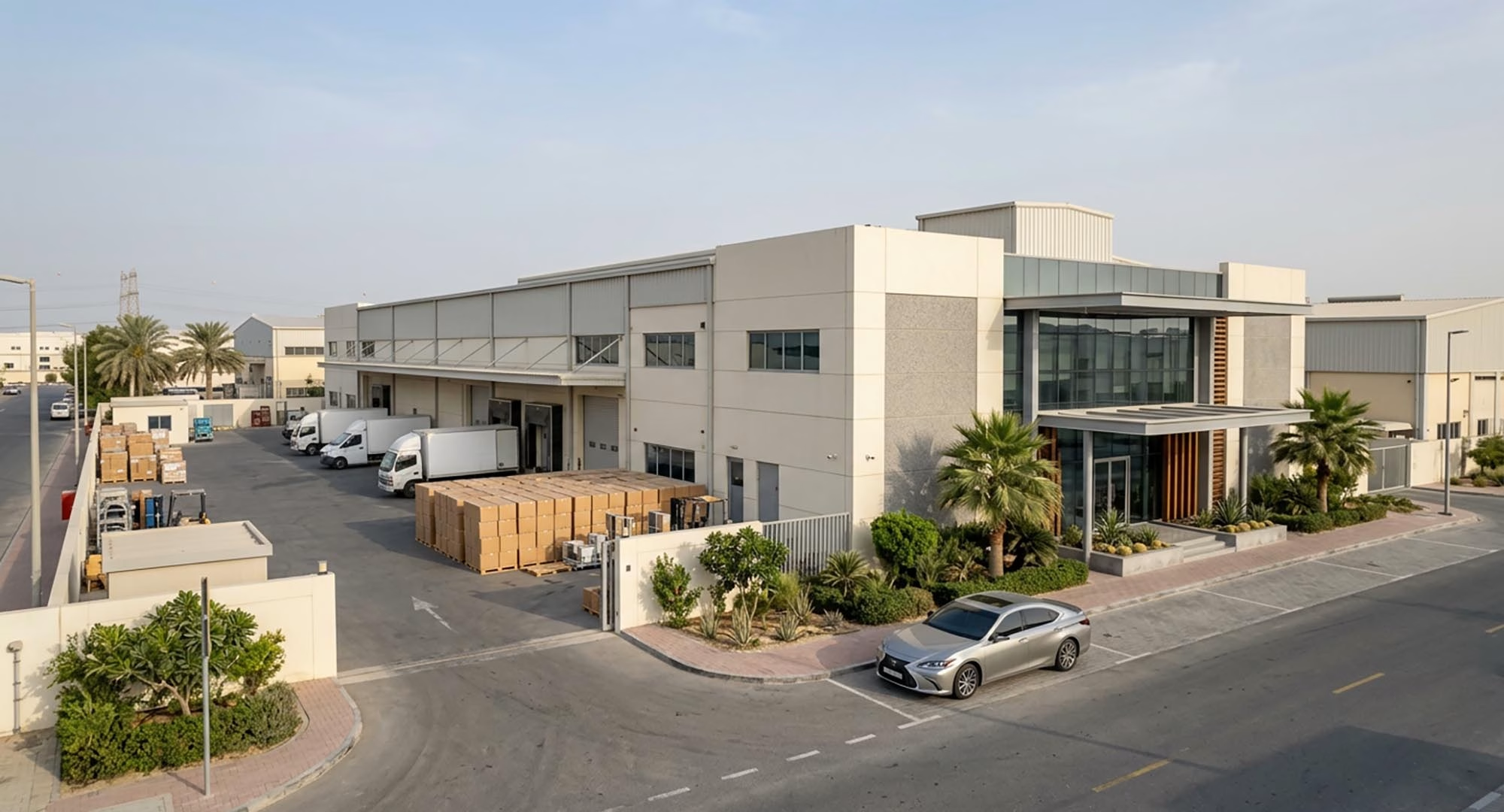
Straightforward from anywhere in the northern emirates.
From central Dubai it is under an hour in normal traffic. From Sharjah it is a short drive. From Abu Dhabi, allow around two hours and plan the return outside peak.
Ajman Industrial Area 1 is a working industrial zone rather than a business park, so give yourself a few extra minutes to find the unit. Confirm the exact location when you book.
Most buyers combine the visit with component selection, which is the sensible use of a trip. Seeing bottles and boxes in person beats looking at photographs of them.
Allow longer than you think. A productive first visit runs to two or three hours once you factor in smelling a shortlist, handling components and actually walking the floor.
What Does the Ajman Location Save You?
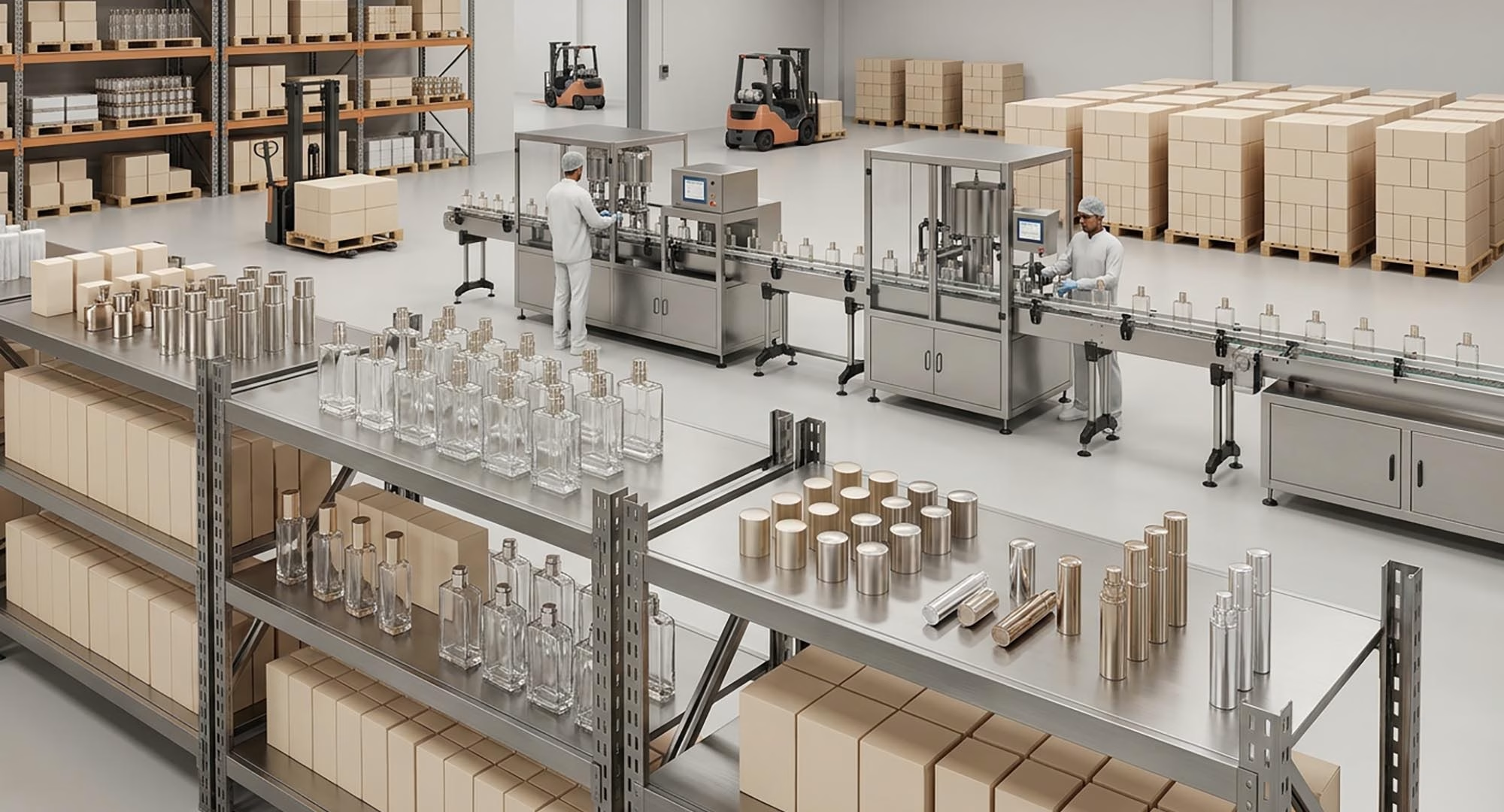
Two things, and one of them is not money.
The cost saving is real. Lower industrial overheads show up in the unit price rather than in the factory’s margin, which is the whole reason production clusters here.
The second saving is time. Being close to glass, cap and carton suppliers means a component problem is solved in days rather than becoming a shipping question.
For a brand based in Dubai, this is the practical trade. Your office stays where your customers are. Your production sits where production is affordable. The Dubai page covers that split in more detail.
The same logic applies across the northern emirates, and the Sharjah page covers what bulk buyers there tend to ask for.
Who Manufactures at an Ajman Perfume Factory?
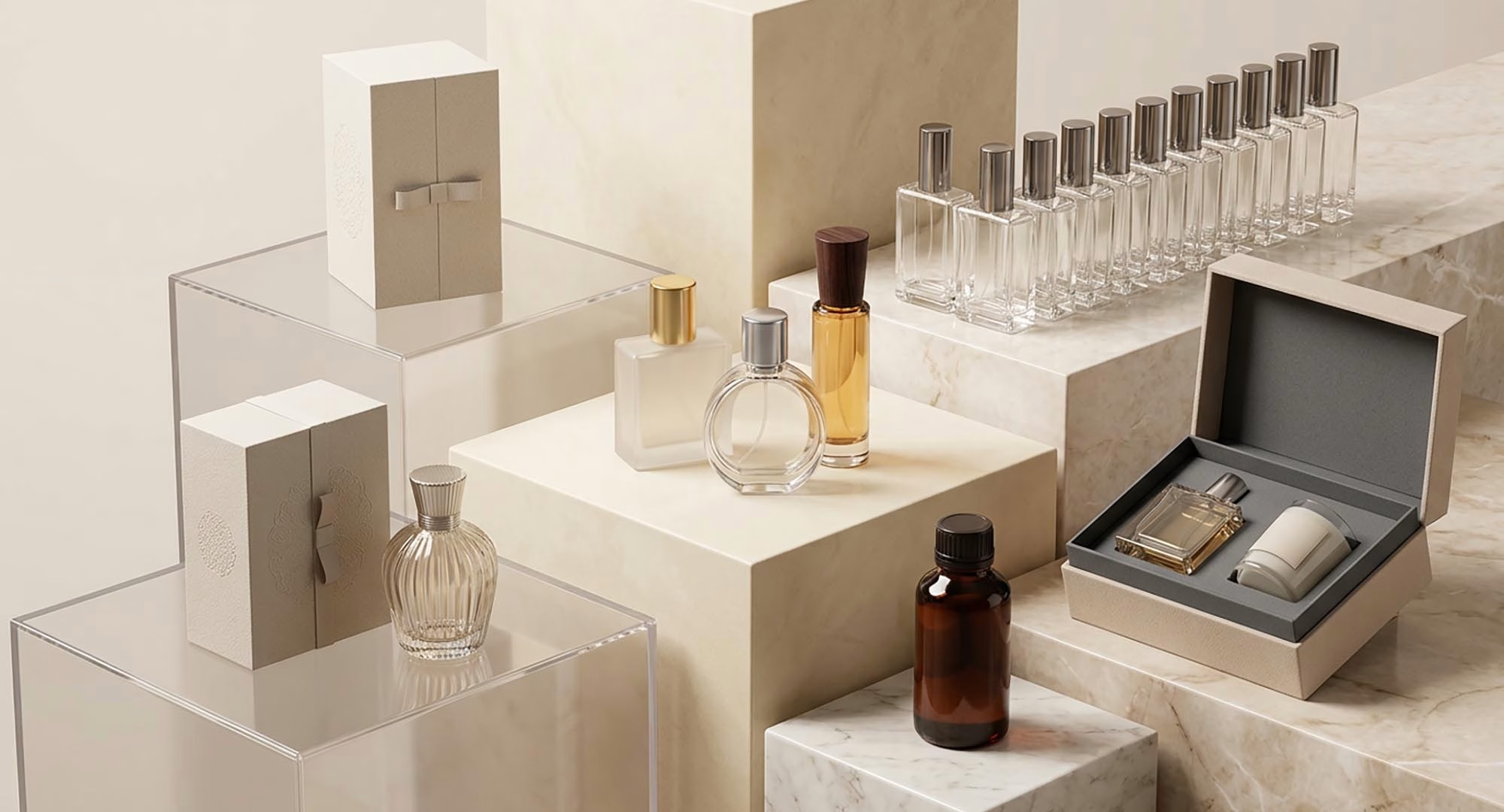
A wider mix than most people expect.
- New UAE brands. First runs, usually around a thousand units, testing whether a concept sells.
- Established regional brands. Repeat production at volume, often across several scents.
- Retailers with own-label lines. Shops and chains adding margin to existing footfall.
- Corporate and gifting buyers. Branded product against a fixed event date.
- Other manufacturers. Buying fragrance oils in bulk rather than finished product.
The same plant serving all five is normal in this industry. It is also why asking about minimum and maximum order sizes together tells you where a factory is really comfortable.
What the Plant Actually Produces
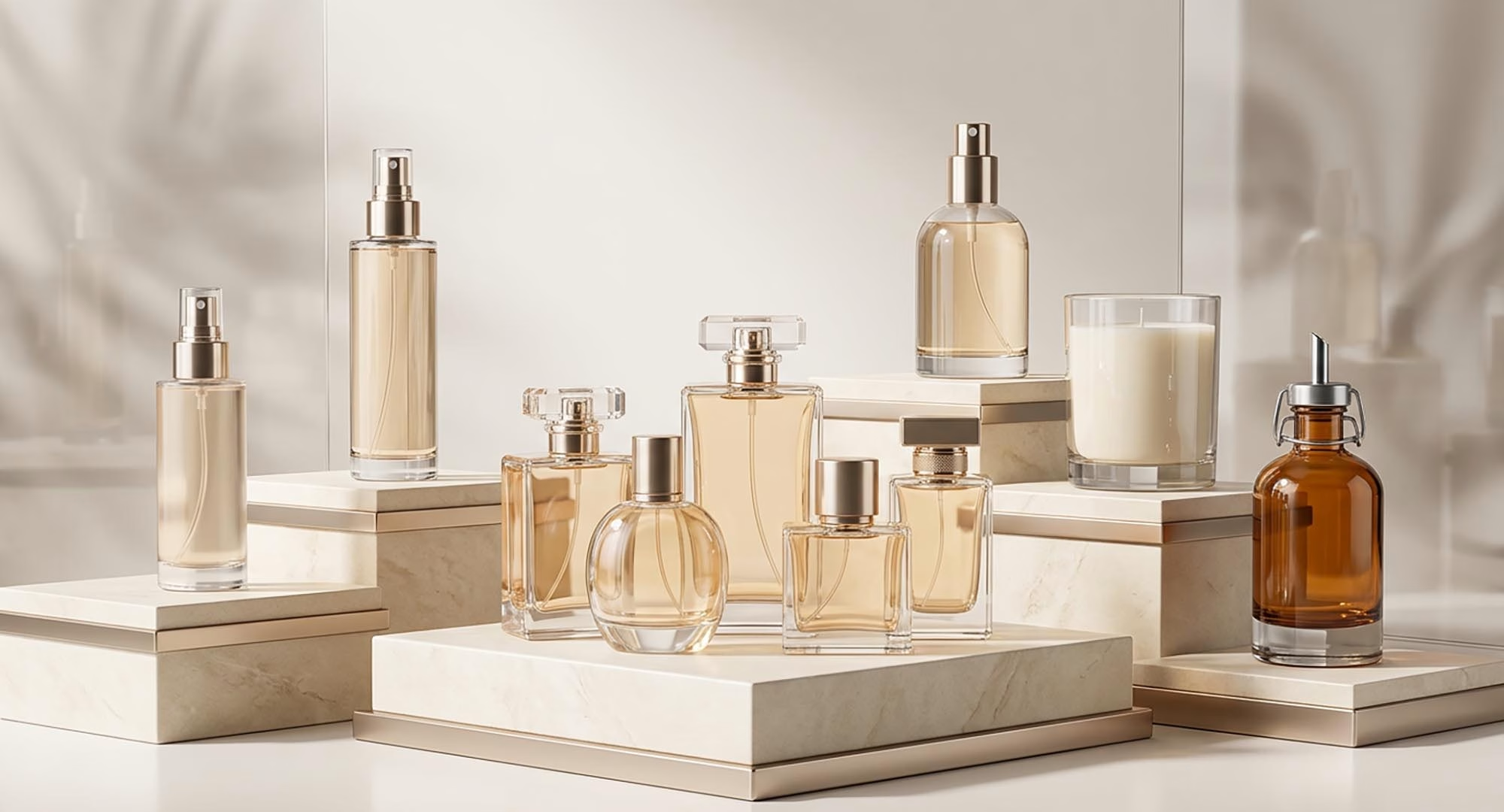
Perfume is the largest line, but it is not the only one.
The Ajman facility covers perfumes across niche, designer-inspired, masstige and mass-market tiers, alongside hair mists, body sprays and all-over sprays, interior perfumes and candles.
It also supplies fragrance oils, both Class A oils for luxury work and cost-effective alternatives for volume applications. The full production range is listed on the services page.
Bottles, caps, boxes and decorative elements are held in-house, which is why component selection can happen during the same visit as the production tour.
What the Plant Actually Produces
Perfume is the largest line, but it is not the only one.
The Ajman facility covers perfumes across niche, designer-inspired, masstige and mass-market tiers, alongside hair mists, body sprays and all-over sprays, interior perfumes and candles.
It also supplies fragrance oils, both Class A oils for luxury work and cost-effective alternatives for volume applications. The full production range is listed on the services page.
Bottles, caps, boxes and decorative elements are held in-house, which is why component selection can happen during the same visit as the production tour.
What Happens After You Approve the Sample?
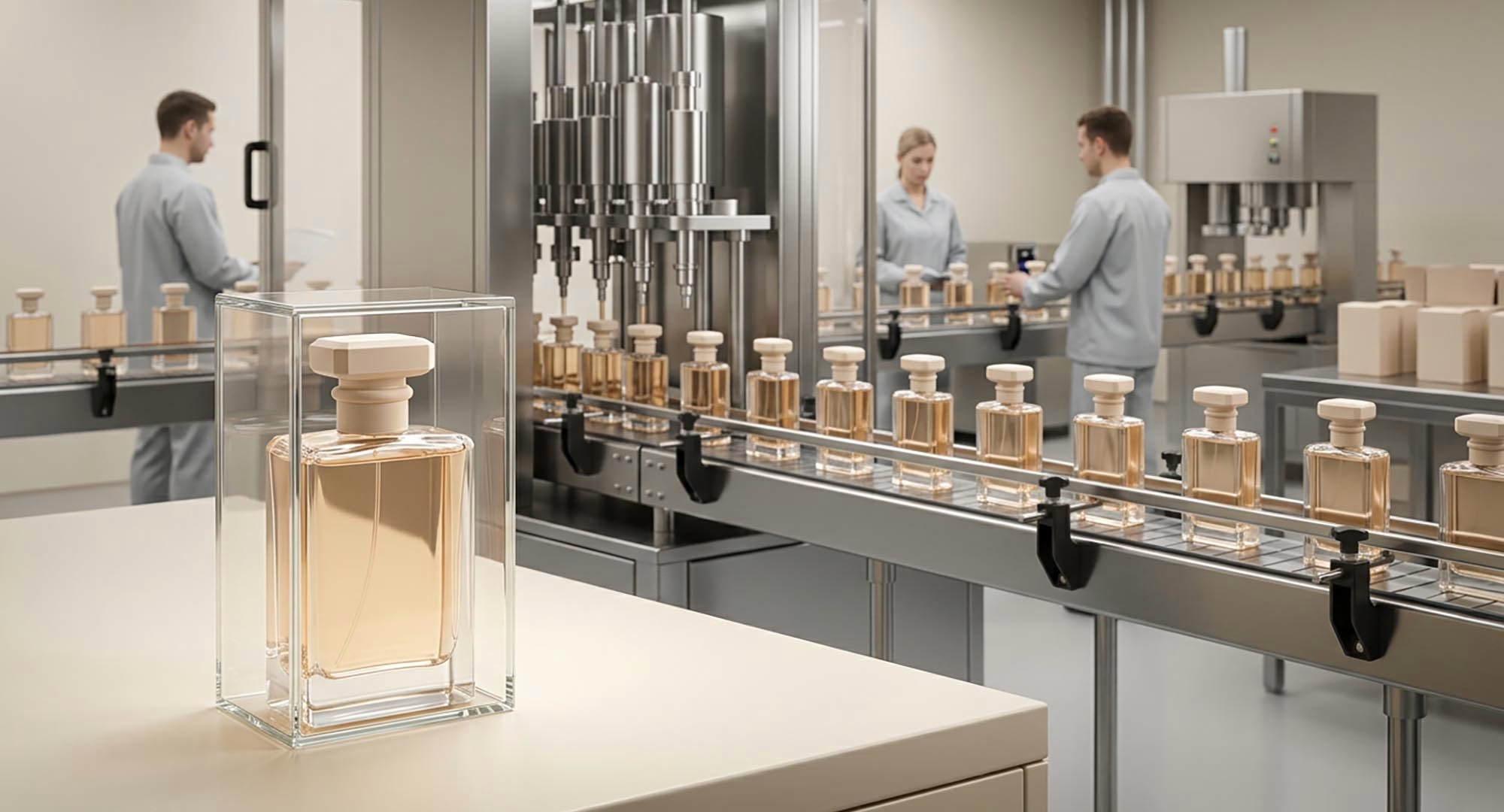
The part nobody photographs, and the part that decides whether your launch date holds.
Approval triggers a sequence inside the plant. Components are pulled from stock or ordered, artwork goes to print, the formula is scaled from sample quantity to production quantity, and a slot is booked on the line.
Scaling is not a simple multiplication. A formula that behaves one way in a few hundred millilitres can behave slightly differently in a production vessel, which is why the first production batch gets checked against your approved sample rather than assumed.
Printing is usually the longest external step. Cartons and labels come from a printer working to its own schedule, and a late artwork approval pushes everything behind it.
Then filling, capping, finishing, boxing and palletising. Seven to thirty days depending on volume and how many decoration passes the bottle needs.
Ask for the production schedule in writing once you approve. A date you can plan around is worth more than a fast quote.
Why a Visit Beats a Video Call
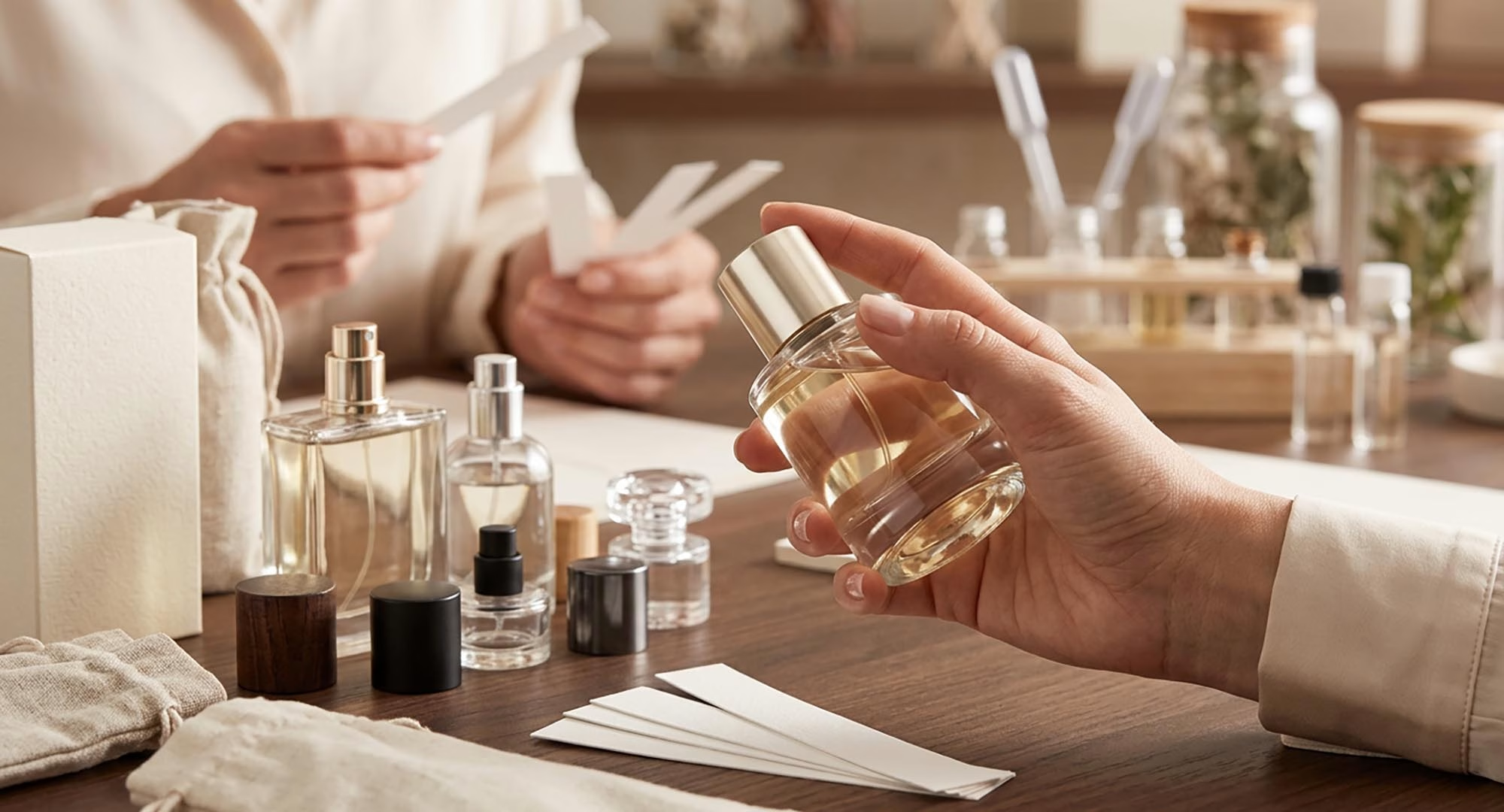
Because you cannot smell a video call.
Fragrance decisions are sensory and they are hard to make remotely. A scent described accurately over email still arrives as a surprise when it reaches you.
The same is true of packaging. Glass weight, cap finish and box rigidity are tactile qualities. Photographs flatten all three, and buyers routinely approve components that disappoint them in the hand.
Finished UAE brands are useful for calibration before you choose. Craftier, a Dubai fragrance retailer, shows the standard a private label product has to reach once it is in a customer’s hand.
One afternoon at the factory usually saves two rounds of samples and a fortnight.
Visiting the Perfume Factory in Ajman
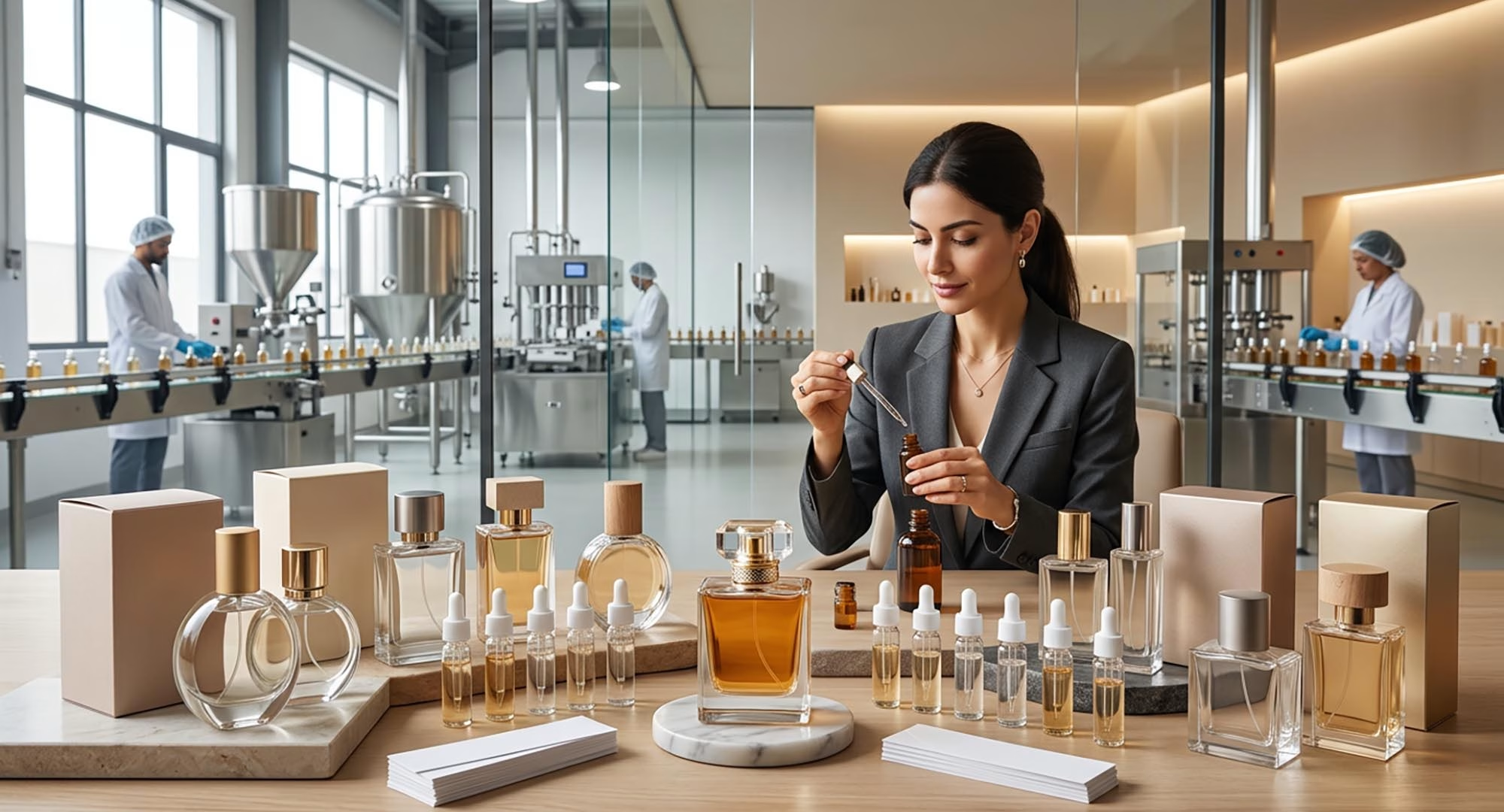
Come with a brief and a price point. Those two things make the visit productive.
If you know roughly who your customer is and what the product needs to retail at, the factory can steer the formulation and the components sensibly on the day.
If you arrive with neither, you will smell a lot of pleasant things and leave without a decision.
Arrange a time before travelling, since production schedules decide when there is most to see.
FAQ
Where is the IGOP perfume factory in Ajman?
The facility is in Ajman Industrial Area 1, a working industrial zone in Ajman. It covers around 16,000 square feet and is under an hour from central Dubai and a short drive from Sharjah. Confirm the exact unit location when you arrange a visit, since industrial addresses can be awkward to find.
Can I visit a perfume factory in Ajman before placing an order?
Yes, by appointment. Visits are worth making because you learn things on a production floor that email cannot tell you, including how components are stored and whether the factory keeps retained samples of past batches. Book ahead rather than arriving unannounced, as production scheduling affects what there is to see.
How much perfume can the Ajman factory produce?
Up to roughly 15,000 bottles a day, with orders accepted from around 1,000 units to a million and beyond. Production runs seven to thirty days once the sample and artwork are approved, depending on volume and how much decoration the packaging requires.
Why are so many UAE perfume factories in Ajman and Sharjah?
Industrial space costs considerably less than in Dubai, and fragrance production needs a large footprint for compounding, maturation, filling and storage. Over time this pulled glass, cap and carton suppliers into the same area, so a component problem can be resolved locally in days rather than weeks.
What should I check on a perfume factory visit?
Component storage, whether formulas are documented, how fill volumes are verified, and above all whether the factory retains a sealed sample from every batch. Retained samples are how consistency is proved between runs. Also look at the packing area, which reveals more about standards than the filling line does.
READY TO ELEVATE YOUR BRAND'S FRAGRANCE EXPERIENCE ?
READY TO ELEVATE YOUR BRAND'S FRAGRANCE EXPERIENCE ?
READY TO ELEVATE YOUR BRAND'S FRAGRANCE EXPERIENCE ?
Ready to Elevate Your Brand's Fragrance Experience ?
Partner with IGOP and transform your fragrance ideas into market-leading products. Our expertise, capacity, and commitment to quality ensure your vision is realized, exactly the way you want it. Your vision, your budget, our expertise.
