
Perfume Manufacturers in Sharjah: Private Label and Bulk Production
Why Sharjah Sits at the Centre of the UAE Fragrance Trade
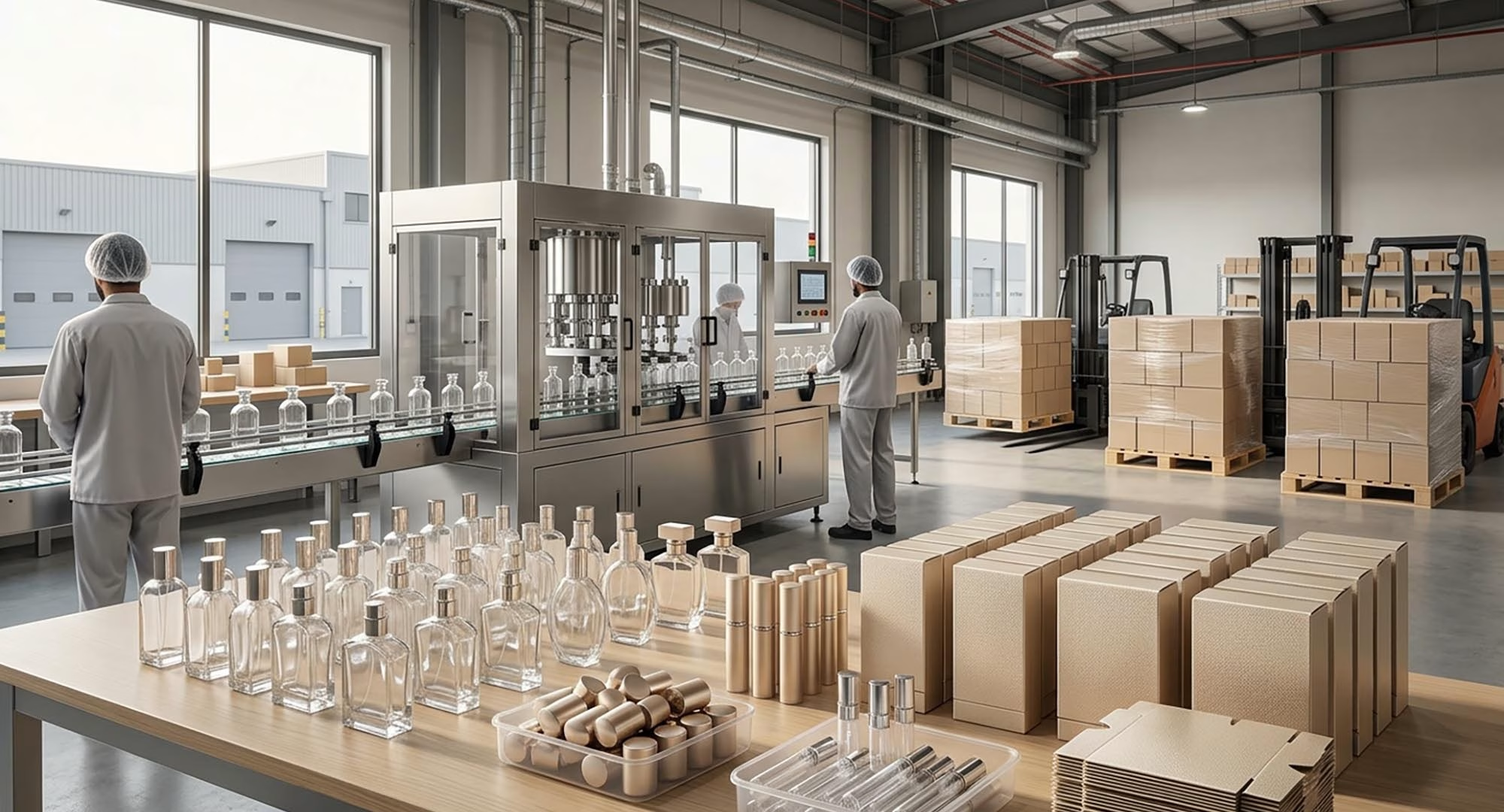
Because the trade grew up here.
Sharjah has been a commercial hub far longer than the modern fragrance market has existed. Wholesale, distribution and re-export are established habits rather than new opportunities.
The emirate also holds a large share of the country’s industrial capacity. Glass, caps, cartons, print and filling all operate within a short radius.
For a fragrance buyer that concentration is the point. A supplier, a printer and a component maker can all be visited in one morning.
The customer profile here differs from Dubai. Sharjah buyers tend to think in cartons rather than in units, and in distribution rather than in launch campaigns.
That shapes what they want from a factory, and it is worth being direct about it rather than pretending every buyer wants the same thing.
What Do Perfume Manufacturers in Sharjah Supply?
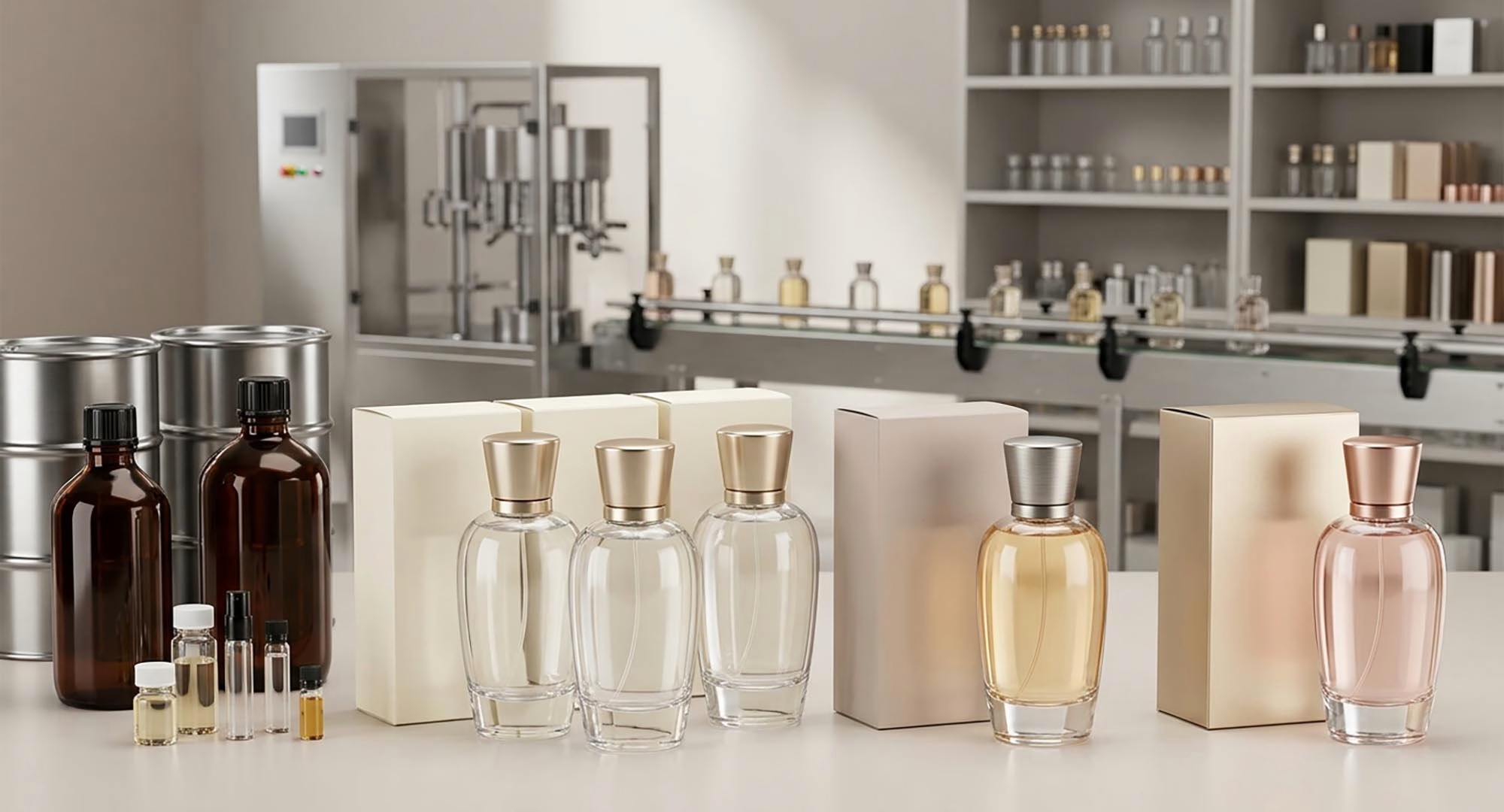
Finished, cartoned, saleable stock. Usually a lot of it.
The service itself is the same as anywhere else in the country. Formulation, filling, packaging, decoration and finishing, delivered as units ready to move.
- Private label production. A scent developed or selected for you, packaged under your own brand.
- Repeat bulk runs. The same product produced again on a schedule you can plan stock around.
- Multi-scent ranges. Several products sharing one packaging format, which keeps component costs down.
- Fragrance oils in bulk. Supplied to other producers rather than as finished product.
What changes in Sharjah is emphasis. Buyers here are less interested in bespoke development and more interested in whether the factory can hold a price and a date across repeated large orders.
The Sharjah Requirement Is Usually Volume
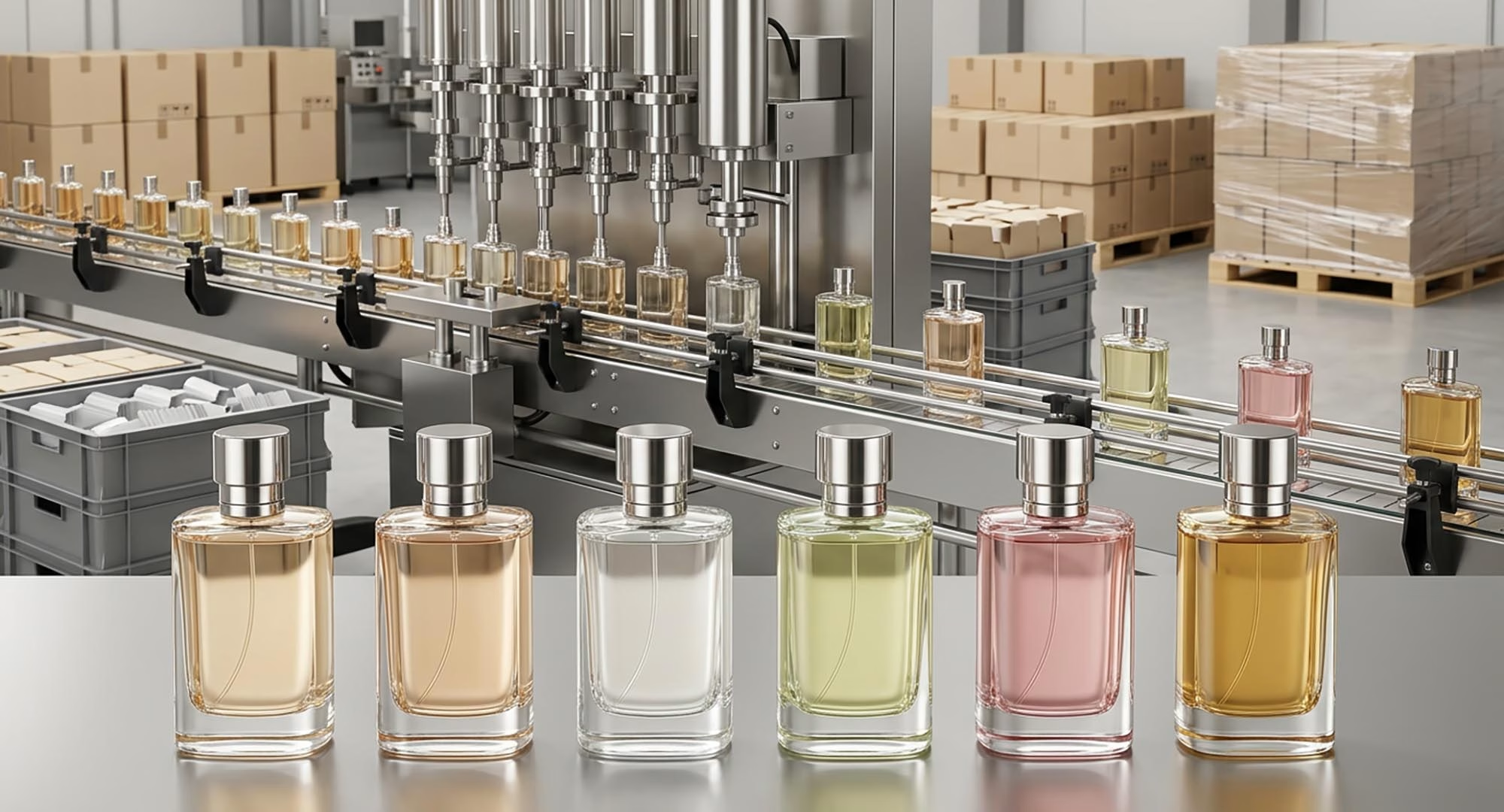
Which sounds simple and is not.
Bulk Production Runs
Large orders are not just small orders multiplied. They pull on component supply, storage and scheduling in ways a thousand-unit run never does.
IGOP produces up to roughly 15,000 bottles a day from its Ajman plant, taking orders from around 1,000 units to a million and beyond.
Ask any factory for both ends of that range. The maximum tells you the ceiling. The minimum tells you how they will treat you when you need a smaller top-up run.
Multi-SKU Consignments
Distributors rarely want one product. They want six, in a shared bottle, with different juice and different labels.
This is efficient if planned properly. One bottle mould, one carton size, one artwork template, six variants. Component costs drop and the range still looks deliberate.
Raise it early though. Changing to a shared format after components are ordered is expensive.
How Volume Changes the Unit Price
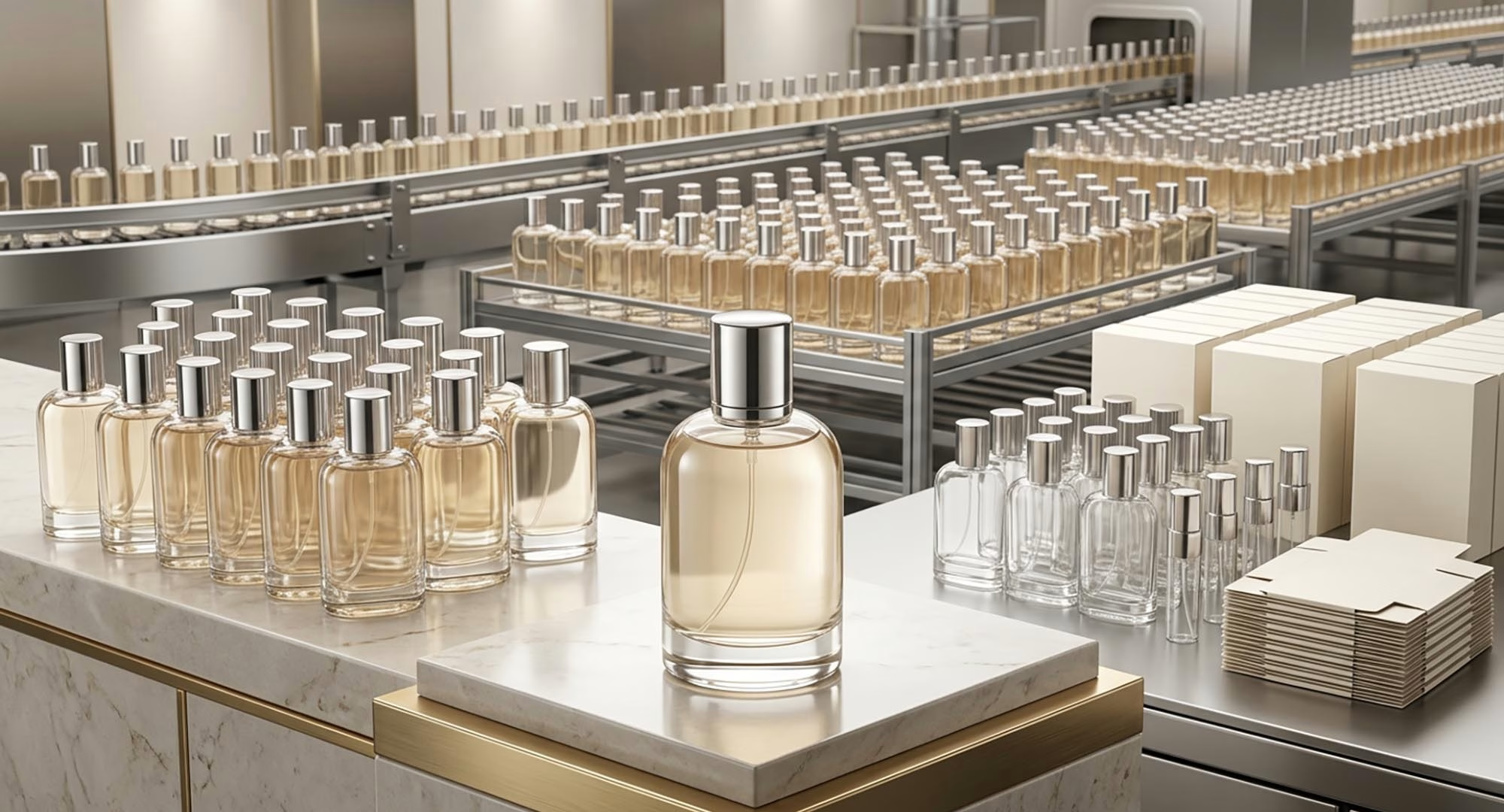
A distinction that costs bulk buyers real money when it is missed.
A boutique product can carry heavy glass, a rigid box and three decoration passes. At distribution volume, every one of those choices multiplies.
Glass weight becomes freight cost on every carton. A rigid box becomes storage volume. Each decoration pass becomes production time across the whole run.
None of that means the product has to look cheap. It means the premium effect has to be achieved deliberately rather than by default.
A well-chosen lighter bottle with one good finishing detail often outperforms a heavy bottle with three, once the freight bill arrives.
The in-house component collection matters here, because selecting from stock bottles and caps avoids tooling costs entirely.
How Long Does a Large Run Take?
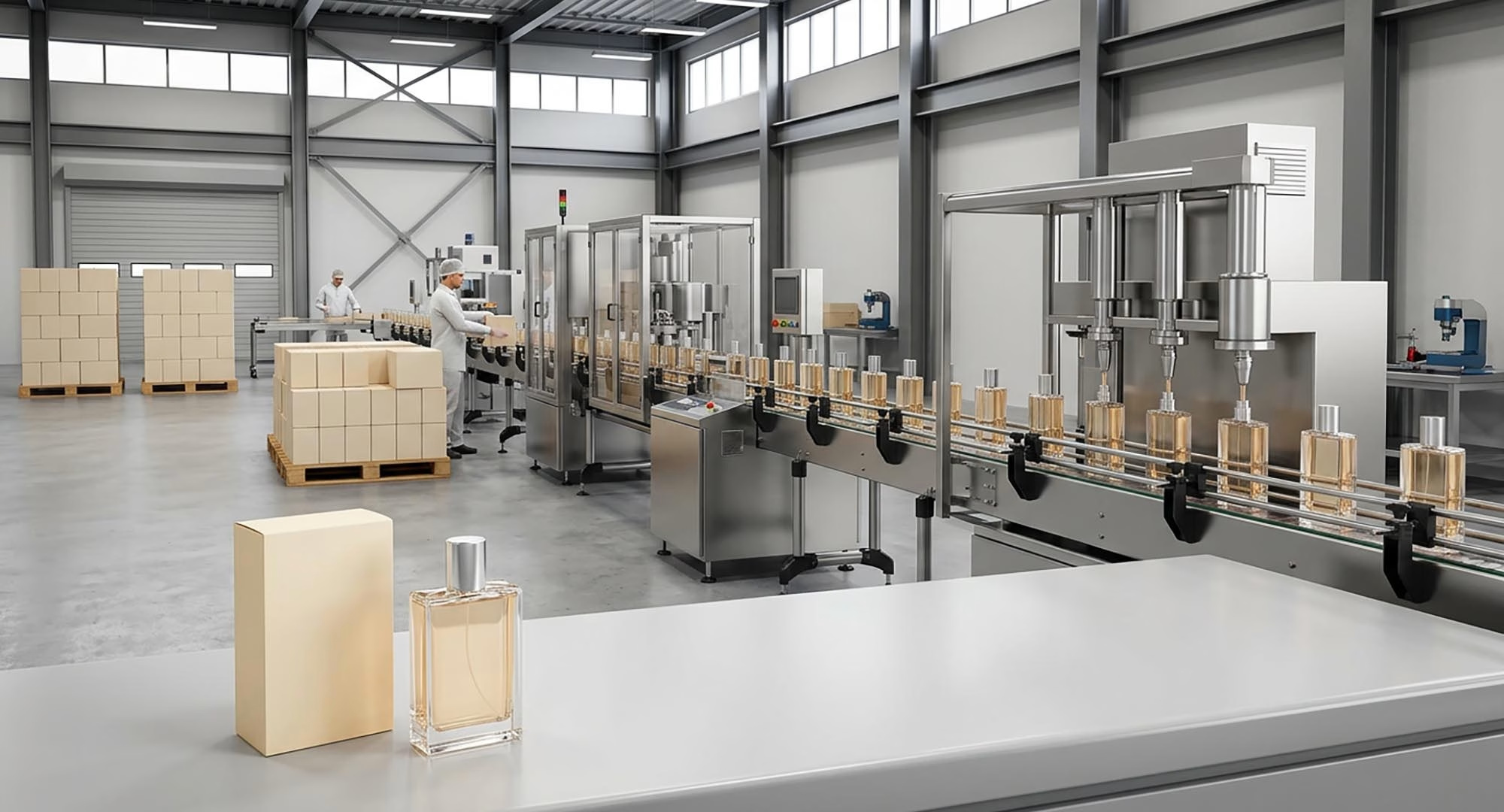
Six stages. Volume affects some of them and not others.
- Scent, concentration, bottle, cap, box and decoration, fixed in writing.
- Component supply. The step volume actually stretches. Stock components are immediate. Custom moulds are not.
- Artwork and print. Cartons and labels run to the printer’s schedule, not the factory’s.
- Pre-production sample. One complete unit, approved before anything scales.
- Seven to thirty days depending on volume and finishing passes.
- Finishing and dispatch. Cartoning, palletising and handover.
The honest answer for a first large order is six to ten weeks end to end. Repeat runs are much faster because the specification and artwork already exist.
Quality Control Across a Big Batch
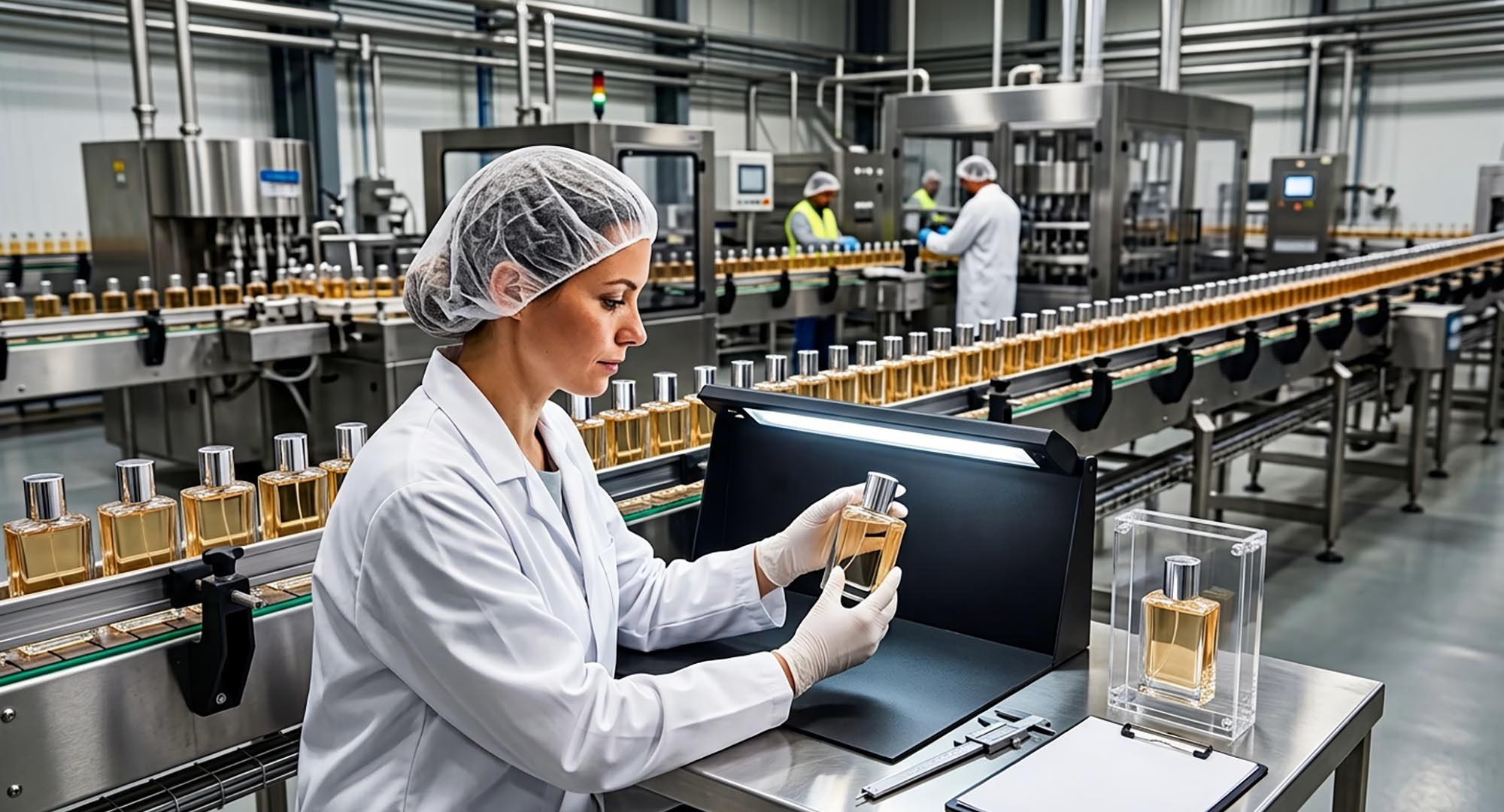
The thing that separates a good bulk supplier from a cheap one.
On a thousand units, a problem is annoying. On a hundred thousand, it is a business event. So the controls matter more as volume rises.
- Retained samples. A sealed reference from the approved batch, kept and checked against later runs.
- Fill volume checks. Verified during the run rather than at the end of it.
- Component consistency. Caps and glass from the same specification throughout, not substituted mid-run.
- Batch traceability. Knowing which pallet came from which production date.
Ask to see the retained sample shelf on a factory visit. It is the single most revealing thing in the building, and the Ajman plant page covers what else to inspect.
What to Check Before Placing a Bulk Order

Six questions, and the answers are cheaper to get now than later.
- How long does the quoted price hold? Material costs move. A price with no validity period is not a price.
- What are the payment terms at this volume? Often more negotiable than the unit cost.
- Can delivery be phased? Taking a hundred thousand units at once is a storage problem.
- What is the tolerance on batch variation? And what happens if a run falls outside it.
- Who owns the mould if it is custom? Whoever paid usually controls it.
- How are fragrance safety standards applied? Ask which standards they work to and who signs off a batch.
Storage, Stock and Phased Delivery
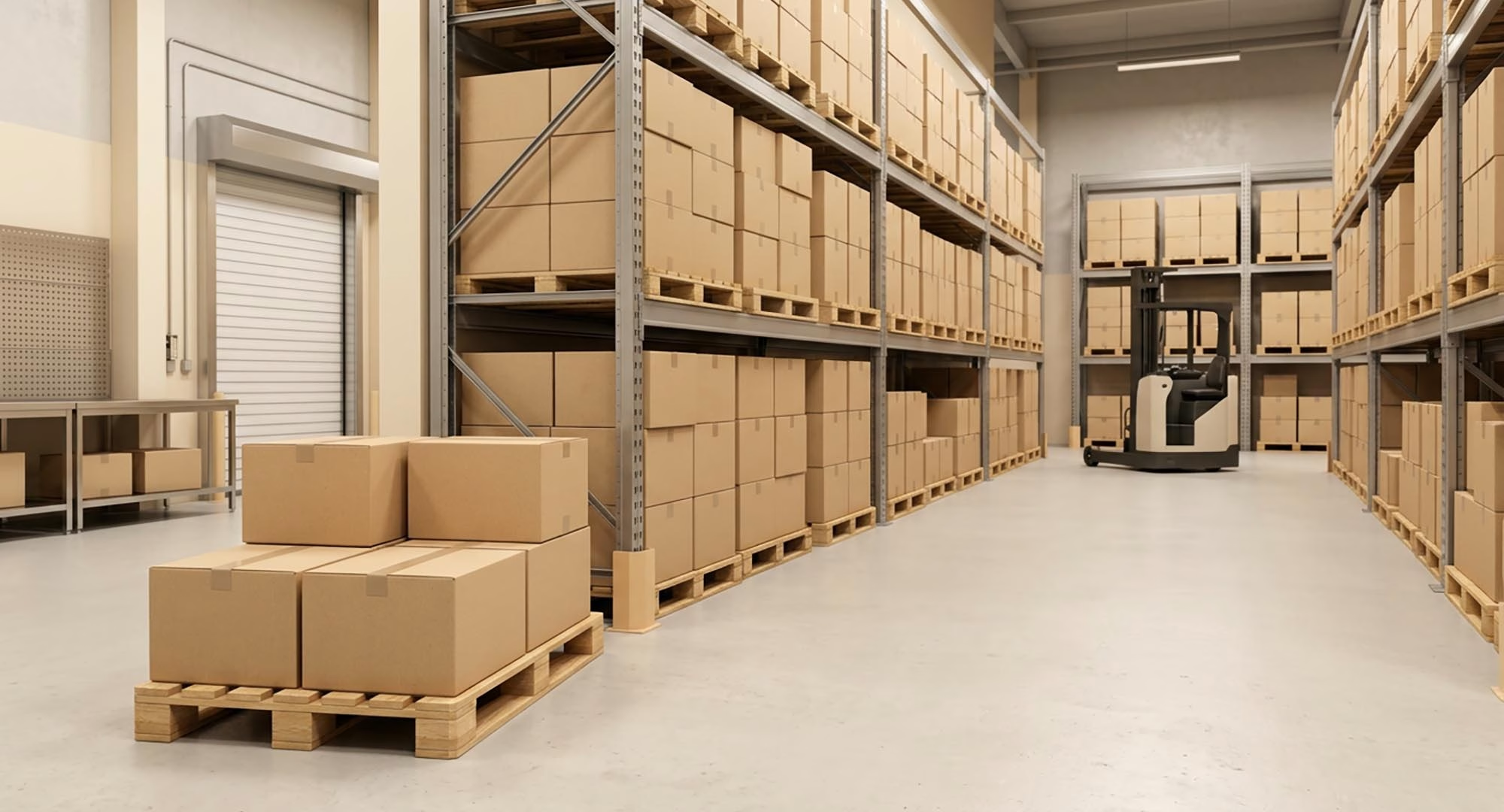
Worth raising before the order, because it is awkward afterwards.
A large run arriving in one delivery becomes a warehousing cost the same afternoon. Many buyers would rather produce once and collect in stages.
Whether a factory will hold finished stock, for how long, and at whose risk are all separate questions. Ask all three.
Cash matters here too. Stock sitting in a warehouse is money not spent on moving it, and a phased arrangement can keep both sides comfortable.
Agree the schedule in the order rather than assuming flexibility later. A factory planning its production calendar needs to know whether it is making your stock or storing it.
Small Orders Still Work Here
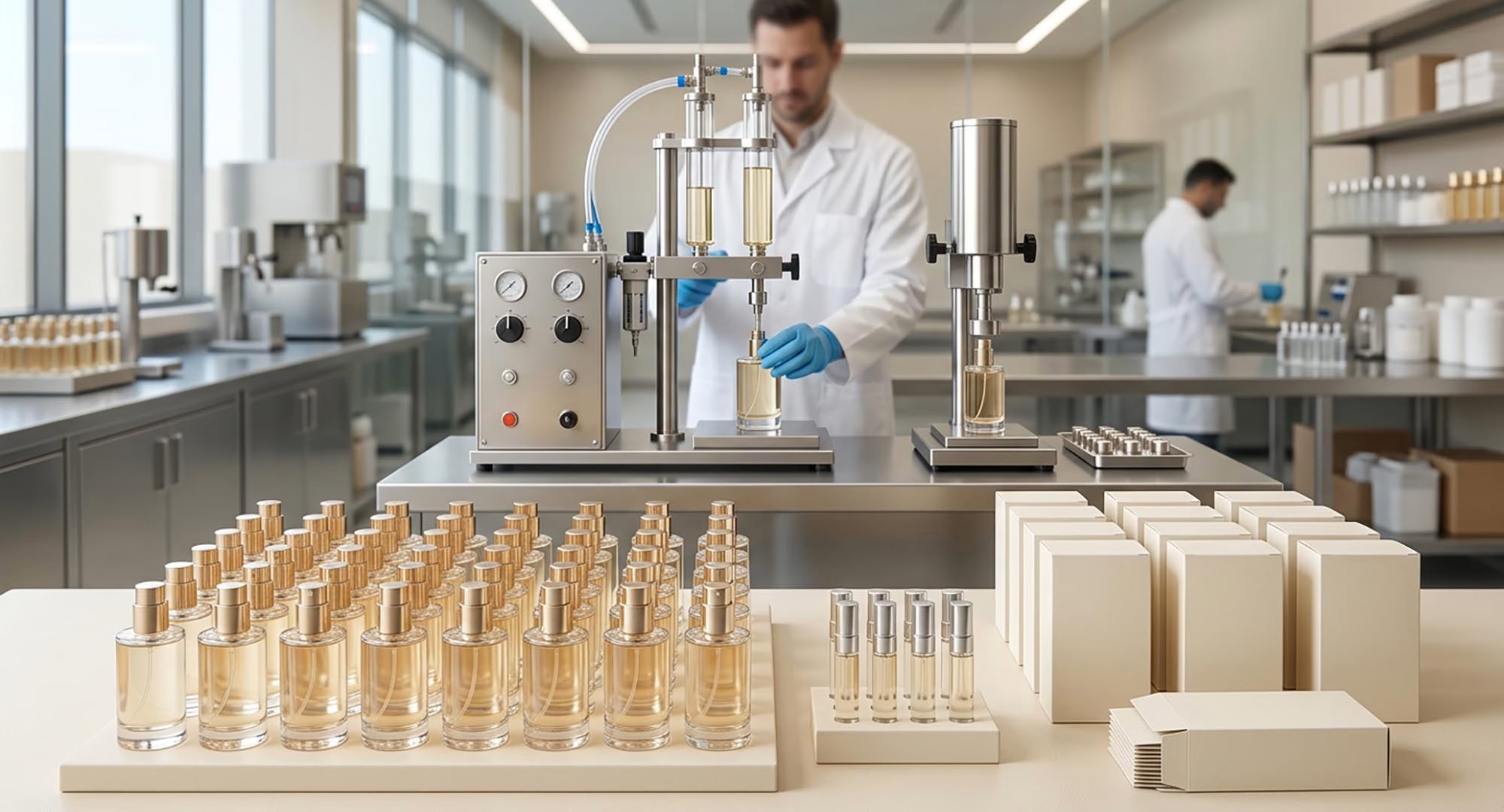
Worth saying, because the volume emphasis can be discouraging.
Not every Sharjah buyer is a distributor. Retailers, gifting suppliers and new brands order modestly and reorder often, and a sensible factory welcomes that.
Production runs from around 1,000 units, which is a real first order rather than a token one. The number moves with packaging choices rather than with how serious you are.
Stock bottles with printed labels keep the entry point low. Custom-moulded glass raises it, because tooling only justifies itself across larger quantities.
Fragrance Oils as a Separate Line
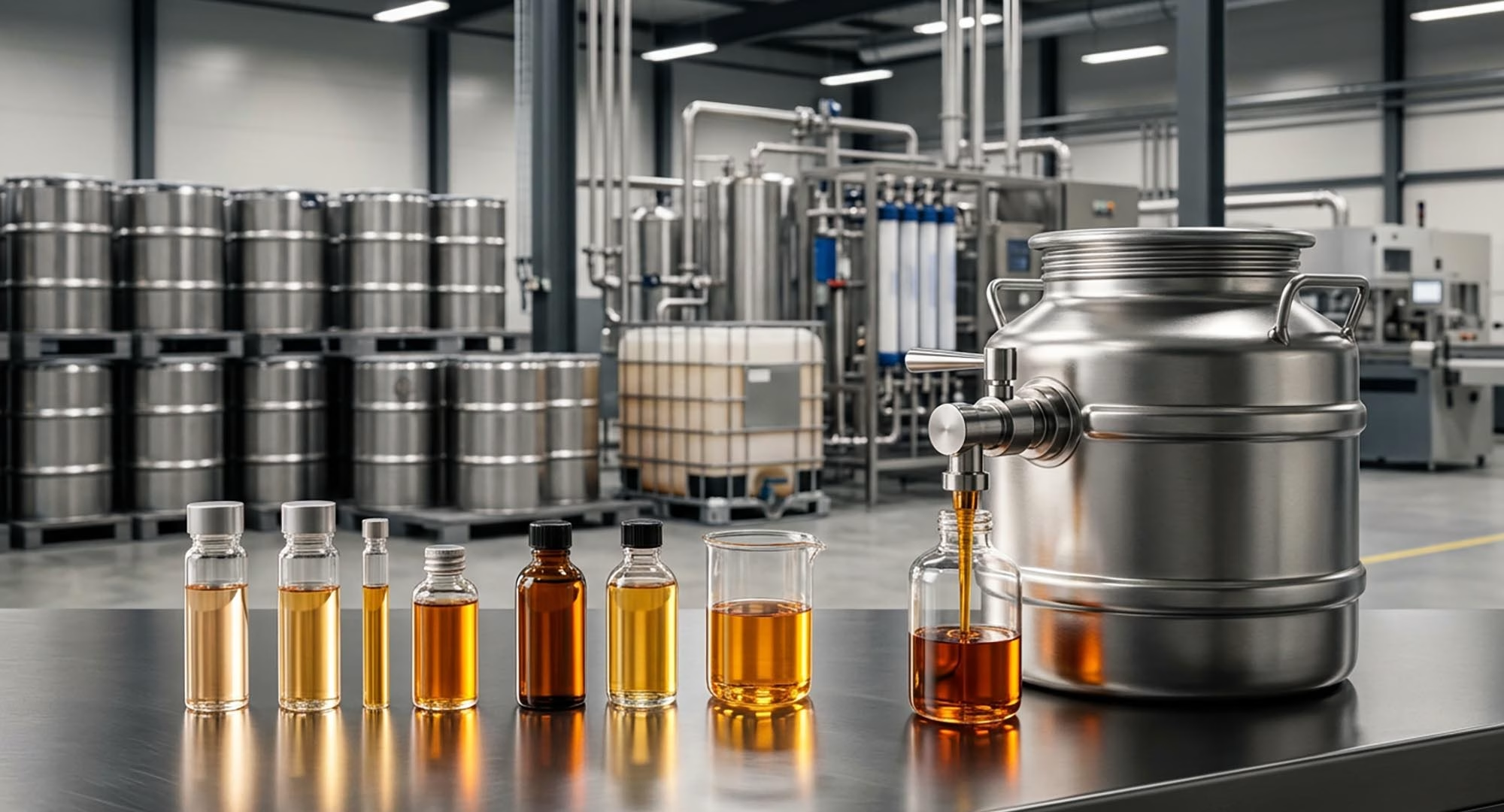
A different customer, buying a different thing.
Some Sharjah buyers are producers themselves. They do not want finished bottles. They want oil by the kilo to use in their own manufacturing.
That is a distinct supply line covering Class A oils for luxury applications and cost-effective alternatives for volume work. The fragrance oils page sets out how grades and applications differ.
If a supplier quotes you per kilo when you asked for finished product, or per bottle when you wanted oil, the conversation has gone sideways. Be explicit about which you need.
Who Are the Sharjah Buyers?
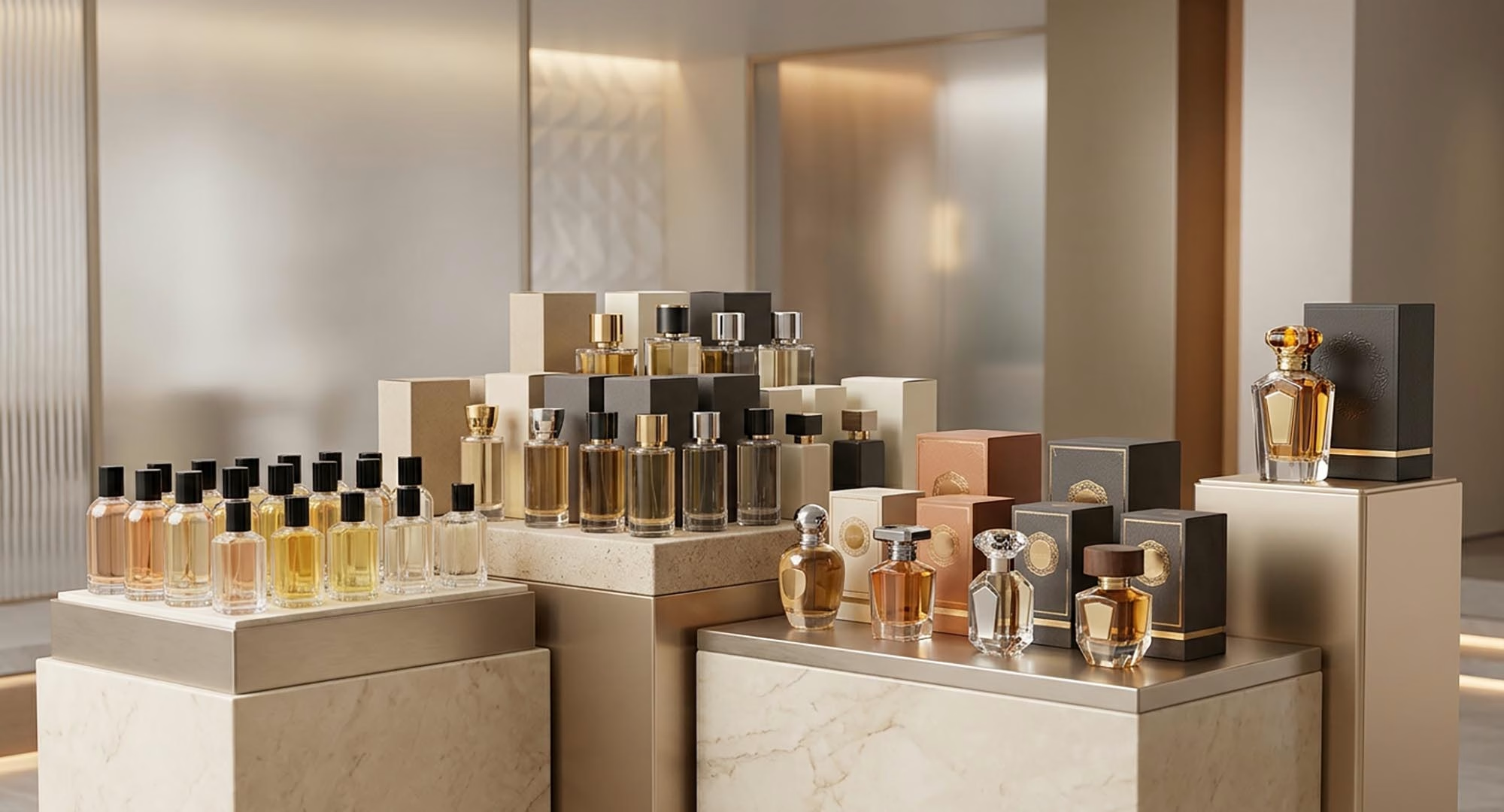
Four groups, with genuinely different priorities.
- Buying finished stock to move through their own networks. Price per carton and reliability of supply decide everything.
- Traders and wholesalers. Often handling several categories, of which fragrance is one. They want simple specifications and dependable repeat runs.
- Retail groups. Adding an own-label line across existing shops. Shelf presentation matters as much as cost.
- Regional brand owners. Building something they intend to keep, usually starting modestly and scaling.
These groups ask the same factory for different things, which is why a supplier comfortable across the full order range is more useful than a specialist at either end.
The one requirement they share is predictability. A missed delivery costs a distributor more than a slightly higher unit price ever would.
How Close Is the Factory to Sharjah?
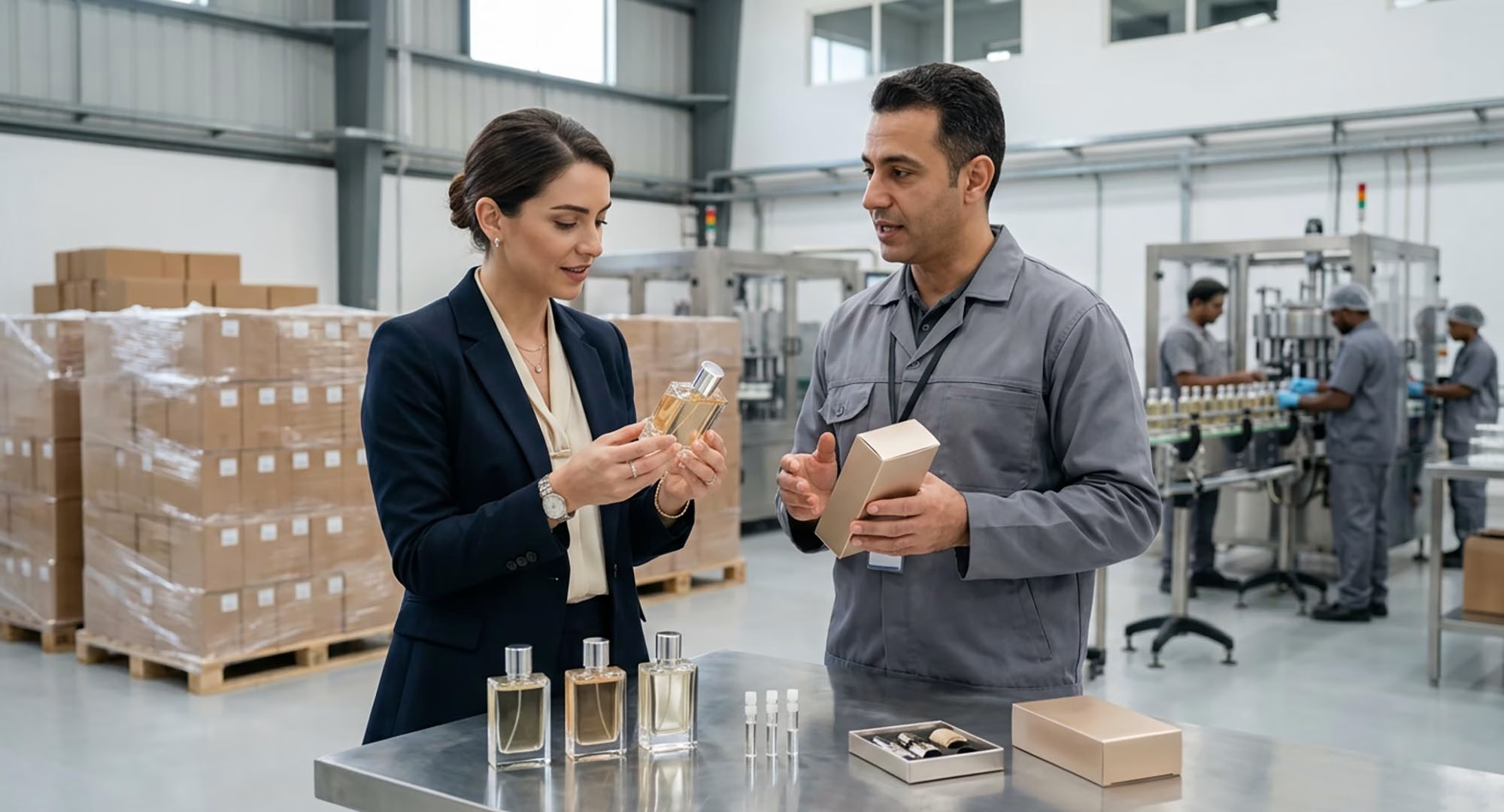
Minutes, not hours.
IGOP produces from Ajman Industrial Area 1, which is a short drive from Sharjah Industrial Area and easily reached from anywhere in the emirate.
For a bulk buyer that closeness has a practical value beyond convenience. You can inspect a run in progress, check a pallet before it ships and resolve a component question in person on the same day.
Regional brands operate this way as standard. Al Bait Al Dimashqi, a UAE perfume label distributing across the Gulf, is one example of the scale this supply chain supports.
Choosing Among Perfume Manufacturers in Sharjah
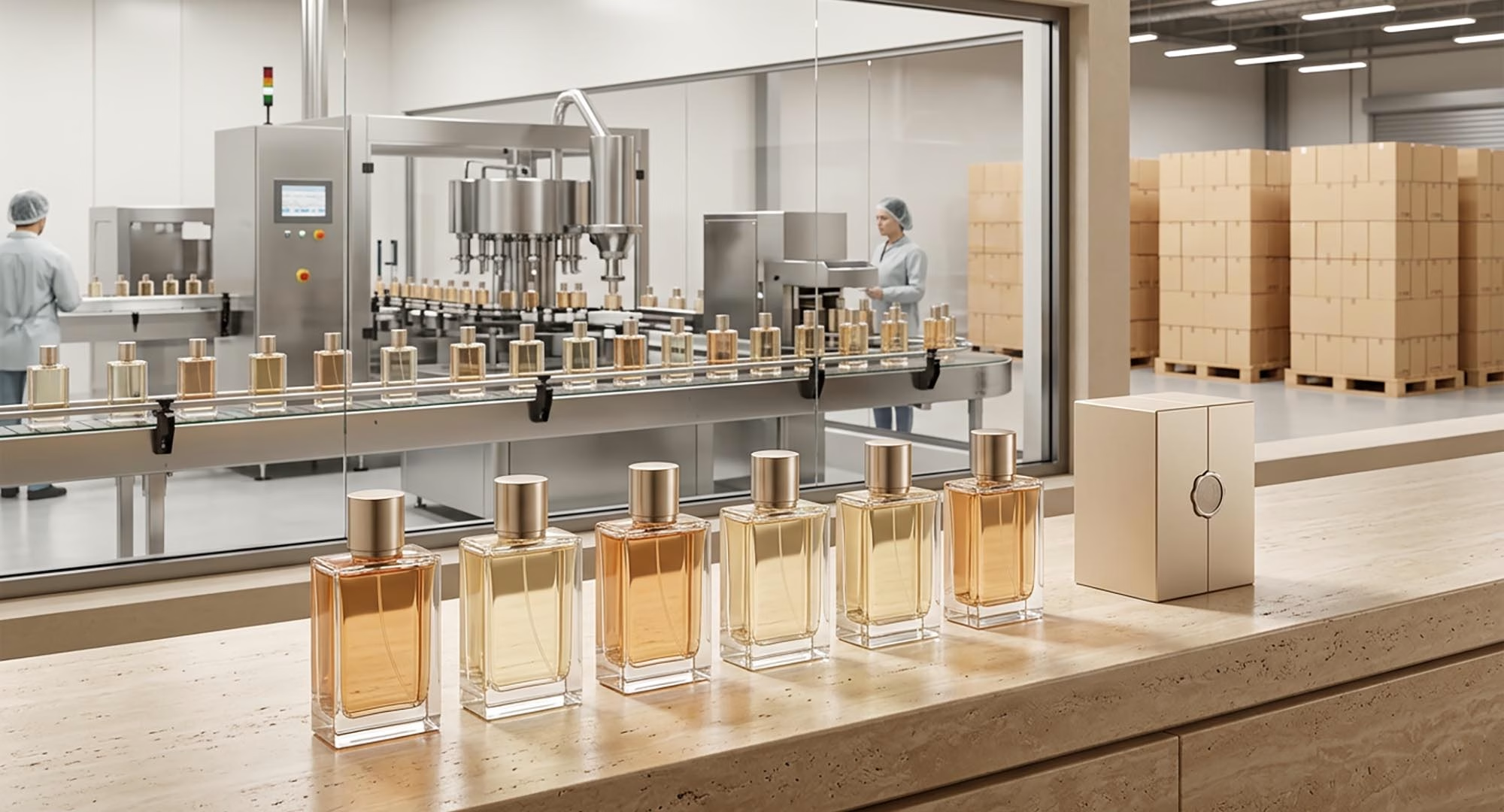
Judge consistency, not enthusiasm.
Every factory produces a good first batch, because the first batch has everyone’s attention. The relationship is tested on the fourth run, in a busy month, when a customer has moved a deadline.
Ask about retained samples, batch tolerance and what happens when something goes wrong. The quality of those answers predicts the next three years better than the quoted price does.
IGOP has produced fragrance in the UAE for over forty-five years, and the services page lists the full range from perfumes and body sprays through to candles and bulk oils.
For a bulk requirement, bring your target landed cost and your volume. Start there.
FAQ
Are there perfume manufacturers in Sharjah itself?
Several, and Sharjah holds a large share of the UAE’s fragrance-related industry including component and packaging suppliers. Plenty of production for Sharjah buyers also happens in neighbouring Ajman, which is minutes away. The practical difference is negligible, and what matters far more is whether the supplier runs its own filling line.
What is the minimum order for bulk perfume production?
Production starts from around 1,000 units, which suits a retailer or a new brand, and runs up to a million and beyond for distribution volumes. The figure moves with your packaging rather than your intentions, since stock components keep the entry point low and custom glass moulds raise it.
How much cheaper is perfume at bulk volume?
The steepest saving happens between 1,000 and 10,000 units, where setup and component costs spread across more bottles. Beyond roughly 50,000 the unit price flattens and the real gains move to freight, payment terms and shared components across multiple products in a range
How long does a large perfume production run take?
Six to ten weeks end to end for a first large order, including specification, component supply, artwork and printing. Production itself is seven to thirty days. Repeat runs are considerably faster because the specification, formula and artwork already exist and only need scheduling.
Can I order several different perfumes in one production run?
Yes, and it is usually the efficient approach for distributors. Using one bottle format and one carton size across several scents keeps component costs down while the range still looks deliberate. Decide on a shared format early, because changing it after components are ordered is expensive.
READY TO ELEVATE YOUR BRAND'S FRAGRANCE EXPERIENCE ?
READY TO ELEVATE YOUR BRAND'S FRAGRANCE EXPERIENCE ?
READY TO ELEVATE YOUR BRAND'S FRAGRANCE EXPERIENCE ?
Ready to Elevate Your Brand's Fragrance Experience ?
Partner with IGOP and transform your fragrance ideas into market-leading products. Our expertise, capacity, and commitment to quality ensure your vision is realized, exactly the way you want it. Your vision, your budget, our expertise.
